
Tag: occupational-therapy
-
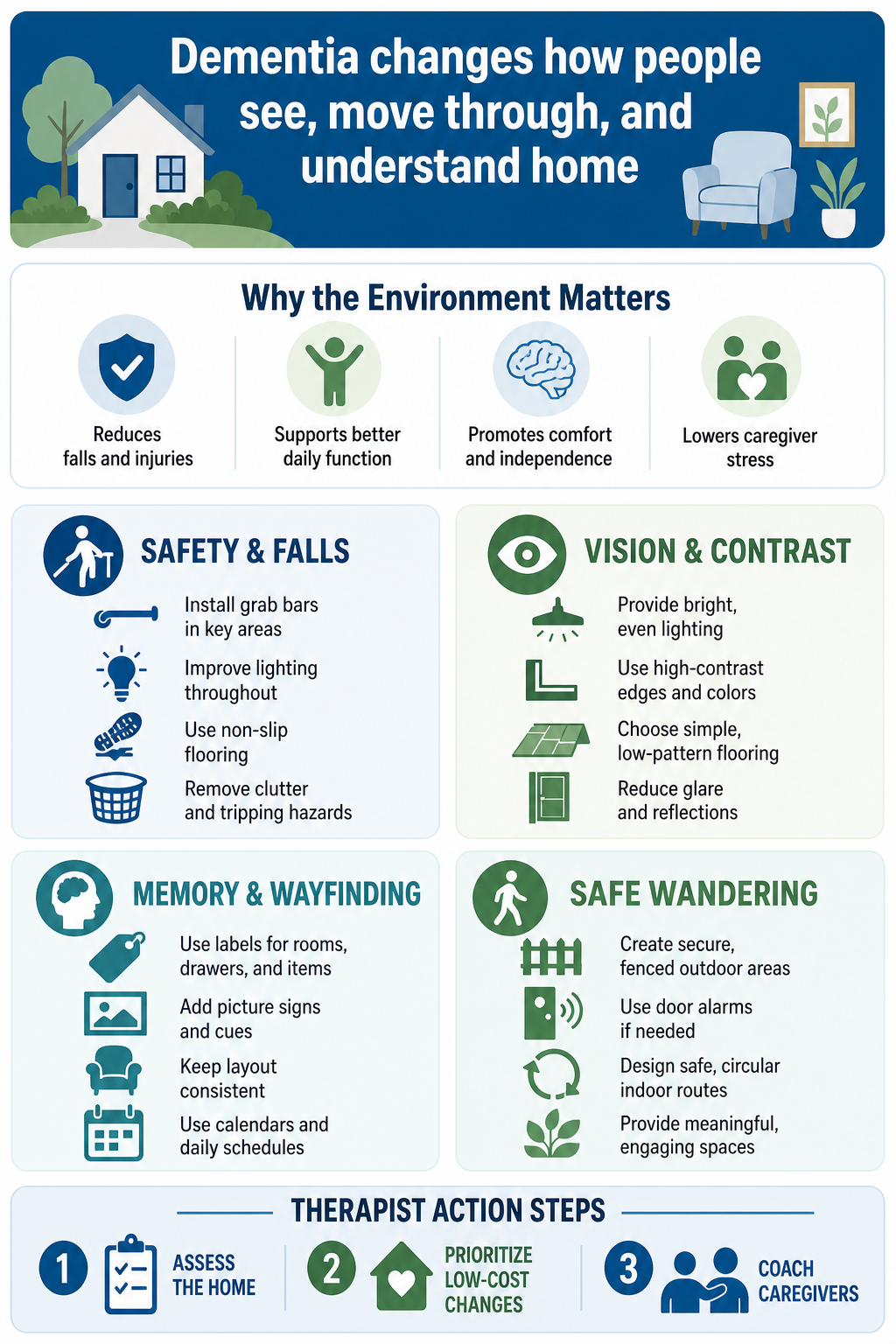
Designing Dementia‑Friendly Homes: What the Research Tells Us
Alzheimer’s and other dementias change how a person moves, sees, and makes sense of their surroundings—but the home often stays exactly the same. Research is showing that this mismatch matters. Thoughtful home modifications can lower fall risk, support independence, and ease caregiver stress for people living with dementia (Struckmeyer & Pickens, 2016; Cha, 2025; Dalvand…
-

When the Power Goes Out: OT’s Critical Role in Emergency Planning for Clients With Medical Equipment
When the power goes out during a hurricane, ice storm, or wildfire evacuation, most people think about flashlights and bottled water. But for occupational therapists who work with clients who depend on medical equipment — ventilators, oxygen concentrators, electric wheelchairs, home dialysis machines, infusion pumps, stairlifts, or powered hospital beds — a power outage is…
-

Why a Checklist Assessment Is Not Enough: The Real Role of OT in Home Modifications
If you work in home modifications, you’ve likely had this experience: you complete a home safety checklist, tick every box, hand the client a list of recommendations—and still walk out the door with a nagging sense that something is off. A week later, you hear that your client fell in the bathroom anyway, or stopped…
-
From One-Off CEUs to a Real Growth Plan: Professional Development for OTs in Home Safety and Home Modifications
Occupational therapists who specialize in home safety and home modifications often build their expertise in pieces: a great continuing education course here, a podcast episode there, a helpful article saved for later, and maybe a webinar or certification added somewhere along the way. While those resources are valuable, scattered learning does not always lead to confident…
-
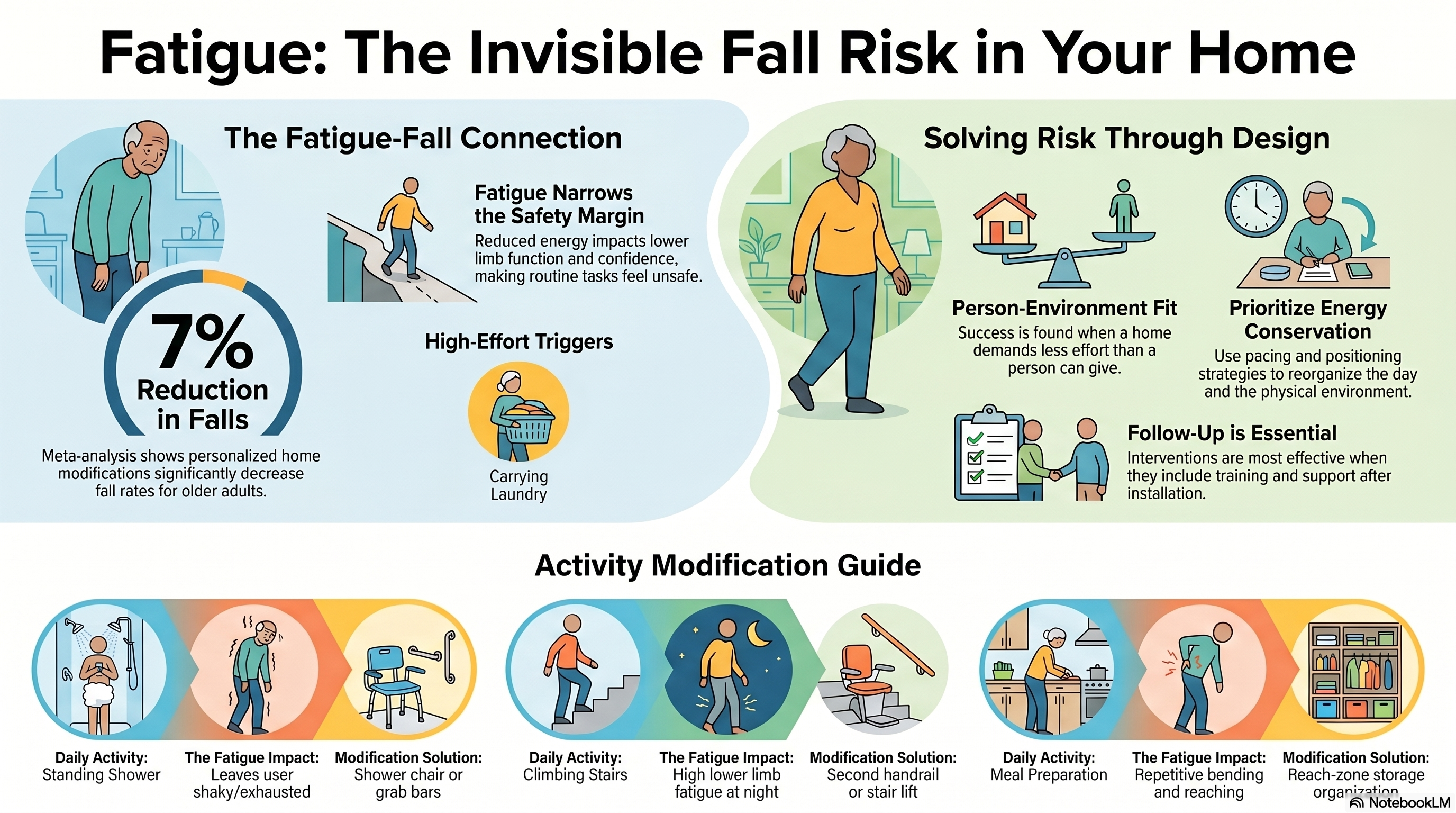
Toolbox Tips: Why Fatigue Belongs in Every Home Safety and Home Modification Conversation
When people think about fall prevention at home, they often picture loose rugs, poor lighting, missing grab bars, or cluttered walkways. Those hazards matter, but they are only part of the picture. One of the most overlooked contributors to falls and near-falls is fatigue: the very real drop in physical endurance, balance, attention, and confidence…
-

Retirement Planning Needs More Than Money: Why Home Modification OTs Belong at the Table
Retirement planning is usually framed as a financial exercise, but the evidence suggests it also depends on where and how people will live. A 2025 systematic review found that home modifications support aging in place by improving fall prevention, functional independence, quality of life, caregiving burden, and cost savings, with 13 of 20 included studies…
-
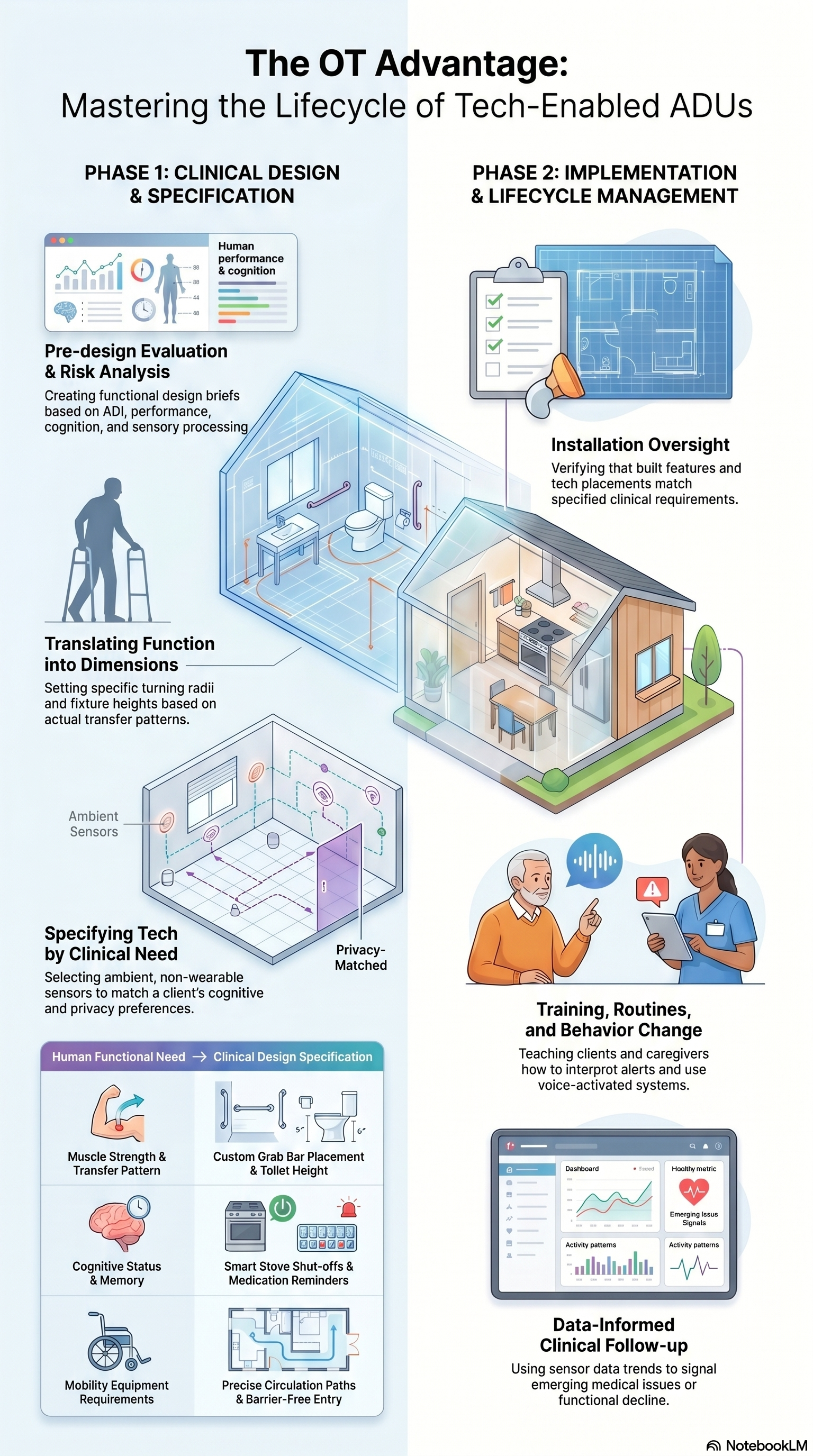
Smart Granny Pods: How Tech‑Enabled ADUs Are Creating New Clinical and Business Opportunities for Home Mod OTs
Why ADUs are landing on your OT caseload Across the U.S., more families are asking, “Should we move mom to assisted living, or set up a small home in our backyard?” For occupational therapists specializing in home modifications, accessory dwelling units (ADUs) and manufactured “granny pods” are quickly becoming a new practice frontier. These units…
-
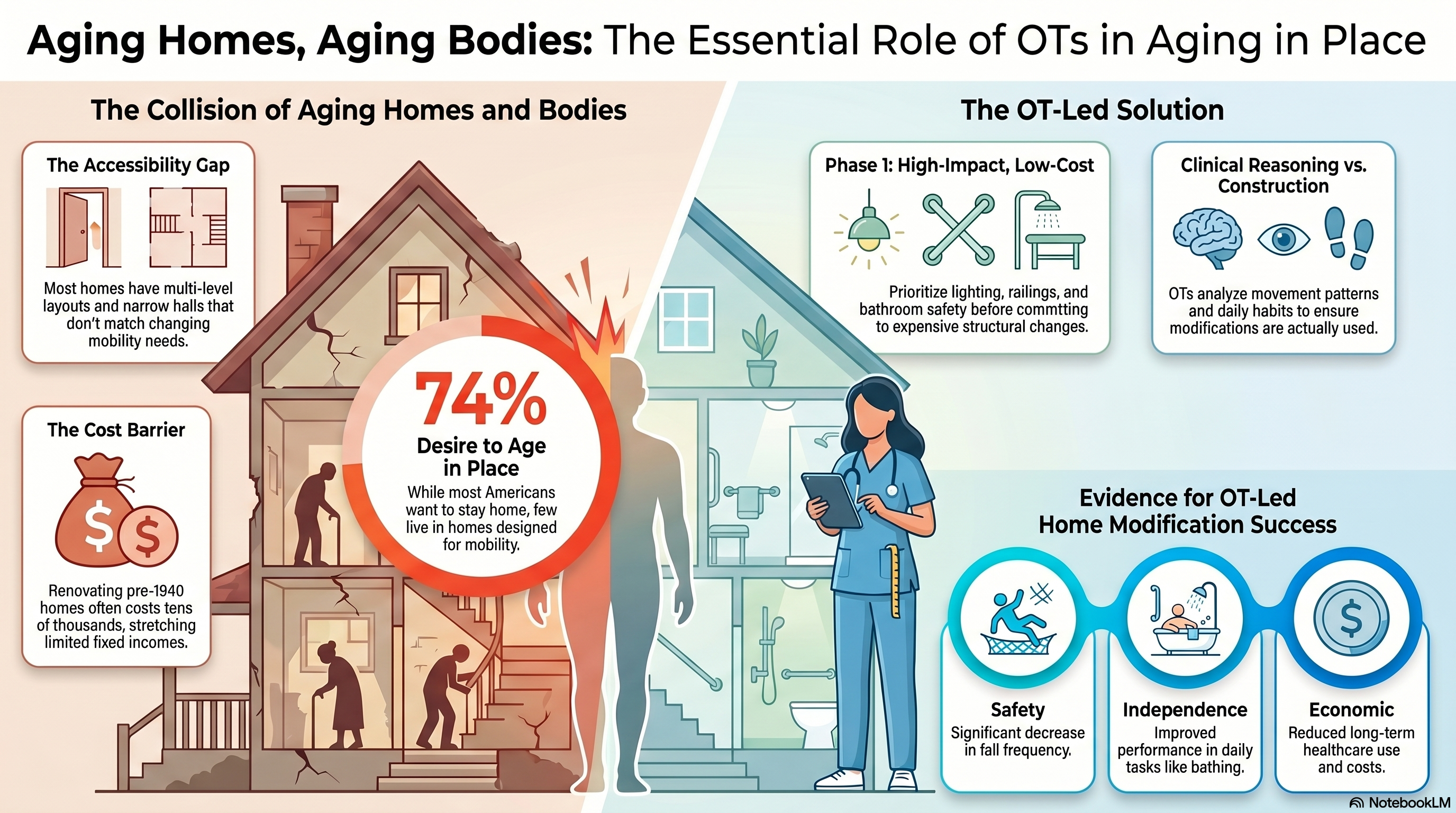
When Aging Homes Collide With Aging Bodies: Why OTs Are Essential to Aging in Place
Across the U.S., two powerful trends are colliding: the housing stock is getting older, and so are the people living in it. Many clients dream of “aging in place” in the homes and neighborhoods they know best—but those same homes often come with steep repair bills, poor accessibility, and hidden safety risks. For occupational therapists…
-
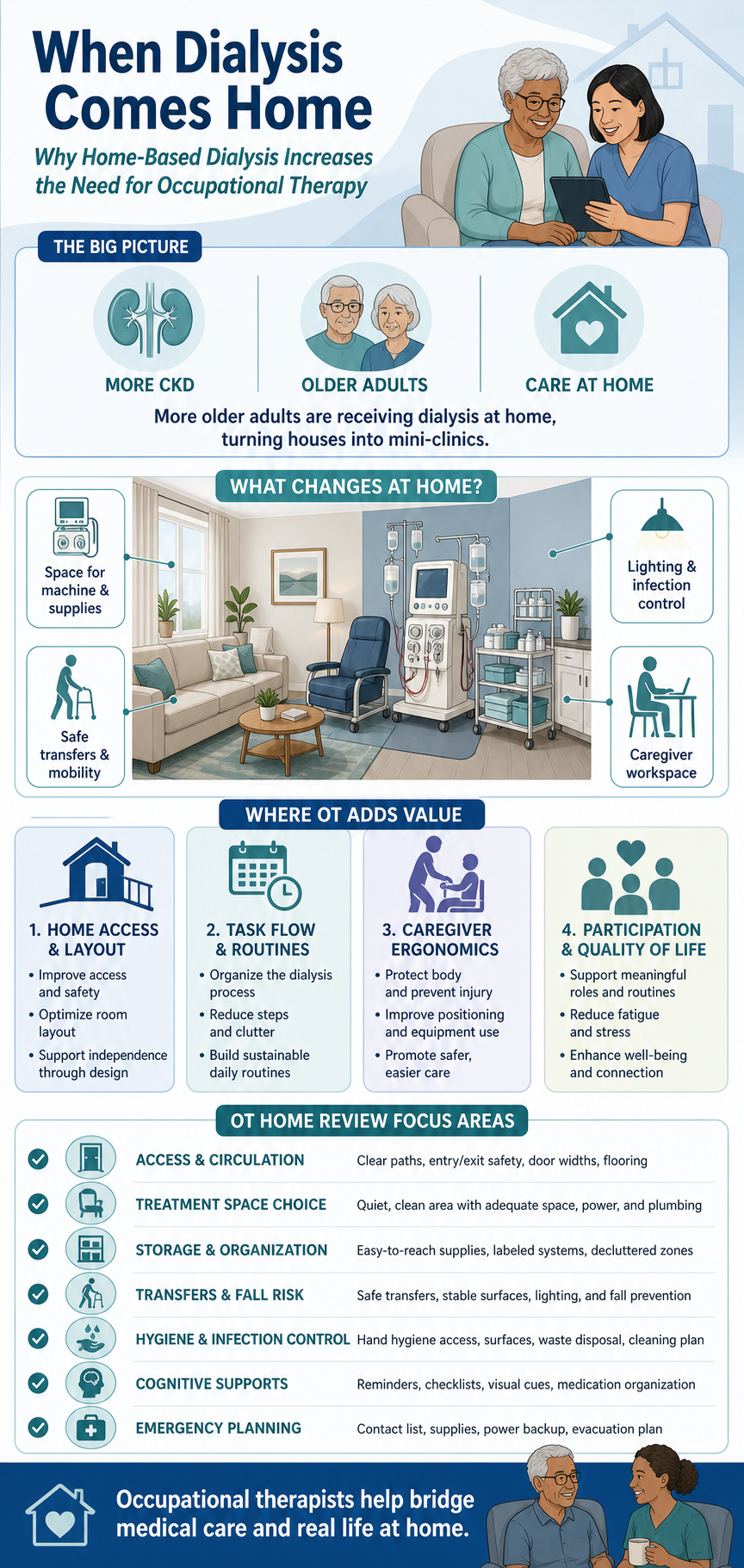
When Dialysis Comes Home: Why Rising Kidney Disease, Population Aging, and Home-Based Care Are Expanding the Need for Occupational Therapy in Home Modification
Chronic kidney disease (CKD) and kidney failure are placing growing pressure on health systems, families, and homes. As more older adults live long enough to require dialysis, and as home-based treatment becomes more common, the home is increasingly being asked to function as a site of complex medical care rather than simply a place of…
-

Toolbox Tips: Force Meters — The Essential Tool for Objective Door and Hardware Assessments
When conducting a home safety evaluation, most therapists instinctively check whether a client can open a door. But how many of us actually measure how much force it takes to do so? A force meter — also called a push-pull gauge or force gauge — is a small but mighty addition to your assessment toolkit that transforms a subjective…