
Tag: occupational-therapy
-

Hidden Home Safety Risks Therapists Should Look For in Aging-in-Place Assessments
Discover the hidden home safety risks occupational therapists should notice during aging-in-place assessments, from lighting and scald hazards to outdoor dangers, maintenance issues, and emergency readiness.
-

Why Occupational Therapists Need Advanced Training in Home Modifications (And Why Now)
If you’ve ever walked into a client’s home and felt that quiet moment of “I know this matters, but I’m not sure I know enough to do this well,” you’re not alone. Home modifications sit at a strange intersection in our field — everyone agrees they’re important, but almost no one gets trained in them…
-

Toolbox Tips: Why Every Home Modification Therapist Needs a Grip Force Dynamometer
If you specialize in home modifications, you already objectively measure light levels, angles, and stud placement. But there’s one measurement that often gets skipped entirely, even though it directly determines whether a client can actually operate the hardware you’re recommending: grip force. A grip force dynamometer gives you the objective data to know, rather than…
-
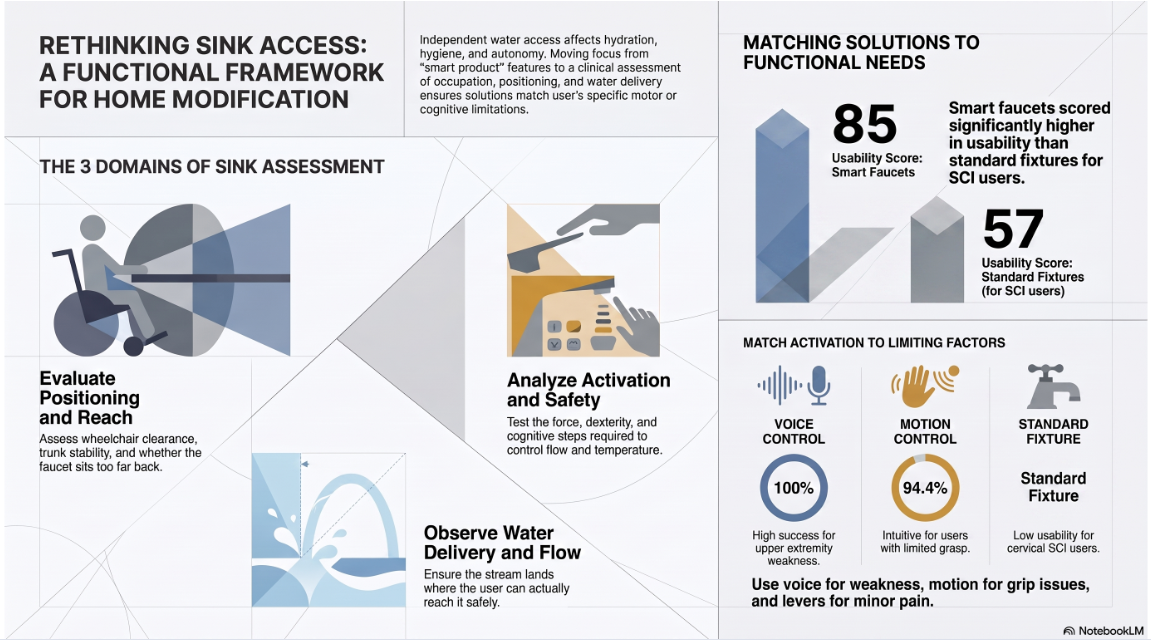
From Research to Practice: Clinical Decision-Making About Sink Access, Faucets, and Water Use at Home
When therapists think about home modifications, attention often goes to entrances, showers, toilets, and stairs. Those are critical areas, but the sink deserves just as much clinical scrutiny. A recent feasibility study of the Access-H2O smart faucet in people living with cervical spinal cord injury (SCI) reinforces an important point for home modification practice: independent…
-

The Next Phase of Home Modifications: Why OT Practice Is Becoming More Data-Driven, Strategic, and Scalable
Occupational therapists who specialize in home modifications are entering a different market than the one that existed even a few years ago. The field is no longer defined primarily by grab bars, ramps, and one-time safety fixes. It is increasingly shaped by measurable outcomes, larger and more integrated aging-in-place remodels, mainstream interest in accessible design,…
-
From Recommendations to Reality: Disability Pride, Home Modifications, and OT Practice
Disability Pride Month in July marked 36 years since the Americans with Disabilities Act (ADA) became law, and the 2026 theme, “The World Works Better with US,” is a powerful reminder of that legacy. It’s also a natural moment for those of us in home modification practice to pause and ask a hard question: what…
-
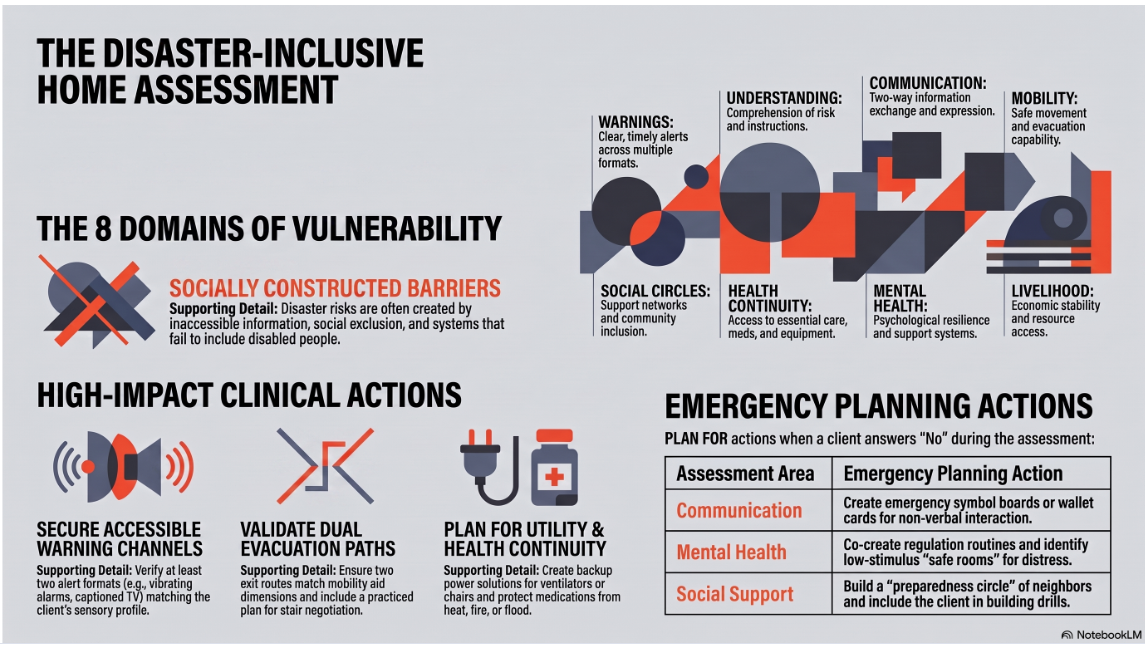
Why Every Home Accessibility Assessment Must Include Disaster Preparedness
As home accessibility therapists, we spend a lot of time thinking about the everyday hazards that trip people up: the too‑narrow doorway, the slippery step, the dim hallway that hides obstacles. But increasingly, our work is also about the big events—the earthquake at three in the morning, the heat dome that will not lift, the…
-
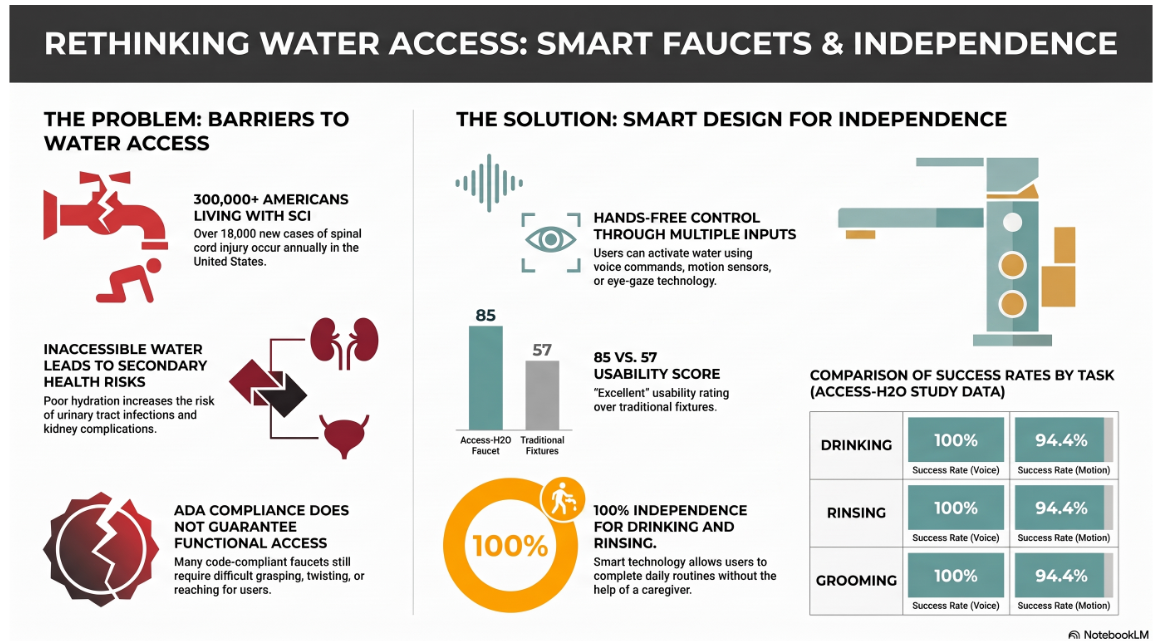
Smart Faucets, Water Access, and Independence at Home
When people think about home accessibility, they usually picture ramps, showers, grab bars, and stair lifts. Those features matter, but another daily activity deserves much more attention: accessing water independently at the sink. A recent peer-reviewed study on the Access-H2O smart faucet offers a strong starting point for that conversation by showing how hands-free faucet…
-

Why clients say no!
What Your Clients Are Really Telling You About Home Safety Assessments Before You Read: Have We Been Here Before? We have previously addressed the issue of clients following through on recommendations made by occupational therapists as part of a home assessment. (https://thehomeaccessibilitytherapist.blog/?s=adherence) This post takes a different, and arguably more fundamental, angle: Why do clients…
-

Why Caregiver Burden Belongs in Your Home Modification Assessment
Learn why caregiver burden belongs in every home modification assessment, with outcomes data and 3 free validated screening tools for OTs.