
Tag: homeaccessibility
-
From Assessment to Action: The OT’s Clinical Map for Hoarding Disorder
You are standing in the doorway of a client’s home. Every surface is covered. The kitchen table has not been visible in years. There is a narrow path through the living room. The smell is difficult. Your client is watching you from across the room, arms crossed, eyes guarded. You are an occupational therapist. And…
-
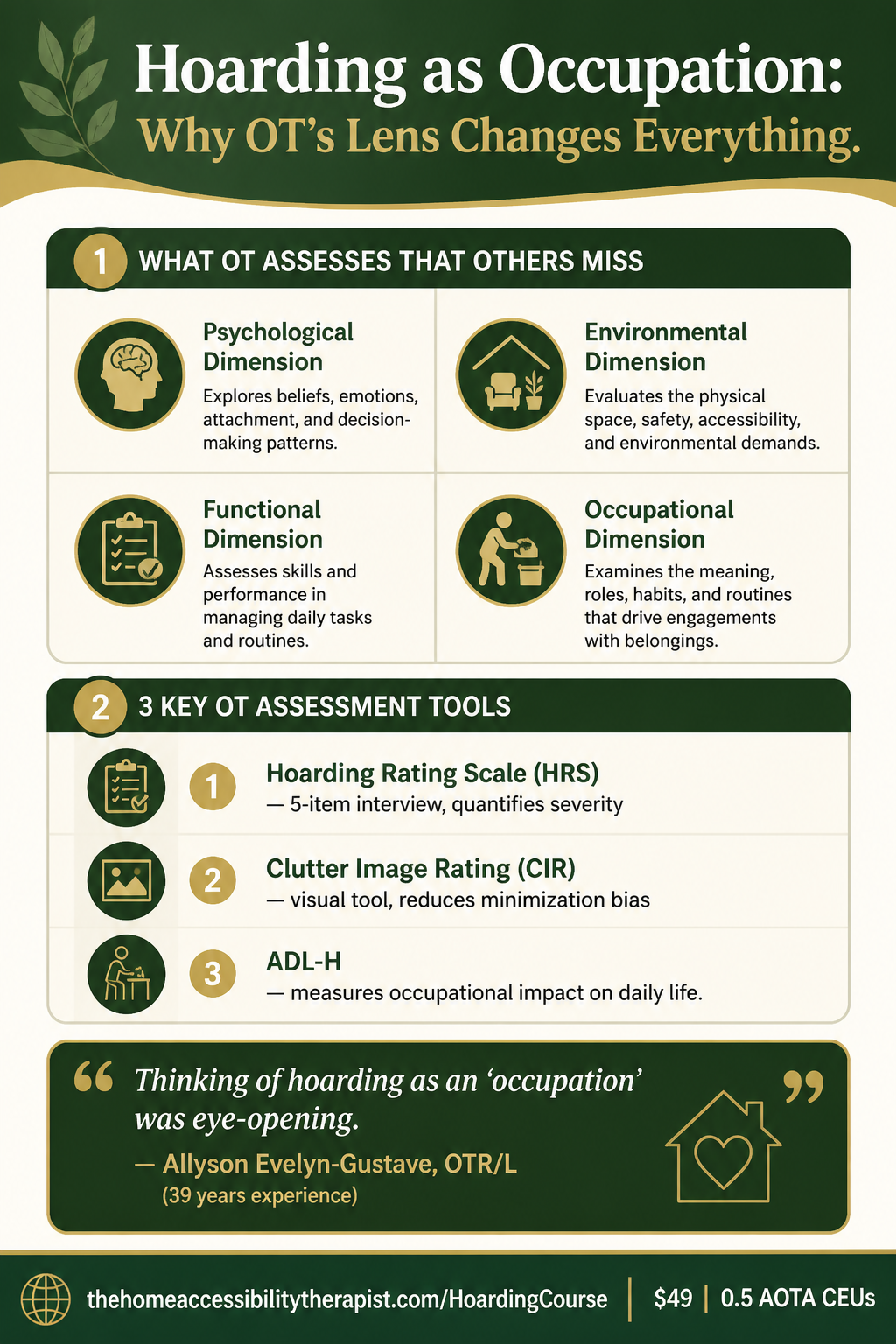
Reframing Hoarding as Occupation: What Occupational Therapists Bring That Nobody Else Can
Ask most clinicians what they think when they hear “hoarding disorder,” and the responses tend to cluster around the same themes: clutter, safety risk, resistance, and difficulty. The mental image is a home filled floor to ceiling with accumulated objects — a problem to be solved, removed, or cleared. But what happens when you bring…
-
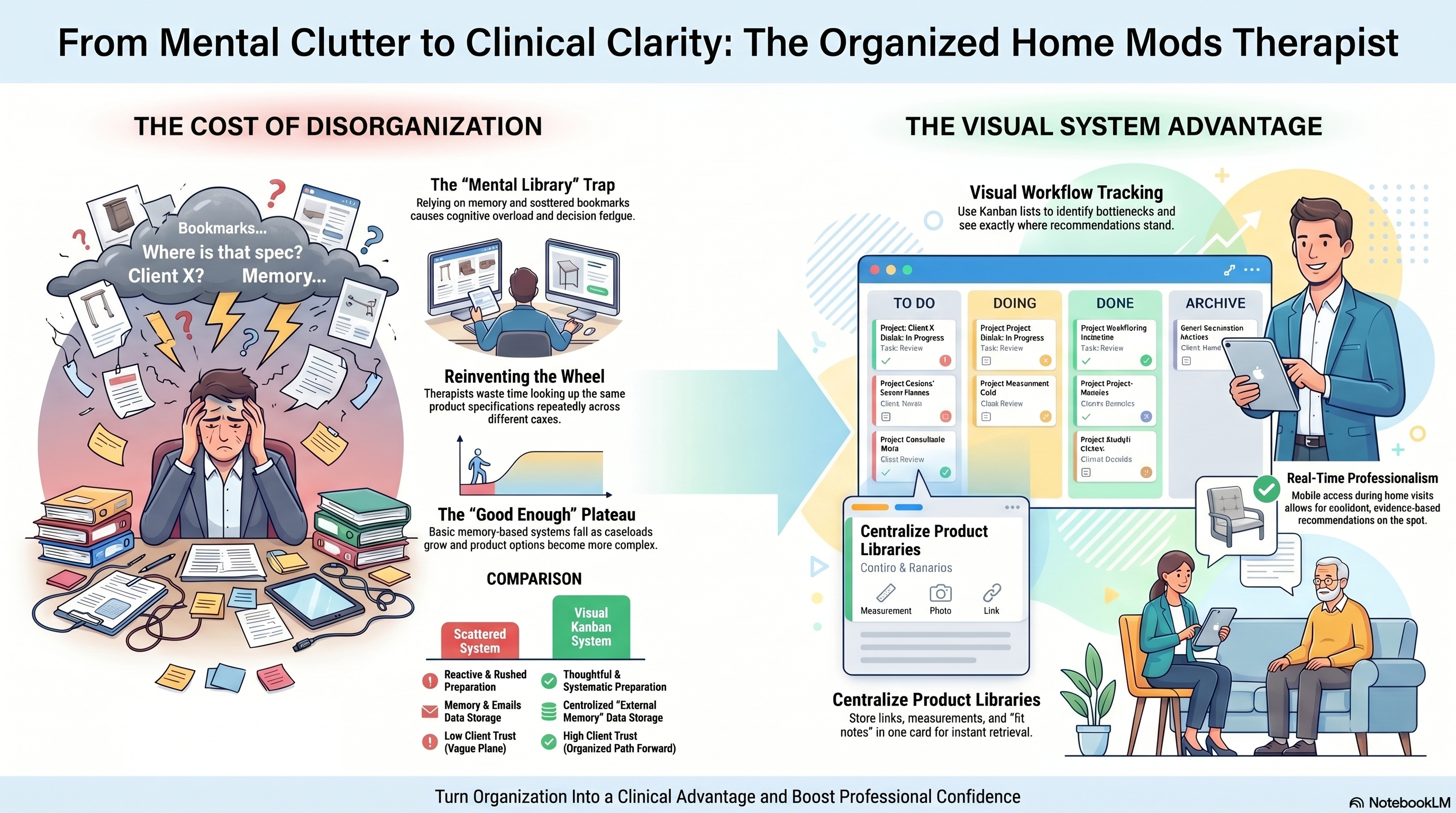
Toolbox Tips: The Organized Home Mods Therapist: Why a Better System Leads to Better Recommendations
If you work in home modifications, you already know the hard part is not just identifying problems. The hard part is moving from “I know there’s a solution for this” to “I can quickly recommend the right solution, explain why it fits, and follow through with confidence.” A visual system like a Trello board or…
-

Disaster Planning When Your Client Has Dementia: What Every OT Needs to Know
Emergency preparedness is complicated for anyone. For a person living with dementia, it can be overwhelming, terrifying, and — without thoughtful, individualized planning — genuinely life-threatening. Research published in The Gerontologist found that disaster preparedness is experienced as one of the most challenging responsibilities of dementia caregivers, with barriers including cognitive and behavioral unpredictability, limited caregiver capacity…
-

From Doorstep to Desktop: How Telehealth Is Reshaping Home Safety and Accessibility in Occupational Therapy
Telehealth is no longer a backup plan in occupational therapy. It has become a meaningful service delivery model for evaluation, caregiver coaching, follow-up, and selected home safety and accessibility work, especially for older adults who want to age in place (Ding et al., 2023; Gately et al., 2021). As healthcare continues to shift toward community-based…
-
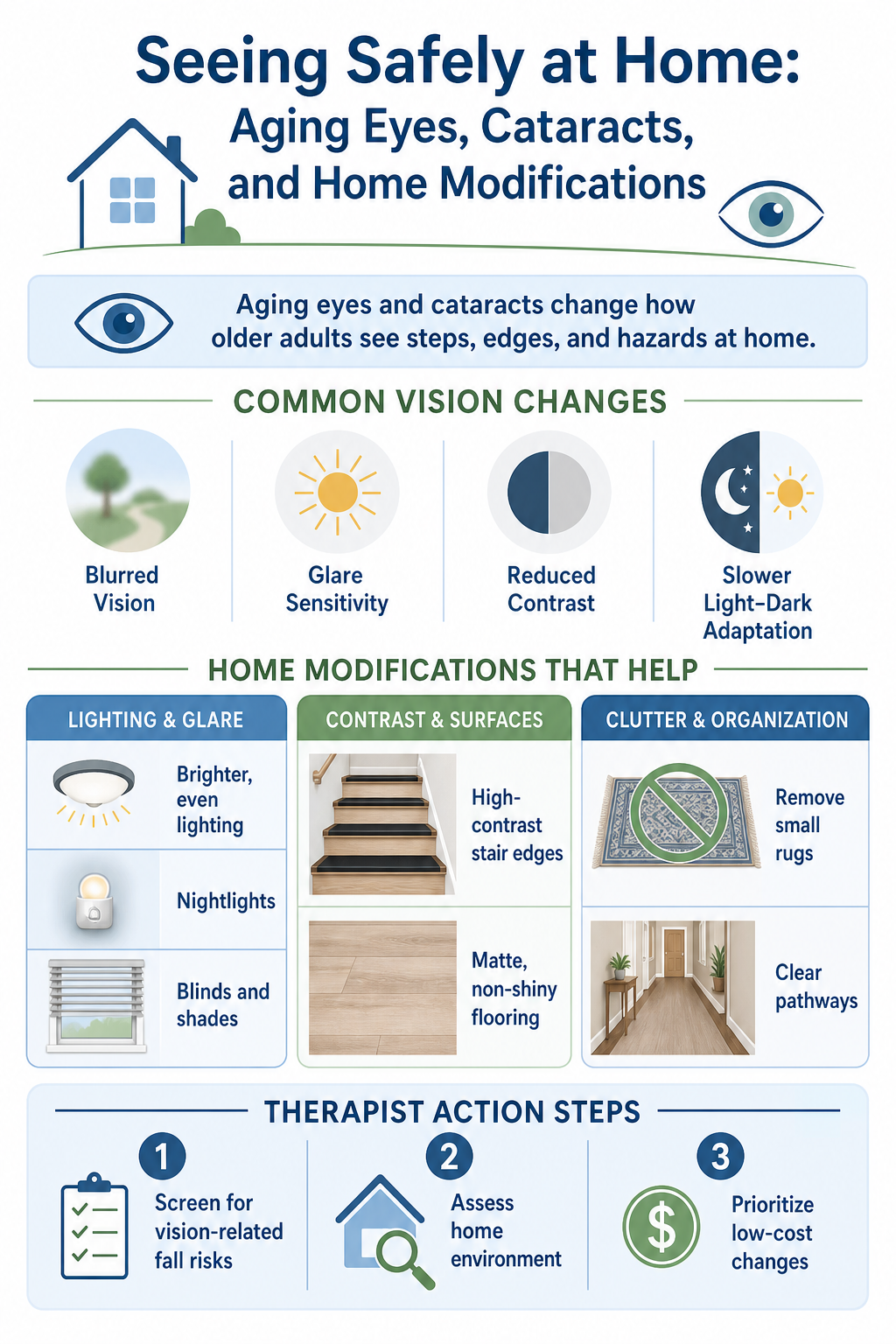
Seeing Safely at Home: Aging Eyes, Cataracts, and Evidence-Informed Home Modifications
Vision changes are so common with aging that many people treat them as an inconvenience rather than a meaningful home safety issue. The problem is that blurred vision, glare sensitivity, poorer contrast sensitivity, and slower adjustment to changes in lighting can quietly reshape how a person moves through the home, completes daily tasks, and responds…
-
From One-Off CEUs to a Real Growth Plan: Professional Development for OTs in Home Safety and Home Modifications
Occupational therapists who specialize in home safety and home modifications often build their expertise in pieces: a great continuing education course here, a podcast episode there, a helpful article saved for later, and maybe a webinar or certification added somewhere along the way. While those resources are valuable, scattered learning does not always lead to confident…
-
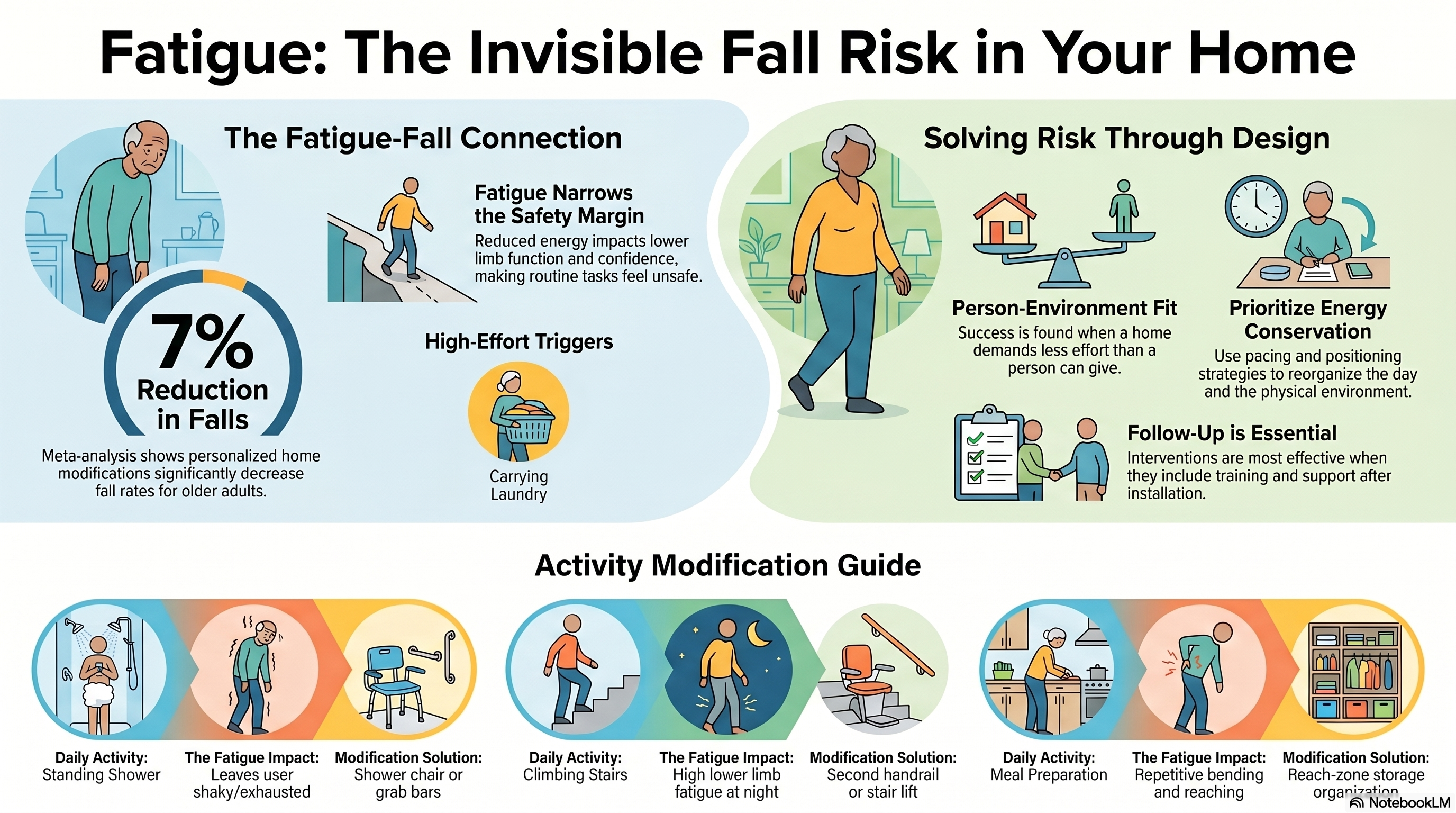
Toolbox Tips: Why Fatigue Belongs in Every Home Safety and Home Modification Conversation
When people think about fall prevention at home, they often picture loose rugs, poor lighting, missing grab bars, or cluttered walkways. Those hazards matter, but they are only part of the picture. One of the most overlooked contributors to falls and near-falls is fatigue: the very real drop in physical endurance, balance, attention, and confidence…
-

Retirement Planning Needs More Than Money: Why Home Modification OTs Belong at the Table
Retirement planning is usually framed as a financial exercise, but the evidence suggests it also depends on where and how people will live. A 2025 systematic review found that home modifications support aging in place by improving fall prevention, functional independence, quality of life, caregiving burden, and cost savings, with 13 of 20 included studies…
-
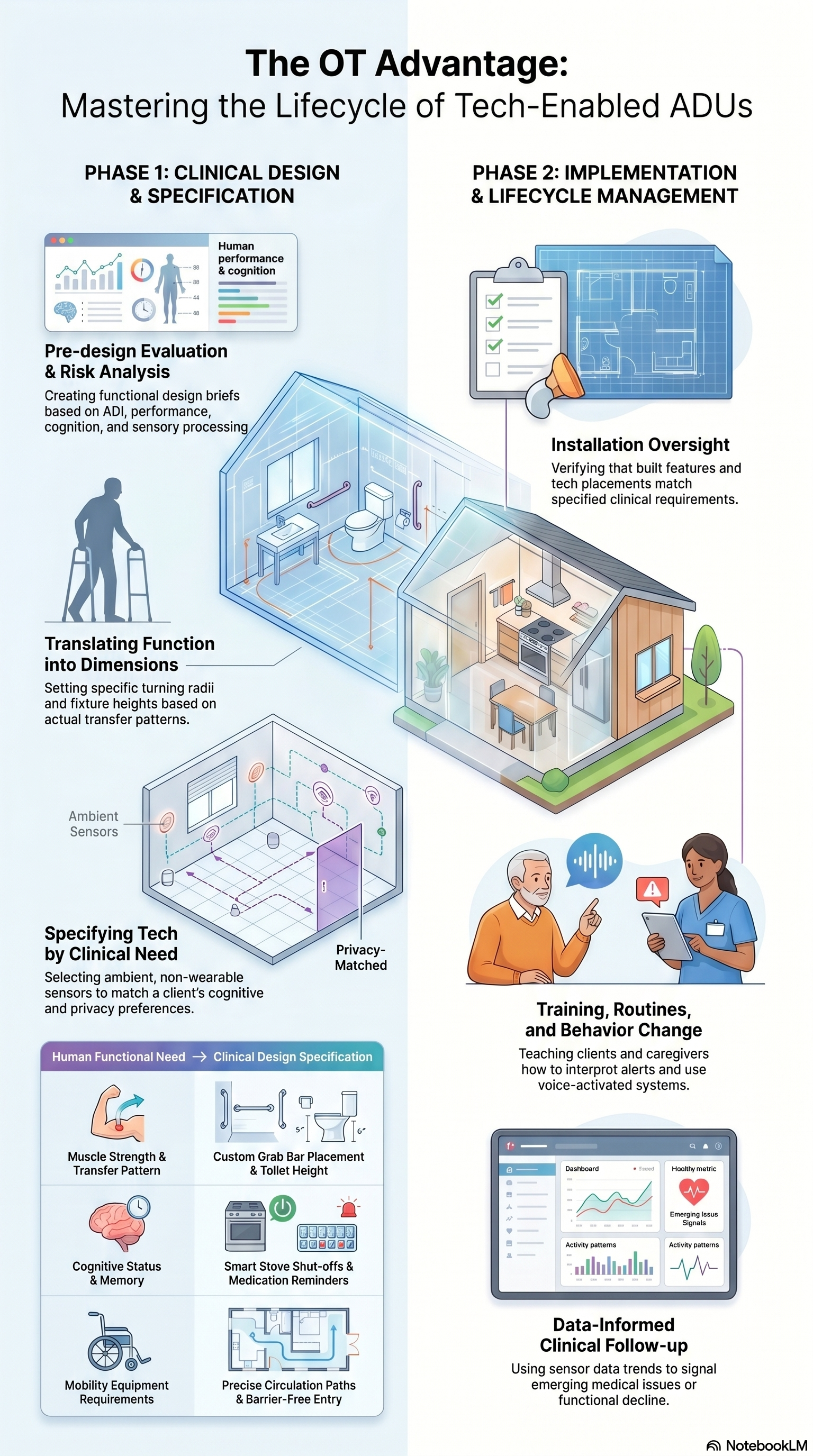
Smart Granny Pods: How Tech‑Enabled ADUs Are Creating New Clinical and Business Opportunities for Home Mod OTs
Why ADUs are landing on your OT caseload Across the U.S., more families are asking, “Should we move mom to assisted living, or set up a small home in our backyard?” For occupational therapists specializing in home modifications, accessory dwelling units (ADUs) and manufactured “granny pods” are quickly becoming a new practice frontier. These units…