
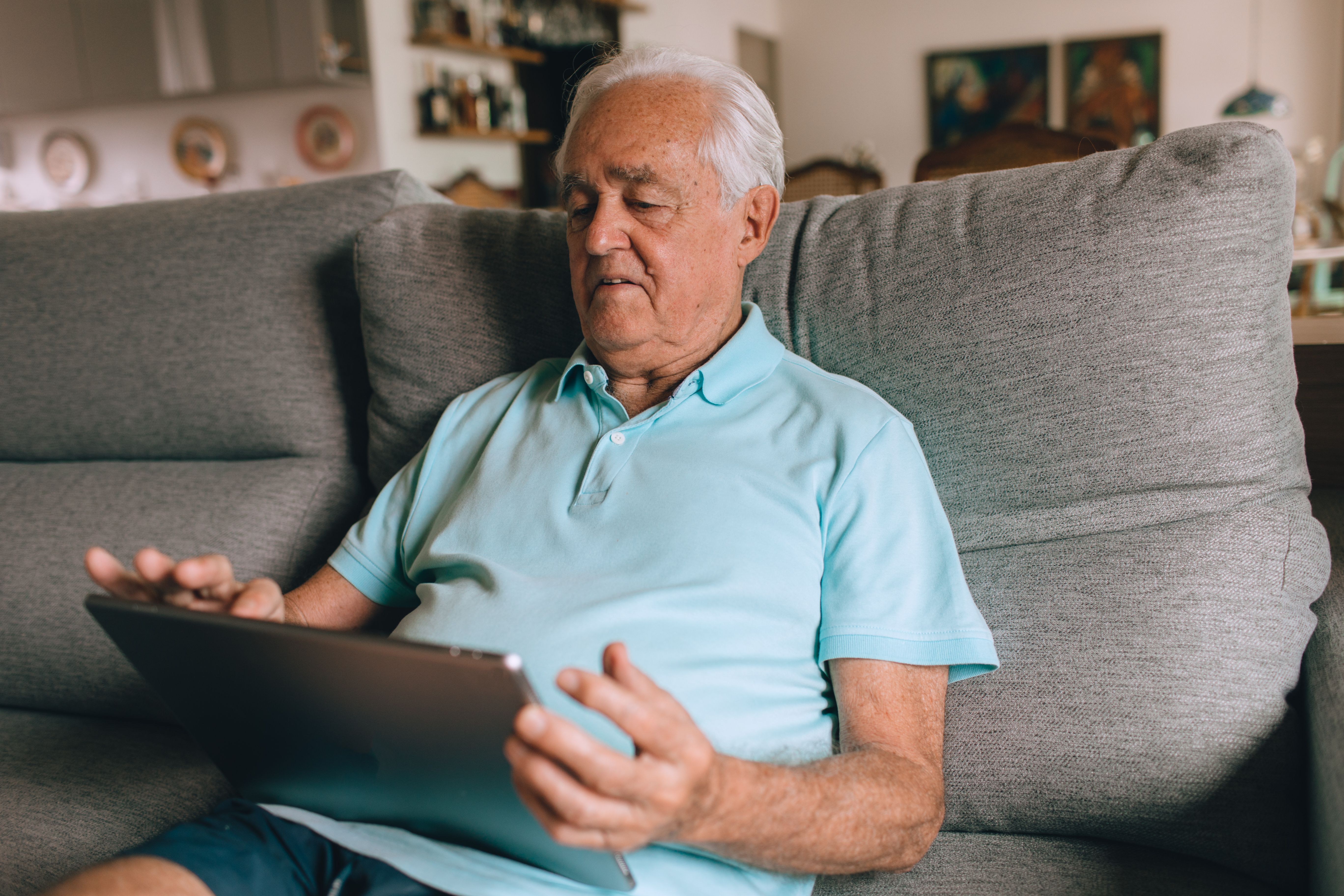
Telehealth is no longer a backup plan in occupational therapy. It has become a meaningful service delivery model for evaluation, caregiver coaching, follow-up, and selected home safety and accessibility work, especially for older adults who want to age in place (Ding et al., 2023; Gately et al., 2021). As healthcare continues to shift toward community-based care, therapists are being asked to understand how people actually live at home, and telehealth is making that view more available than ever before (Ding et al., 2023; Renda & Lape, 2018; Gately et al., 2021).
For clinicians focused on home safety and participation, telehealth changes an important part of the equation. Instead of relying only on clinic-based conversations about what home is like, therapists can often see the actual bathroom setup, the stair entry, the kitchen workflow, the lighting conditions, or the transfer surfaces while the client is using them in real time (Renda & Lape, 2018; Gately et al., 2021). That shift supports more context-rich decision making, even though it also introduces new challenges related to technology, safety, privacy, and the inability to provide hands-on physical assistance (Breeden et al., 2023; Gately et al., 2021)

Why telehealth fits aging in place
Telehealth has expanded quickly in occupational therapy because it addresses long-standing access problems. Older adults and medically complex clients may face transportation barriers, fatigue, distance from specialty providers, caregiver scheduling constraints, or risks associated with leaving home for appointments (Ding et al., 2023; Cason, 2015). A recent scoping review of telehealth occupational therapy among older people found that telehealth OT has been used for occupational assessment, intervention, rehabilitation counseling, caregiver support, and activity monitoring, showing that the model is broader than many clinicians initially assume (Ding et al., 2023).
The same review concluded that telehealth OT is being used widely with older adults and can improve the security of home life while supporting both clients and caregivers (Ding et al., 2023). In practice, that makes telehealth particularly relevant to home accessibility work, where environmental context matters. If the clinical question involves how a client manages entry steps, a cluttered hallway, medication setup, a bathroom transfer, or kitchen access, a remote visual connection may offer information that a clinic appointment simply cannot provide (Renda & Lape, 2018; Gately et al., 2021).
What the research shows
One of the most directly relevant studies for home accessibility practice is the pilot study on telehealth occupational therapy home modification interventions by Renda and Lape (2018). That study examined whether home modification interventions could be delivered through client-owned smartphones, tablets, or computers and found improvement in home safety and in participants’ perception of performance in daily activities. Participants also reported satisfaction with the telehealth format because it was easy to use and reduced burden for both clients and caregivers.
The sample in that study was small, so it should not be overstated. However, it provides useful practice-based evidence that telehealth can be a feasible way to support home modification work, particularly when travel, cost, or geography would otherwise prevent intervention entirely. The study also identified ongoing barriers, including inconsistent audio and video quality and limited funding for home modification services.
Other implementation work points in a similar direction. The Home Quick mHealth model for occupational therapy home visits in community and rural hospitals in Australia was associated with improved timeliness of assessment and increased OT staff productivity. A 2023 study on telehealth OT service delivery also found that practitioners reported increased access, continuity of care, efficiency, and the ability to visualize the home environment as key advantages of telehealth practice.
These findings matter because many recommendations do not fail for lack of clinical insight. They fail because they are poorly timed, poorly communicated, or never revisited once the person tries to live with them. Telehealth creates more opportunities for shorter, targeted follow-up visits in the real environment where recommendations are either working or not working.
Why remote home assessment helps
The clearest advantage of telehealth for home accessibility is that it allows therapists to see the lived environment with less delay. In a virtual home walkthrough, a therapist can ask a client or caregiver to show the entrance path, steps, railings, bathroom transfers, bed height, flooring changes, lighting quality, and storage setup in real time. That direct observation supports more specific recommendations than a generic checklist completed in clinic.
Telehealth can also improve caregiver coaching. Caregivers are often the ones helping with measurements, camera positioning, furniture rearrangement, cueing, equipment setup, and follow-through on recommendations. In practice, remote sessions can be used not only to assess the environment but also to teach caregivers how to support routines, position equipment, and monitor problem areas such as bathroom access or nighttime mobility.
Another benefit is continuity. A therapist may not need to return in person just to confirm whether a grab bar was placed at the right height or whether a shower seat actually fits the user and the space. A short video follow-up can sometimes answer those questions efficiently. This is where telehealth often works best—not as a total replacement for home visits, but as a way to extend the value of home-based clinical reasoning over time.
Where telehealth works best
Telehealth appears especially useful for interventions that rely heavily on observation, education, coaching, environmental review, and collaborative problem solving. In a national survey of Veterans Health Administration occupational therapy practitioners working with older veterans, clinicians who used video telehealth reported benefits related to access, the ability to see veterans who live far from the medical center, the ability to reach veterans who have difficulty traveling, and the opportunity to get a view into veterans’ homes (Gately et al., 2021). Those are not minor operational gains; they are clinically relevant benefits for any therapist trying to support safe function where daily life actually happens.
Home modification work is one of the clearest examples. A small feasibility study of telehealth occupational therapy home modification interventions found improvement in home safety and in participants’ perception of performance in daily activities, while also reporting satisfaction with the intervention format and reduced client and caregiver burden (Renda & Lape, 2018). Although the sample was very small, the study is still important because it demonstrates that therapists can use everyday consumer technology such as smartphones, tablets, or computers to complete meaningful home-focused intervention work (Renda & Lape, 2018).
Telehealth also appears to work well when the therapist’s role is partly that of coach. A study of novice occupational therapy telehealth users during the COVID-19 pandemic found that practitioners perceived telehealth as increasing access and continuity of services, with success supported by client champions, coaching strategies, practitioner flexibility, and the ability to visualize the home environment (Breeden et al., 2023). That finding fits especially well with occupational therapy home assessment, because so much of the work depends on guiding clients and caregivers through set-up, problem solving, graded task practice, and carryover between sessions.
Home safety and accessibility work sits squarely within those more telehealth-friendly domains. When the goal is observation, coaching, problem solving, equipment education, or follow-up, remote care may be highly practical. In contrast, situations requiring hands-on guarding, complex transfer assessment without support, or precise physical measurements may still call for in-person care.
This is especially important for evaluation planning. Guidance on OT telehealth assessments emphasizes screening questions about safety awareness, needed supervision, environmental hazards, available space, and whether the selected assessment is valid and feasible in a remote format. For therapists doing home-based work, that means deciding ahead of time whether a session will be observation only, whether a caregiver needs to be present, and what parts of the home should be prioritized on camera.
The limits clinicians need to respect
The evidence does not suggest that telehealth is equally effective for everything. Therapists consistently report barriers related to internet reliability, audio and video quality, difficulty seeing the full body or task performance clearly, and the inability to provide hands-on assistance or tactile cueing when movement quality or safety becomes a concern (Breeden et al., 2023; Gately et al., 2021). Those limitations matter most when the task involves transfers, dynamic balance, complex mobility, or situations in which the client could be injured if support is delayed. For older adults, hearing loss, low vision, cognitive changes, or limited digital literacy may also reduce the effectiveness of a remote session unless the format is adapted carefully.
The VHA survey provides a useful illustration of this nuance. Occupational therapy practitioners who had used video telehealth were more comfortable than nonusers with using it for activities of daily living, instrumental activities of daily living, home safety, home exercise or therapeutic exercise, veteran or caregiver education, durable medical equipment, assistive technology, education and work, and wheelchair clinic or seating and positioning (Gately et al., 2021). Even so, the study also found that less than half of respondents had used video telehealth with older veterans, and more than half of those users reported at least one barrier, with inadequate space, physical locations, and related equipment being the most frequently endorsed barrier (Gately et al., 2021).
This is why telehealth works best when therapists use good clinical triage. Some clients are appropriate for a fully remote evaluation. Others may need a hybrid approach, such as telehealth for the interview, home tour, caregiver training, or follow-up, but an in-person visit for complex transfer training, precise measurements, equipment fitting, or situations in which safety cannot be managed remotely (Renda & Lape, 2018; Gately et al., 2021). Good telehealth practice is not about forcing every service onto a screen; it is about matching the delivery method to the demands of the task.
Privacy and consent issues also deserve attention because a home walkthrough over video exposes personal information about living conditions, family routines, possessions, and sometimes other household members. There is also an equity question: telehealth can improve access for rural clients and those who have difficulty traveling, but it can widen gaps if the person lacks broadband, a usable device, or a support person who can help with setup.
For therapists working in home accessibility, the most realistic future is likely hybrid. Initial consults may begin remotely to triage needs and identify urgency, while follow-up sessions may occur by video to review installation, observe routine performance, coach caregivers, and update recommendations as function changes. Used thoughtfully, telehealth expands the reach of occupational therapy without stripping away context. It can reduce travel burden, improve continuity, and make home modification recommendations more responsive to daily life.
Caregivers and the home environment
One of telehealth’s biggest strengths in geriatric and home-based practice is the ability to include caregivers more naturally. In telehealth occupational therapy, caregivers can help position the device, carry the camera through the home, take simple measurements, report on routines, support task set-up, and participate in education at the same time the therapist is observing the environment (Ding et al., 2023; Gately et al., 2021). For clients with cognitive change, sensory loss, low digital literacy, or mobility limitations, that caregiver role may be essential rather than optional (Gately et al., 2021).
This matters because occupational therapy recommendations are more likely to work when the person who helps implement them is involved from the start. Telehealth naturally supports shared problem solving: the therapist can watch a bathroom transfer, notice that the grab bar placement is poor, ask the caregiver to change the camera angle, and immediately coach both people through a safer setup or next step (Breeden et al., 2023; Gately et al., 2021). That type of interaction can strengthen carryover and reduce the disconnect that sometimes occurs when caregivers hear recommendations only secondhand.
At the same time, therapists should not assume caregiver availability. Some clients do not have someone who can help with technology, mobility, or camera handling, and some caregivers may not be able to assist safely (Gately et al., 2021). In those cases, telehealth may still be useful, but the therapist may need to simplify the visit, slow the pace, reduce dynamic tasks, or convert the session into planning and education rather than direct performance testing.
Implications for home accessibility practice
For home accessibility therapists, telehealth is particularly well suited to several parts of the clinical process. It can support intake interviews, prioritization of environmental concerns, virtual home walkthroughs, review of photographs or measurements, caregiver coaching, equipment follow-up, post-discharge check-ins, and monitoring of how recommendations are working over time (Ding et al., 2023; Renda & Lape, 2018; Gately et al., 2021). These are meaningful clinical tasks, not lesser substitutes for “real” care.
It also creates opportunities for hybrid care models that may be more efficient and client-centered than an all-or-nothing approach. A therapist might begin with a telehealth visit to identify the highest-risk areas of the home, complete part of the occupational profile, and determine what can be solved with education or simple environmental change before deciding whether an in-person visit is still needed (Renda & Lape, 2018; Breeden et al., 2023). That can save time for both the clinician and the client while reserving travel-intensive visits for the moments when direct physical presence truly matters.
Still, effective telehealth home assessment requires planning. The therapist may need instructions sent in advance about lighting, camera positioning, device charging, footwear, who should be present, and what tasks will be observed (Breeden et al., 2023; Gately et al., 2021). Without that preparation, the session may be dominated by technical troubleshooting rather than clinical observation.
What the evidence supports
The evidence base for telehealth in occupational therapy is still developing, but it already supports several careful conclusions. First, telehealth can improve access to occupational therapy services, especially for older adults and people who have difficulty traveling (Ding et al., 2023; Gately et al., 2021). Second, telehealth can be clinically useful for home-focused occupational therapy work, particularly when the goals involve observation, environmental analysis, education, coaching, and follow-up rather than hands-on facilitation (Renda & Lape, 2018; Breeden et al., 2023).
Third, telehealth is not neutral; its success depends on technology quality, clinician skill, caregiver participation when needed, and the match between the intervention and the platform (Breeden et al., 2023; Gately et al., 2021). Finally, for therapists working in aging in place, telehealth should not be framed as a lesser alternative to home-based care. In many cases, it is a direct way to bring occupational therapy closer to the actual place where occupational performance succeeds or breaks down (Ding et al., 2023; Renda & Lape, 2018).
The future of home accessibility practice is unlikely to be entirely in person or entirely virtual. More likely, it will be selective, flexible, and hybrid. Therapists who understand when telehealth adds value, when it introduces too much risk, and how to use it to strengthen home-based reasoning will be better positioned to meet the growing demand for accessible, participation-focused care (Breeden et al., 2023; Gately et al., 2021; Ding et al., 2023).
References
Breeden, L. E., Tyger, H. T., Reckers, A. M., Johnson, M., Morales, A. M., Ober, L., & Williams, M. A. (2023). An Examination of Occupational Therapy Telehealth Service Delivery Among Novice Users During the COVID-19 Pandemic. International journal of telerehabilitation, 15(1), e6544. https://doi.org/10.5195/ijt.2023.6544
Cason J. (2012). Telehealth opportunities in occupational therapy through the Affordable Care Act. The American journal of occupational therapy : official publication of the American Occupational Therapy Association, 66(2), 131–136. https://doi.org/10.5014/ajot.2012.662001
Choromanski, L., Kreuzer, T., Shia, C., & Stroppini, J. (2020). A guide to OT Telehealth Assessments. Retrieved from: https://otpotential.com/blog/guide-to-ot-telehealth-assessments
Ding, J., Yang, Y., Wu, X., Xiao, B., Ma, L., & Xu, Y. (2023). The telehealth program of occupational therapy among older people: an up-to-date scoping review. Aging clinical and experimental research, 35(1), 23–40. https://doi.org/10.1007/s40520-022-02291-w
Gately ME, Tickle-Degnen L, Voydetich DJ, Ward N, Ladin K, Moo LR
Video Telehealth Occupational Therapy Services for Older Veterans: National Survey Study, JMIR Rehabil Assist Technol 2021;8(2):e24299
doi: 10.2196/24299
Leochico, C. F. D., Espiritu, A. I., Ignacio, S. D., & Mojica, J. A. P. (2020). Challenges to the emergence of telerehabilitation in a developing country: A systematic review. Frontiers in Neurology, 11, 1007. https://doi.org/10.3389/fneur.2020.01007
McBride, C., Story, S., & Cason, J. (2023). Development and Validation of the Protocol for Administering Telehealth Home (PATH) Assessments. International journal of telerehabilitation, 15(1), e6545. https://doi.org/10.5195/ijt.2023.6545
Ninnis, K., Van den Berg, M., Lannin, N. A., George, S., & Laver, K. (2019). Information and communication technology use within occupational therapy home assessments: A scoping review. British Journal of Occupational Therapy, 82(3), 141–152. https://doi.org/10.1177/0308022618786928
Nix, J., & Comans, T. (2017). Home Quick – Occupational Therapy Home Visits Using mHealth, to Facilitate Discharge from Acute Admission Back to the Community. International journal of telerehabilitation, 9(1), 47–54. https://doi.org/10.5195/ijt.2017.6218
Renda, M., & Lape, J. E. (2018). Feasibility and effectiveness of telehealth occupational therapy home modification interventions. International Journal of Telerehabilitation, 10(1), 3–14. https://doi.org/10.5195/ijt.2018.6237
Rhodus, E.K., Baum, C., Kryscio, R., Liu, C., George, R., Thompson, M., et al.,; Feasibility of Telehealth Occupational Therapy for Behavioral Symptoms of Adults With Dementia: Randomized Controlled Trial. Am J Occup Ther July/August 2023, Vol. 77(4), 7704205010. doi: https://doi.org/10.5014/ajot.2023.050124
Leave a Reply