
Tag: wellness
-

Disaster Planning When Your Client Has Dementia: What Every OT Needs to Know
Emergency preparedness is complicated for anyone. For a person living with dementia, it can be overwhelming, terrifying, and — without thoughtful, individualized planning — genuinely life-threatening. Research published in The Gerontologist found that disaster preparedness is experienced as one of the most challenging responsibilities of dementia caregivers, with barriers including cognitive and behavioral unpredictability, limited caregiver capacity…
-

From Doorstep to Desktop: How Telehealth Is Reshaping Home Safety and Accessibility in Occupational Therapy
Telehealth is no longer a backup plan in occupational therapy. It has become a meaningful service delivery model for evaluation, caregiver coaching, follow-up, and selected home safety and accessibility work, especially for older adults who want to age in place (Ding et al., 2023; Gately et al., 2021). As healthcare continues to shift toward community-based…
-
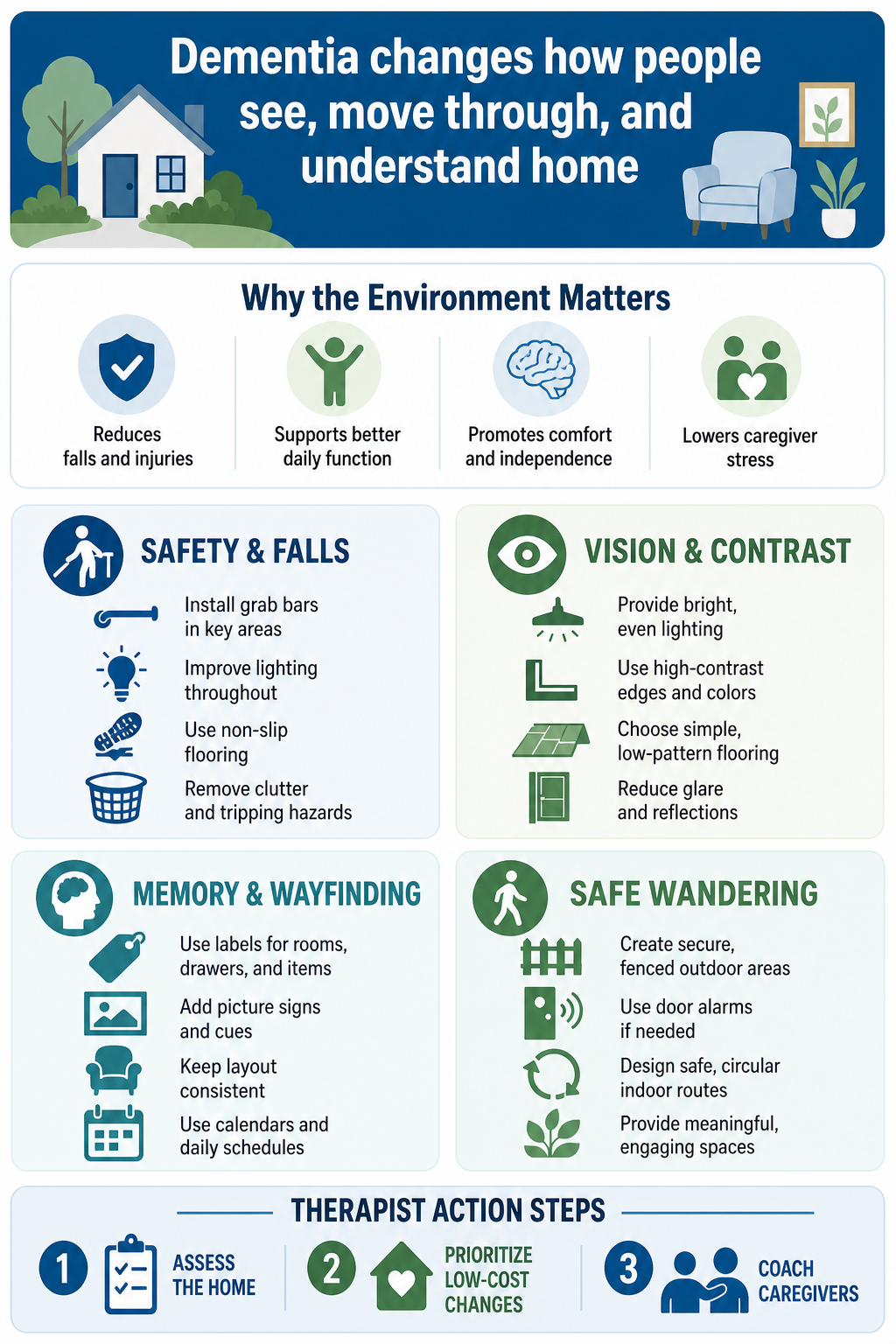
Designing Dementia‑Friendly Homes: What the Research Tells Us
Alzheimer’s and other dementias change how a person moves, sees, and makes sense of their surroundings—but the home often stays exactly the same. Research is showing that this mismatch matters. Thoughtful home modifications can lower fall risk, support independence, and ease caregiver stress for people living with dementia (Struckmeyer & Pickens, 2016; Cha, 2025; Dalvand…
-

When the Power Goes Out: OT’s Critical Role in Emergency Planning for Clients With Medical Equipment
When the power goes out during a hurricane, ice storm, or wildfire evacuation, most people think about flashlights and bottled water. But for occupational therapists who work with clients who depend on medical equipment — ventilators, oxygen concentrators, electric wheelchairs, home dialysis machines, infusion pumps, stairlifts, or powered hospital beds — a power outage is…
-

Retirement Planning Needs More Than Money: Why Home Modification OTs Belong at the Table
Retirement planning is usually framed as a financial exercise, but the evidence suggests it also depends on where and how people will live. A 2025 systematic review found that home modifications support aging in place by improving fall prevention, functional independence, quality of life, caregiving burden, and cost savings, with 13 of 20 included studies…
-
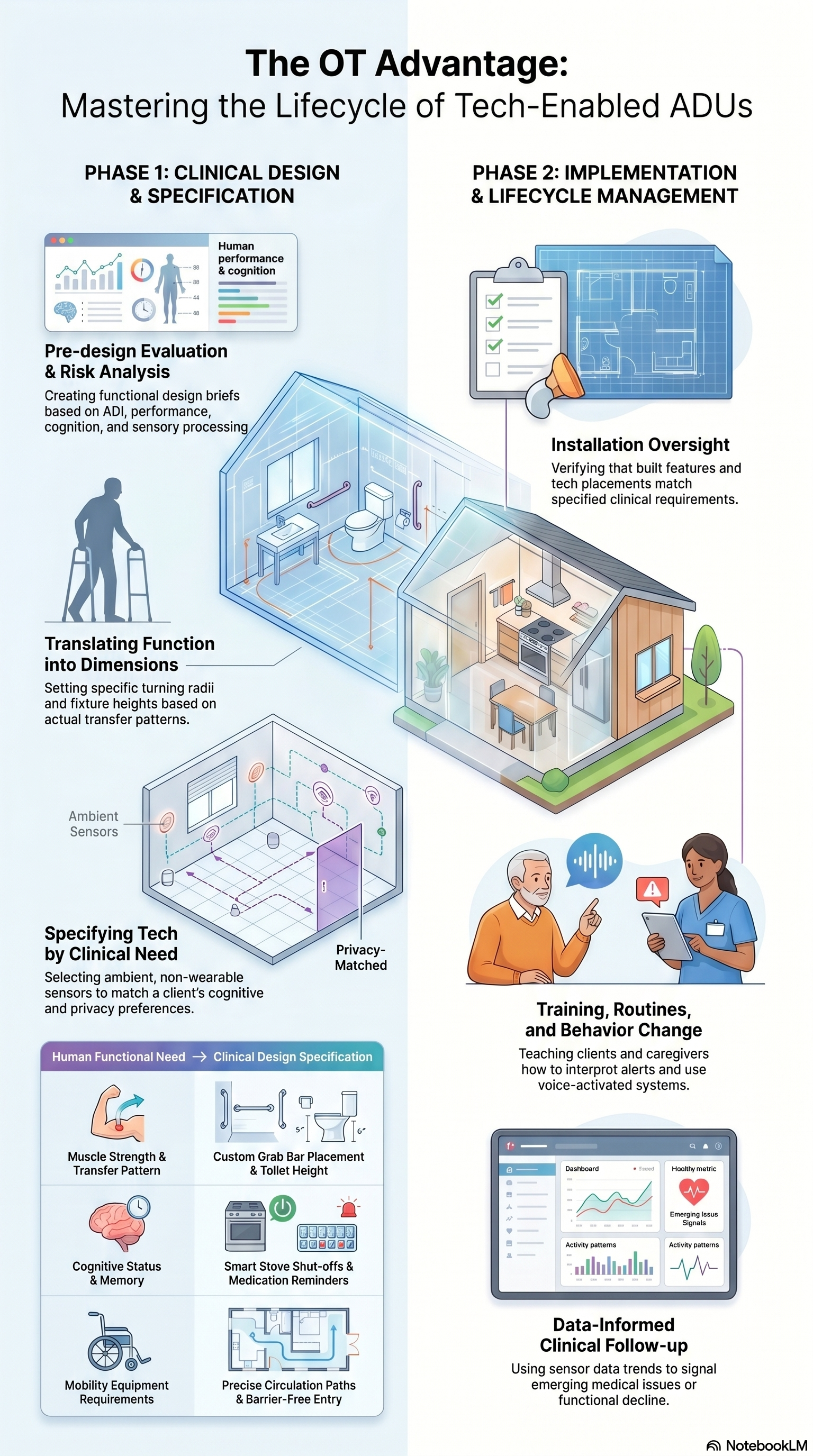
Smart Granny Pods: How Tech‑Enabled ADUs Are Creating New Clinical and Business Opportunities for Home Mod OTs
Why ADUs are landing on your OT caseload Across the U.S., more families are asking, “Should we move mom to assisted living, or set up a small home in our backyard?” For occupational therapists specializing in home modifications, accessory dwelling units (ADUs) and manufactured “granny pods” are quickly becoming a new practice frontier. These units…
-
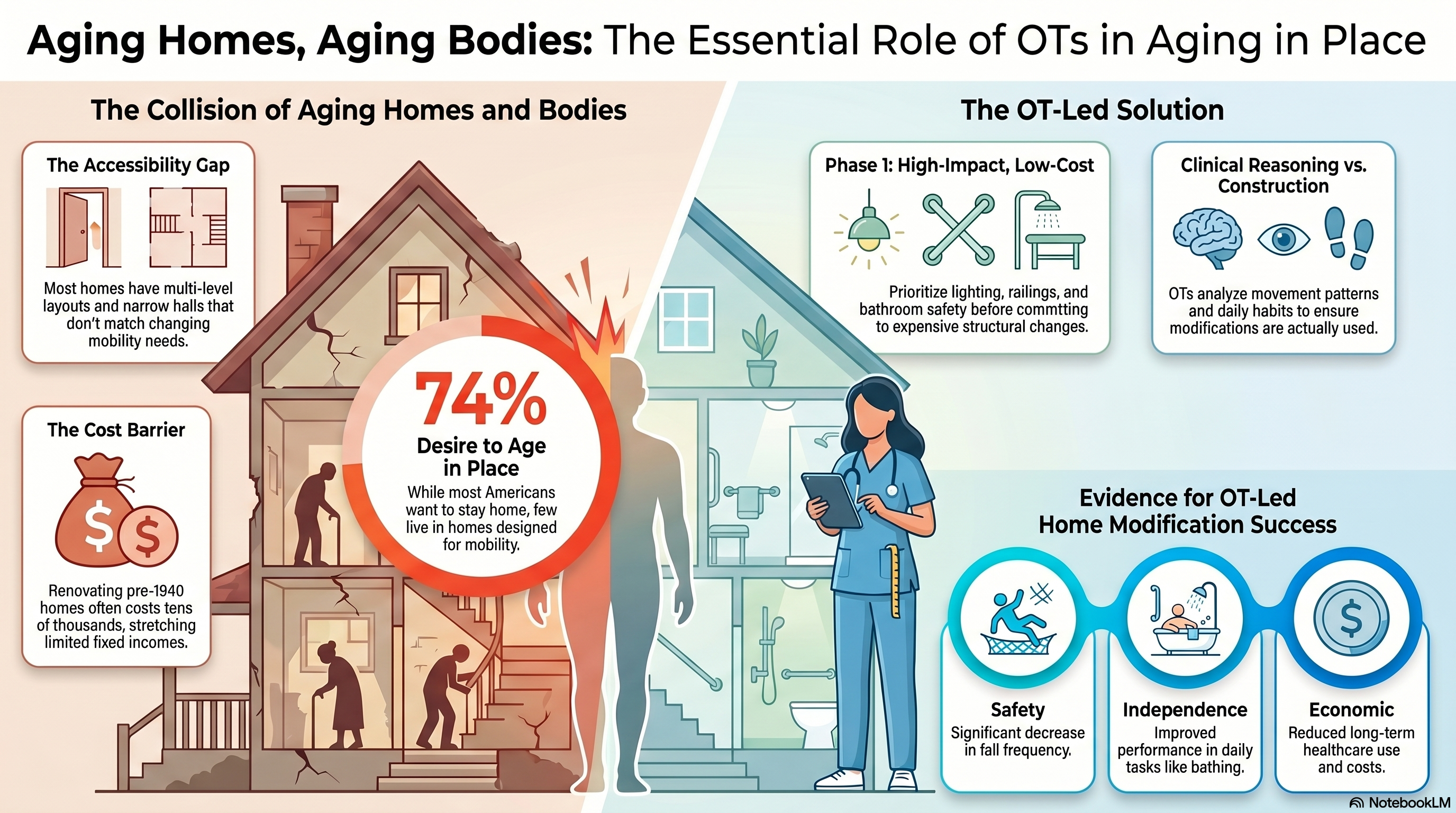
When Aging Homes Collide With Aging Bodies: Why OTs Are Essential to Aging in Place
Across the U.S., two powerful trends are colliding: the housing stock is getting older, and so are the people living in it. Many clients dream of “aging in place” in the homes and neighborhoods they know best—but those same homes often come with steep repair bills, poor accessibility, and hidden safety risks. For occupational therapists…
-

Toolbox Tips: Force Meters — The Essential Tool for Objective Door and Hardware Assessments
When conducting a home safety evaluation, most therapists instinctively check whether a client can open a door. But how many of us actually measure how much force it takes to do so? A force meter — also called a push-pull gauge or force gauge — is a small but mighty addition to your assessment toolkit that transforms a subjective…
-

Beyond Grab Bars: Using OT Outcome Tools to Capture Meaningful Home Engagement
Meaningful engagement “in real life within the home context” is exactly where home‑mod OTs shine—and OT Month is a perfect time to show that we are not just prescribing grab bars, we are changing how people live at home. Outcome measures like I‑HOPE, SAFER‑HOME, and client‑centred home‑modification protocols help us prove that impact in everyday practice. Why…
-
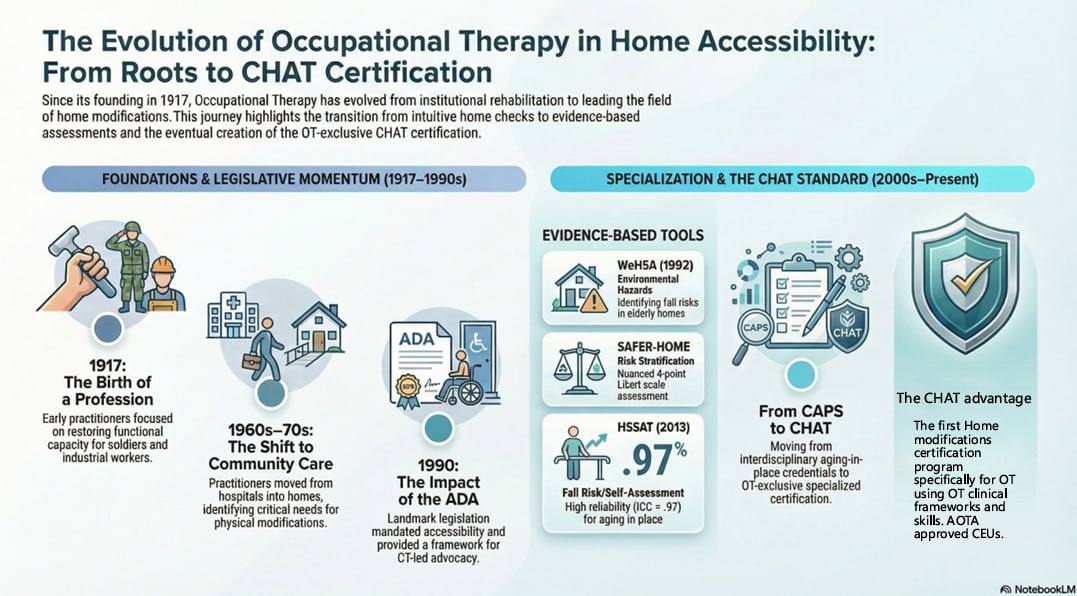
The History of Occupational Therapy’s Role in Home Modifications and Home Safety Assessment
Occupational therapy has always been rooted in one fundamental belief: that people deserve to live, work , and participate in meaningful activities or occupations within environments that support- not hinder- their independence. Nowhere is this more evident than in the practice of home modifications and home safety assessments. As we celebrate OT Month this April…