
Tag: wellness
-

The Next Phase of Home Modifications: Why OT Practice Is Becoming More Data-Driven, Strategic, and Scalable
Occupational therapists who specialize in home modifications are entering a different market than the one that existed even a few years ago. The field is no longer defined primarily by grab bars, ramps, and one-time safety fixes. It is increasingly shaped by measurable outcomes, larger and more integrated aging-in-place remodels, mainstream interest in accessible design,…
-
From Recommendations to Reality: Disability Pride, Home Modifications, and OT Practice
Disability Pride Month in July marked 36 years since the Americans with Disabilities Act (ADA) became law, and the 2026 theme, “The World Works Better with US,” is a powerful reminder of that legacy. It’s also a natural moment for those of us in home modification practice to pause and ask a hard question: what…
-
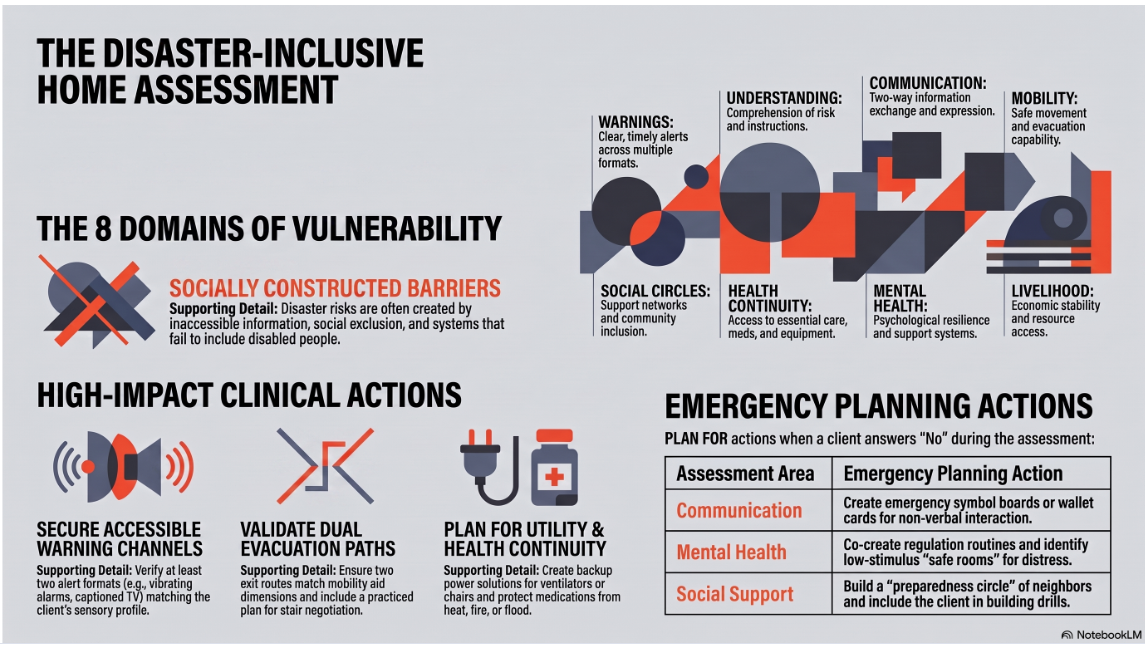
Why Every Home Accessibility Assessment Must Include Disaster Preparedness
As home accessibility therapists, we spend a lot of time thinking about the everyday hazards that trip people up: the too‑narrow doorway, the slippery step, the dim hallway that hides obstacles. But increasingly, our work is also about the big events—the earthquake at three in the morning, the heat dome that will not lift, the…
-
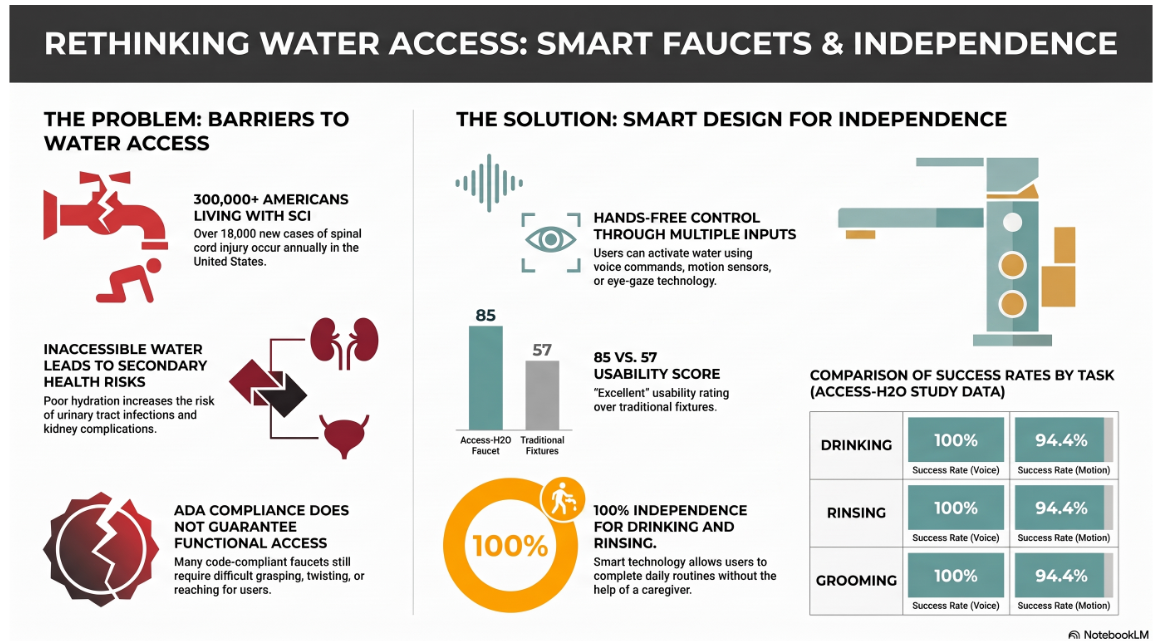
Smart Faucets, Water Access, and Independence at Home
When people think about home accessibility, they usually picture ramps, showers, grab bars, and stair lifts. Those features matter, but another daily activity deserves much more attention: accessing water independently at the sink. A recent peer-reviewed study on the Access-H2O smart faucet offers a strong starting point for that conversation by showing how hands-free faucet…
-

Why clients say no!
What Your Clients Are Really Telling You About Home Safety Assessments Before You Read: Have We Been Here Before? We have previously addressed the issue of clients following through on recommendations made by occupational therapists as part of a home assessment. (https://thehomeaccessibilitytherapist.blog/?s=adherence) This post takes a different, and arguably more fundamental, angle: Why do clients…
-

Why Caregiver Burden Belongs in Your Home Modification Assessment
Learn why caregiver burden belongs in every home modification assessment, with outcomes data and 3 free validated screening tools for OTs.
-

When the Clinic Can’t Come to Them: The Case for Low Vision Home Therapy Services
You have a client on your caseload with significant vision loss. They are 70 years old, retired, and mostly homebound. They missed their last two outpatient appointments — not because they didn’t want to come, but because getting there is genuinely hard. Their world has gotten smaller, and their risks have gotten bigger. This scenario…
-
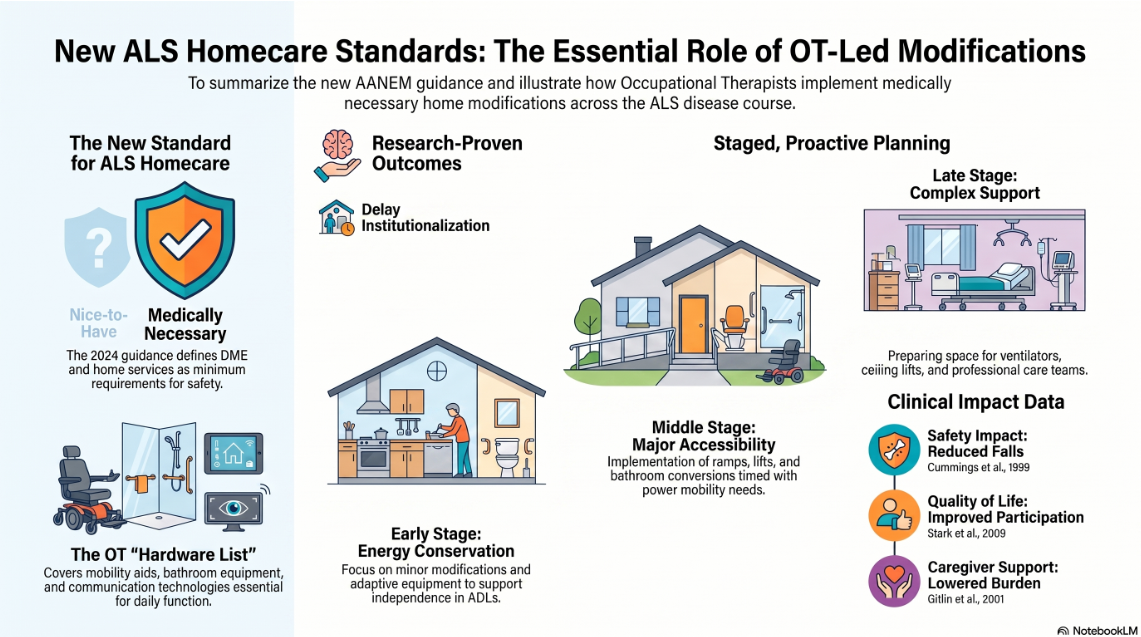
New ALS Homecare Standards: Why OT-Led Home Modifications Are Now Essential
Most people living with amyotrophic lateral sclerosis (ALS) want to remain at home for as long as possible, even as weakness, fatigue, and respiratory changes make daily activities increasingly difficult. The new ALS Home Health and Durable Medical Equipment Medical Standard Guidance from the American Association of Neuromuscular and Electrodiagnostic Medicine (AANEM) is a major…
-
From Assessment to Action: The OT’s Clinical Map for Hoarding Disorder
You are standing in the doorway of a client’s home. Every surface is covered. The kitchen table has not been visible in years. There is a narrow path through the living room. The smell is difficult. Your client is watching you from across the room, arms crossed, eyes guarded. You are an occupational therapist. And…
-
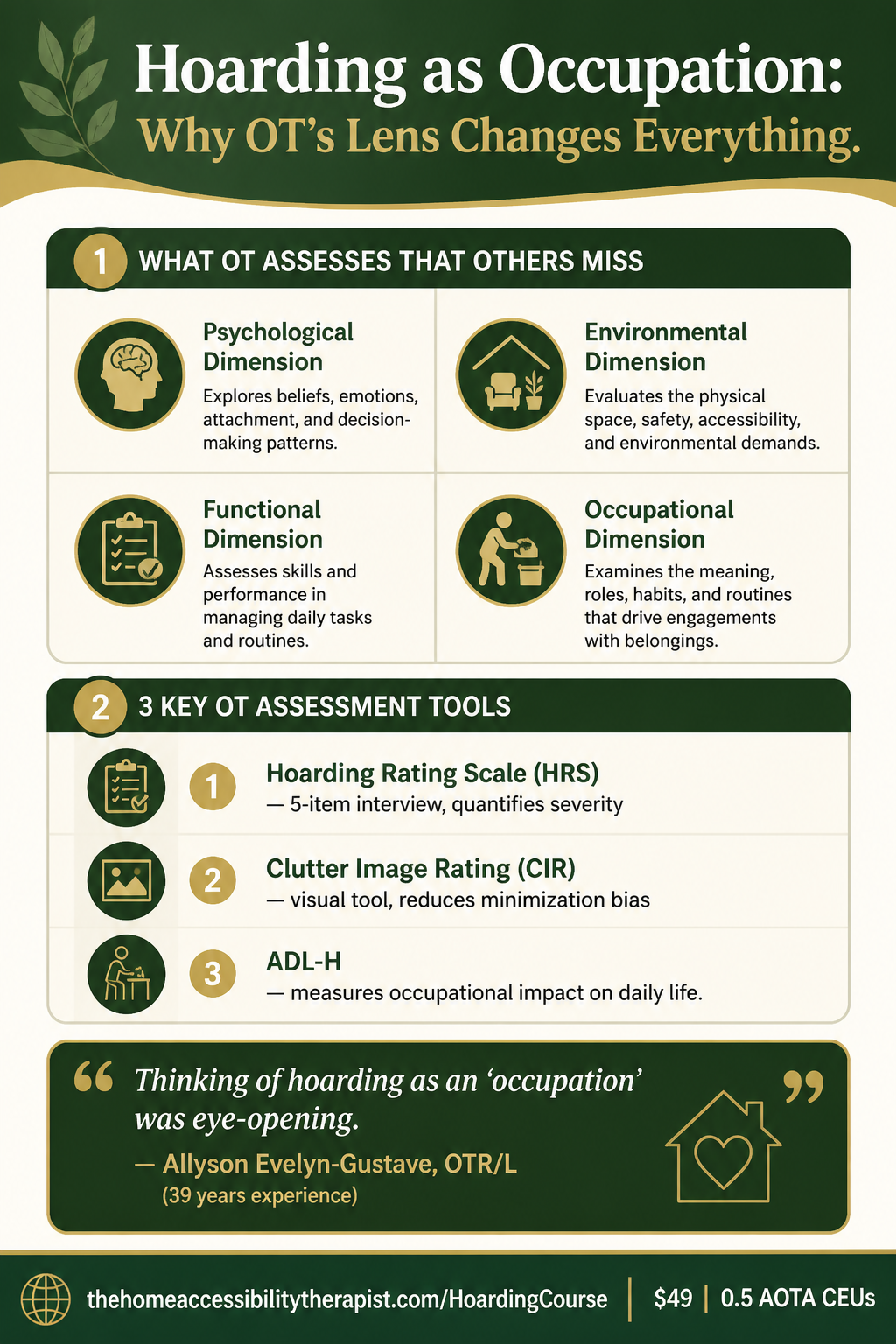
Reframing Hoarding as Occupation: What Occupational Therapists Bring That Nobody Else Can
Ask most clinicians what they think when they hear “hoarding disorder,” and the responses tend to cluster around the same themes: clutter, safety risk, resistance, and difficulty. The mental image is a home filled floor to ceiling with accumulated objects — a problem to be solved, removed, or cleared. But what happens when you bring…