
Tag: occupational-therapy
-

From Recommendation to Real-Life Use: Why and How to Use a Home Modification Handoff Checklist
A home modification recommendation can be clear in a therapist’s mind and still leave important questions for the people carrying it out. What is the modification intended to help the client do? Which features are essential? What still needs to be measured or verified? Who should be contacted if the proposed product is unavailable or…
-
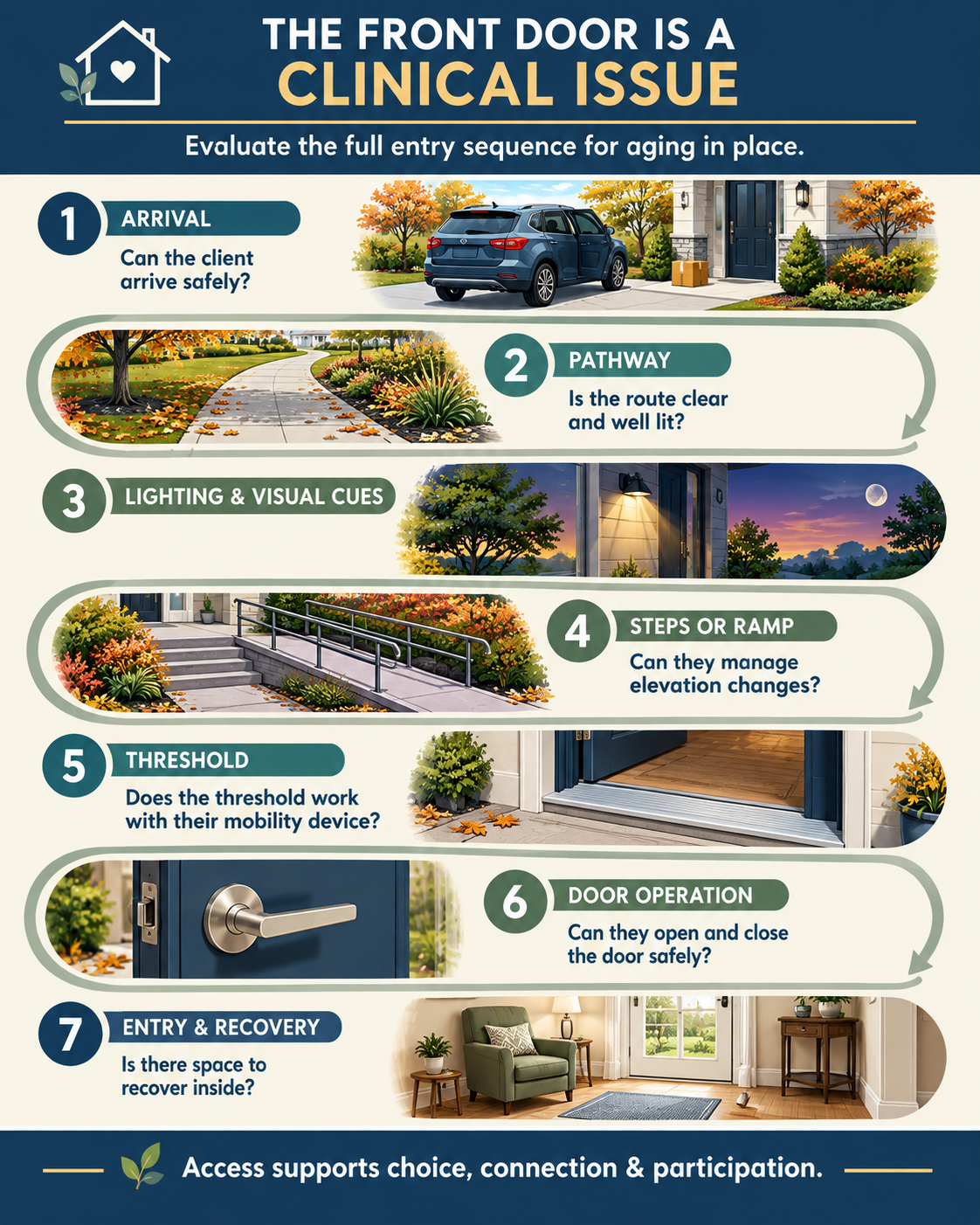
Can Everyone Get to the Front Door?
Evaluating the Full Entry Sequence During the Holiday Season As the holiday season begins, many of us notice the shift first at the front door. Days become shorter. Evenings become darker. Leaves, rain, packages, decorations, visiting family members, and deliveries all change how a person moves between the street and the home. For many households,…
-

Start With the Routine, Not the Room: A Better Way to Prioritize Home Modification Recommendations
A bathroom can look unsafe on paper. There may be a tub wall to step over, limited space for turning, poor lighting near the vanity, towels stored out of reach, and no secure grab bars. During a home modification evaluation, each of these details matters. But the most important question is not: “What should we…
-

Beyond the Recommendation: Why Home Modification OTs Need to Watch Accessibility Financing
A well-designed home modification recommendation can improve safety, reduce effort, support caregiving, and make it easier for someone to continue living in the home and community they value. But a recommendation is not the same thing as a completed modification. Home modification occupational therapists know this gap well. We complete the evaluation. We identify the…
-
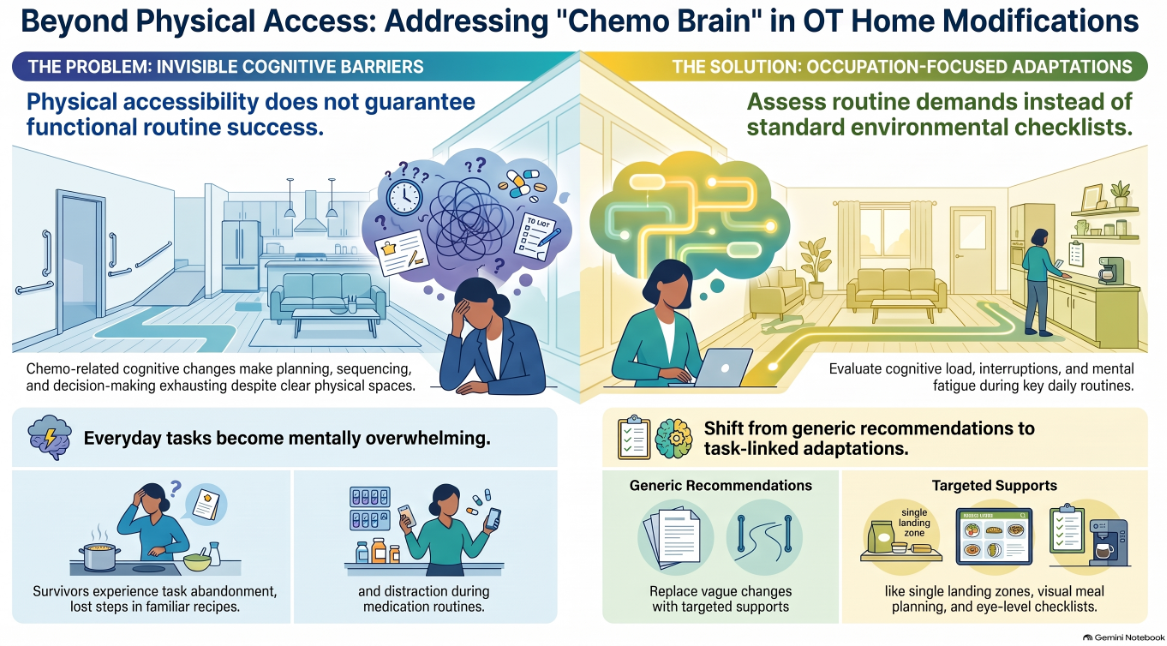
When the Home Is Accessible but the Routine Is Not
Occupational Therapy, Cognitive Changes, and Home Modification After Breast Cancer Treatment A home can have clear pathways, well-placed grab bars, accessible storage, and appropriate lighting—and still feel difficult to manage after breast cancer treatment. For some survivors, the barrier is not primarily physical. It is the moment they stand in the kitchen and cannot remember…
-
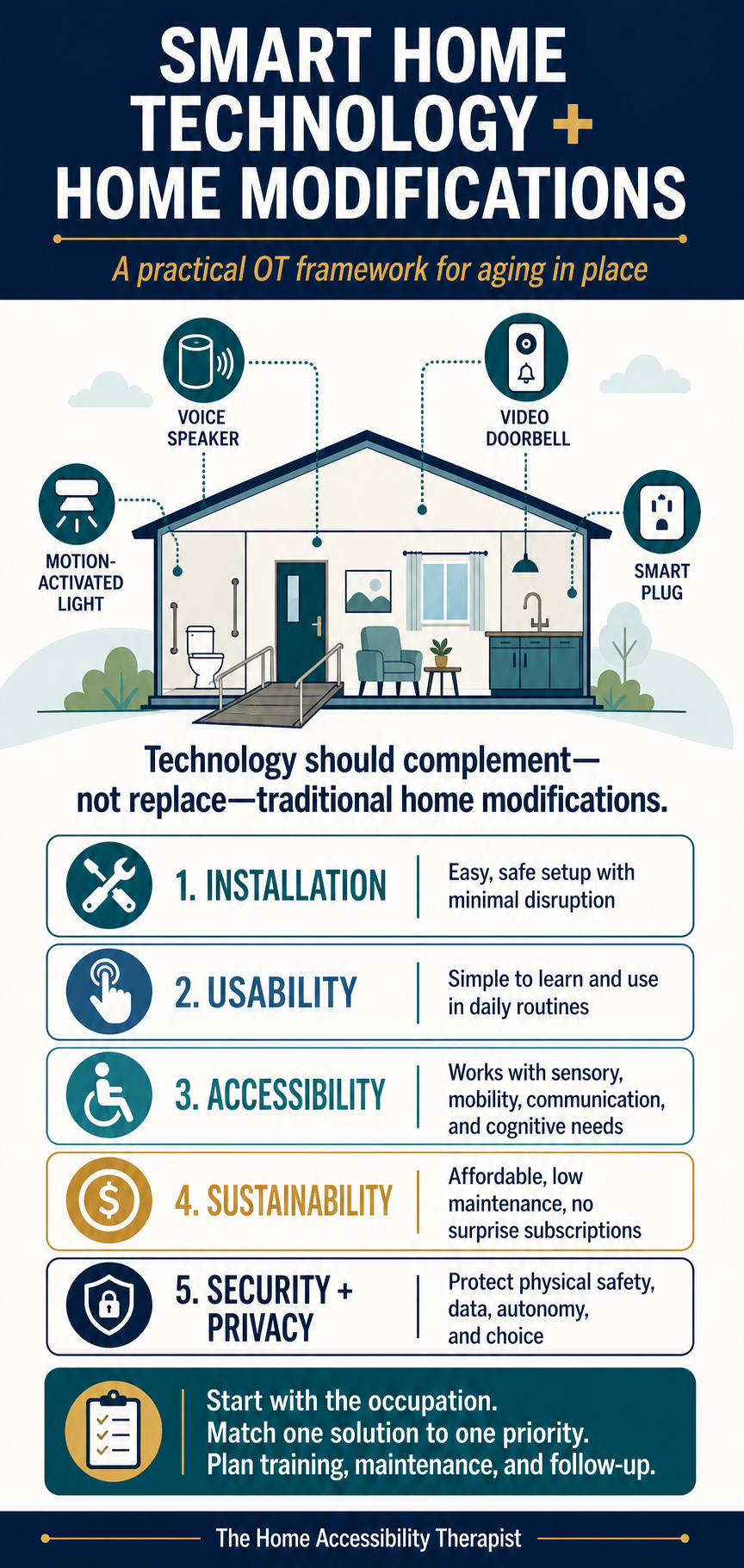
Smart Home Technology in Home Modifications: What New OAHMP Research Means for Occupational Therapists
Smart technology can extend safety and independence at home—but only when it fits the person, the home, the support system, and the plan for keeping it working. Home modification practice has always been about more than products. A grab bar, ramp, lever handle, improved lighting plan, or curbless shower only becomes meaningful when it supports…
-
Toolbox Tip: Six Questions to Ask When a Home-Safety Recommendation Isn’t Sticking
A shower chair is sitting unopened in its box. A grab bar has been discussed at three visits but never installed. A motion-activated night light is in the home, but it is not turned on. Or a client agrees that a mobility strategy would be safer—then returns to the same rushed routine the next morning.…
-
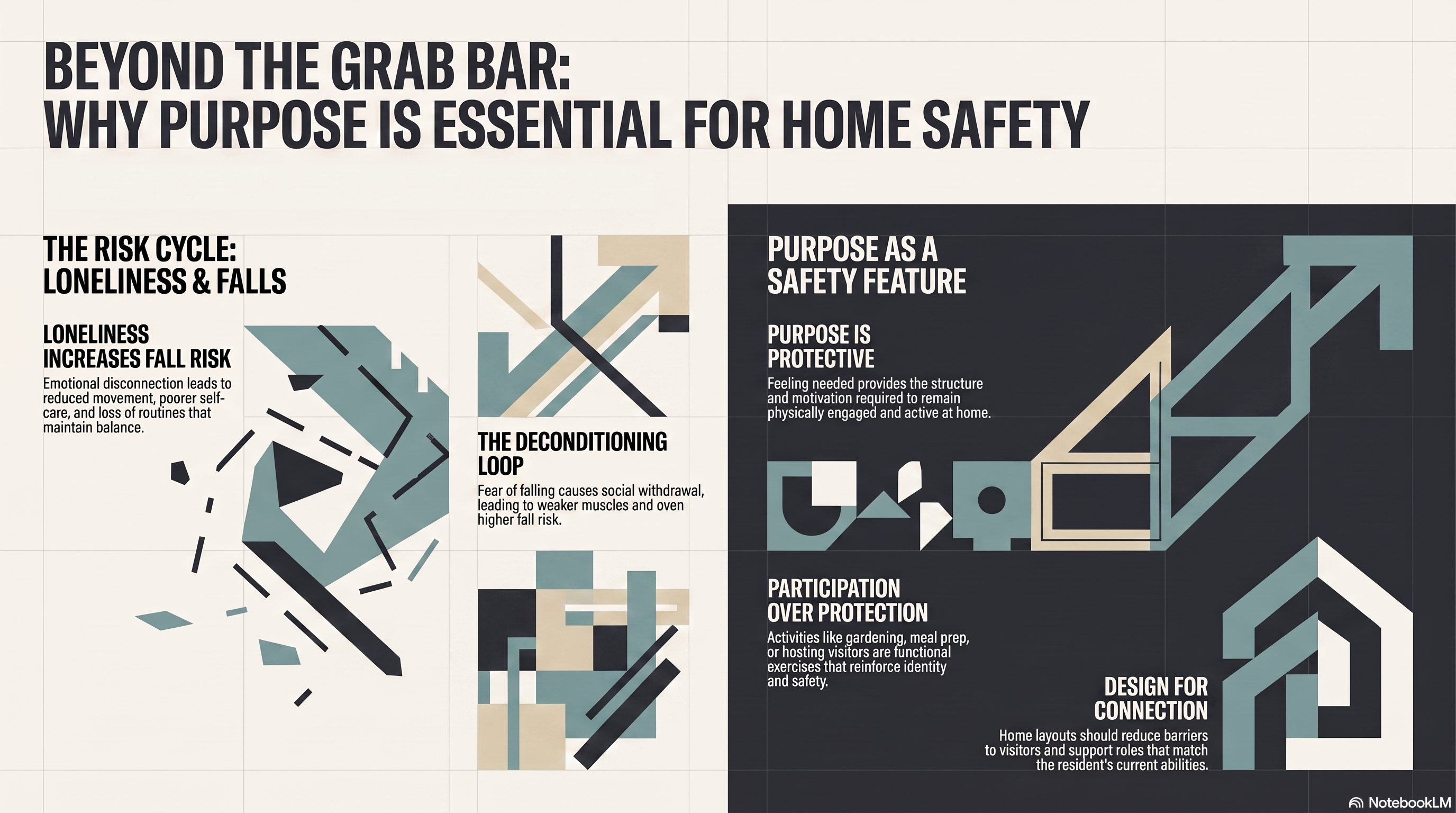
Loneliness, Falls, and Aging Well: Why Purpose Matters at Home
I recently read a LinkedIn post that stayed with me. The writer shared that she used to think being a good granddaughter meant showing up consistently, checking in, and being present. But over time, she realized something deeper: her grandmother had company, but not necessarily purpose. No one needed her help. No one asked her…
-
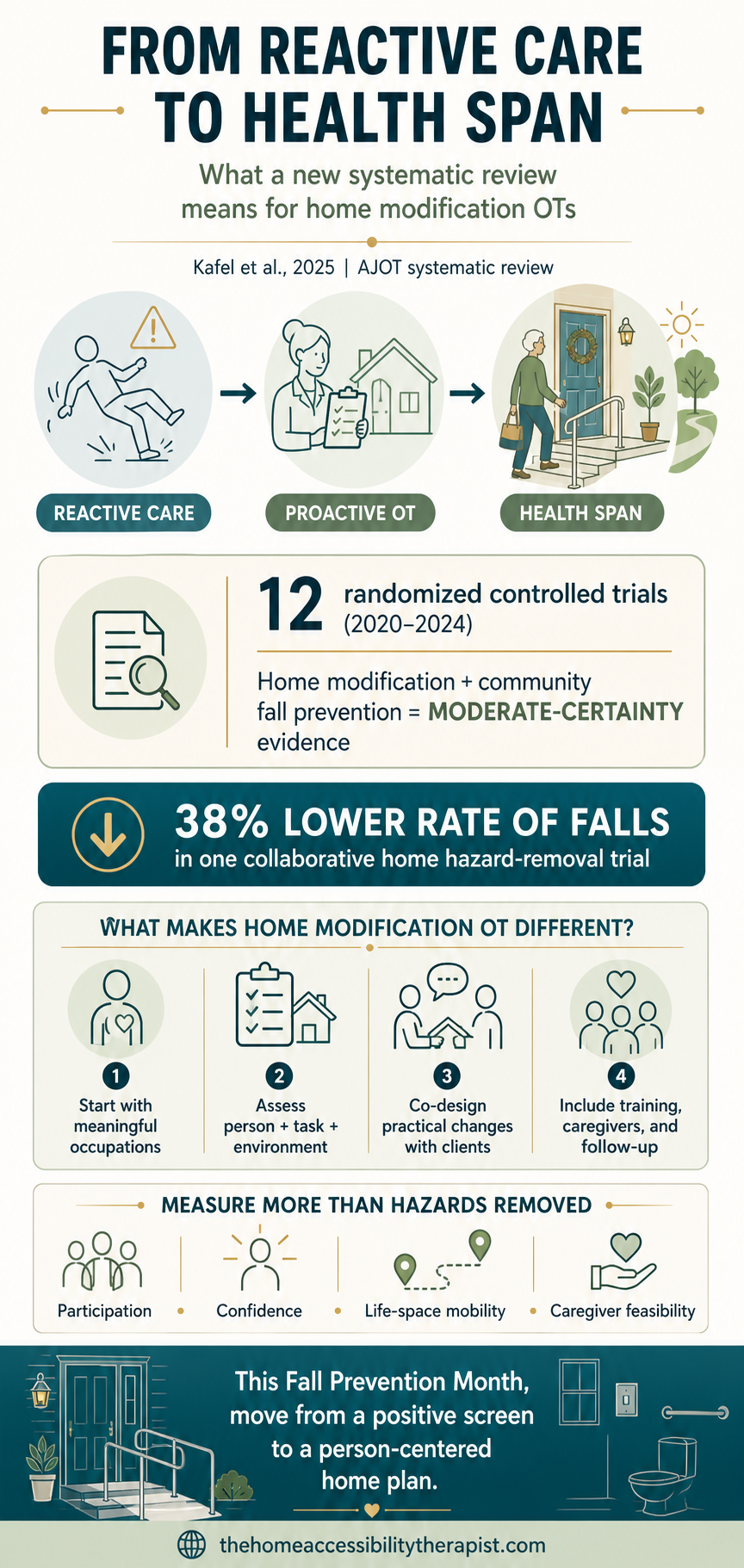
Evidence Corner: From Reactive Care to Health Span—What a New Systematic Review Means for Home Modification OTs
Fall prevention is often framed as a response to risk: a fall has occurred, mobility has changed, or a caregiver is struggling to keep someone safe at home. A new systematic review invites us to think more broadly. It positions occupational therapy as a proactive health-promotion profession—and it reinforces why home modification practice belongs squarely…
-

Fall Prevention Month: A Practice-Building Opportunity for Home Modification OTs
September is more than a seasonal reminder to talk about falls. For occupational therapists specializing in home modifications, aging in place, and home safety, it is an opportunity to educate the public, strengthen referral relationships, and clarify the clinical value we bring when fall risk intersects with daily life at home. Every September, fall prevention…