
Tag: homeaccessibilitytherapist
-
From Assessment to Action: The OT’s Clinical Map for Hoarding Disorder
You are standing in the doorway of a client’s home. Every surface is covered. The kitchen table has not been visible in years. There is a narrow path through the living room. The smell is difficult. Your client is watching you from across the room, arms crossed, eyes guarded. You are an occupational therapist. And…
-
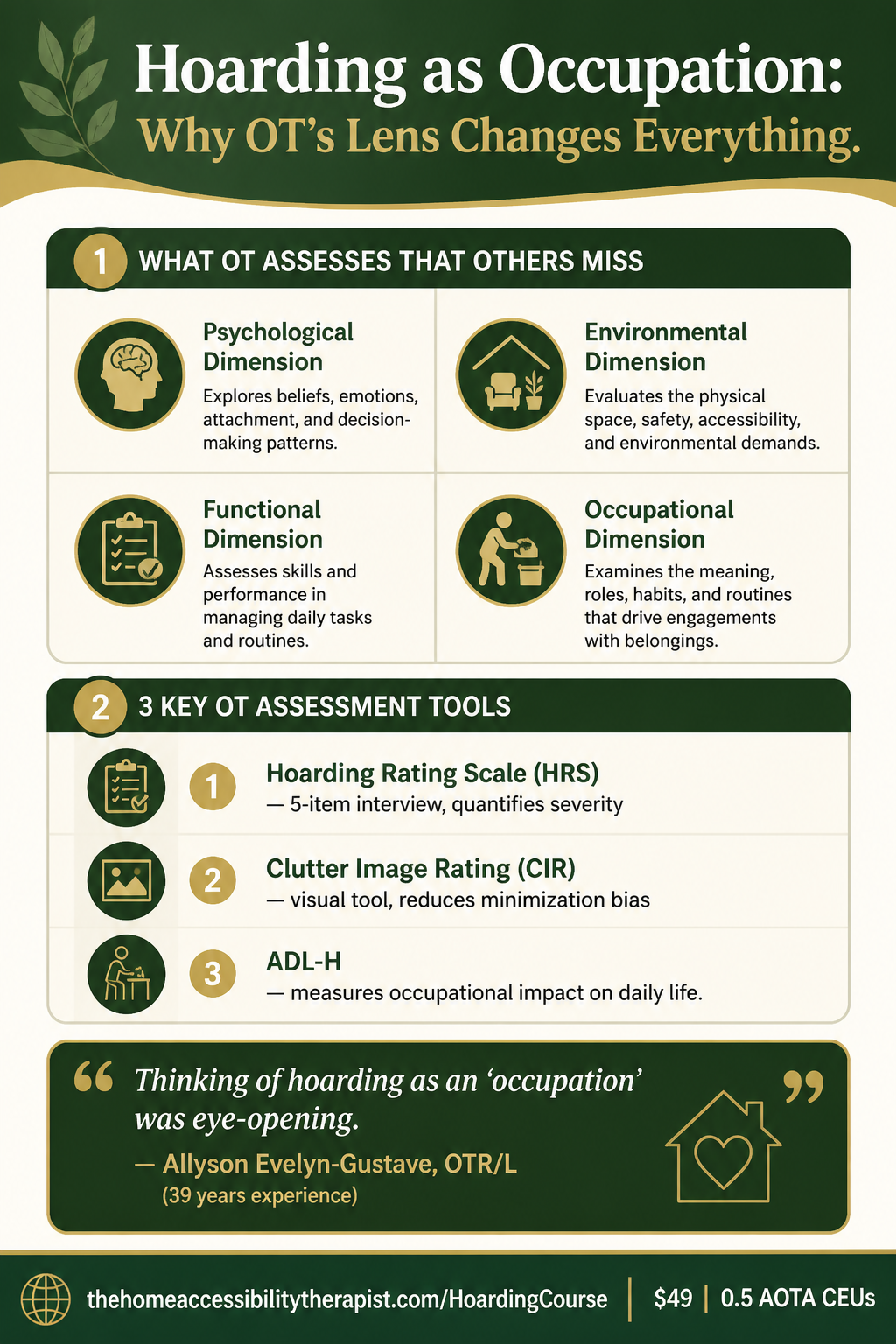
Reframing Hoarding as Occupation: What Occupational Therapists Bring That Nobody Else Can
Ask most clinicians what they think when they hear “hoarding disorder,” and the responses tend to cluster around the same themes: clutter, safety risk, resistance, and difficulty. The mental image is a home filled floor to ceiling with accumulated objects — a problem to be solved, removed, or cleared. But what happens when you bring…
-
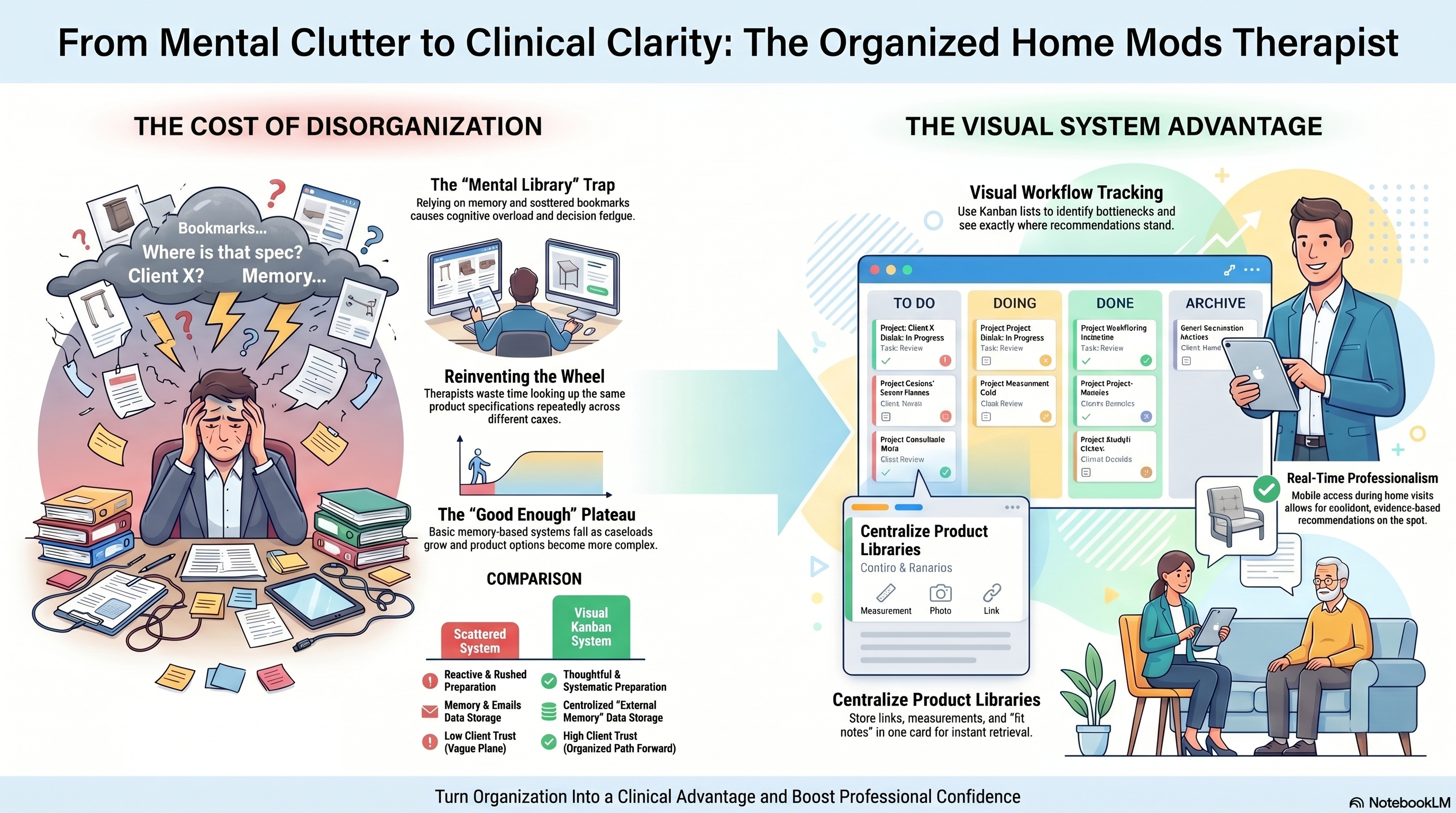
Toolbox Tips: The Organized Home Mods Therapist: Why a Better System Leads to Better Recommendations
If you work in home modifications, you already know the hard part is not just identifying problems. The hard part is moving from “I know there’s a solution for this” to “I can quickly recommend the right solution, explain why it fits, and follow through with confidence.” A visual system like a Trello board or…
-

Disaster Planning When Your Client Has Dementia: What Every OT Needs to Know
Emergency preparedness is complicated for anyone. For a person living with dementia, it can be overwhelming, terrifying, and — without thoughtful, individualized planning — genuinely life-threatening. Research published in The Gerontologist found that disaster preparedness is experienced as one of the most challenging responsibilities of dementia caregivers, with barriers including cognitive and behavioral unpredictability, limited caregiver capacity…
-

From Doorstep to Desktop: How Telehealth Is Reshaping Home Safety and Accessibility in Occupational Therapy
Telehealth is no longer a backup plan in occupational therapy. It has become a meaningful service delivery model for evaluation, caregiver coaching, follow-up, and selected home safety and accessibility work, especially for older adults who want to age in place (Ding et al., 2023; Gately et al., 2021). As healthcare continues to shift toward community-based…
-
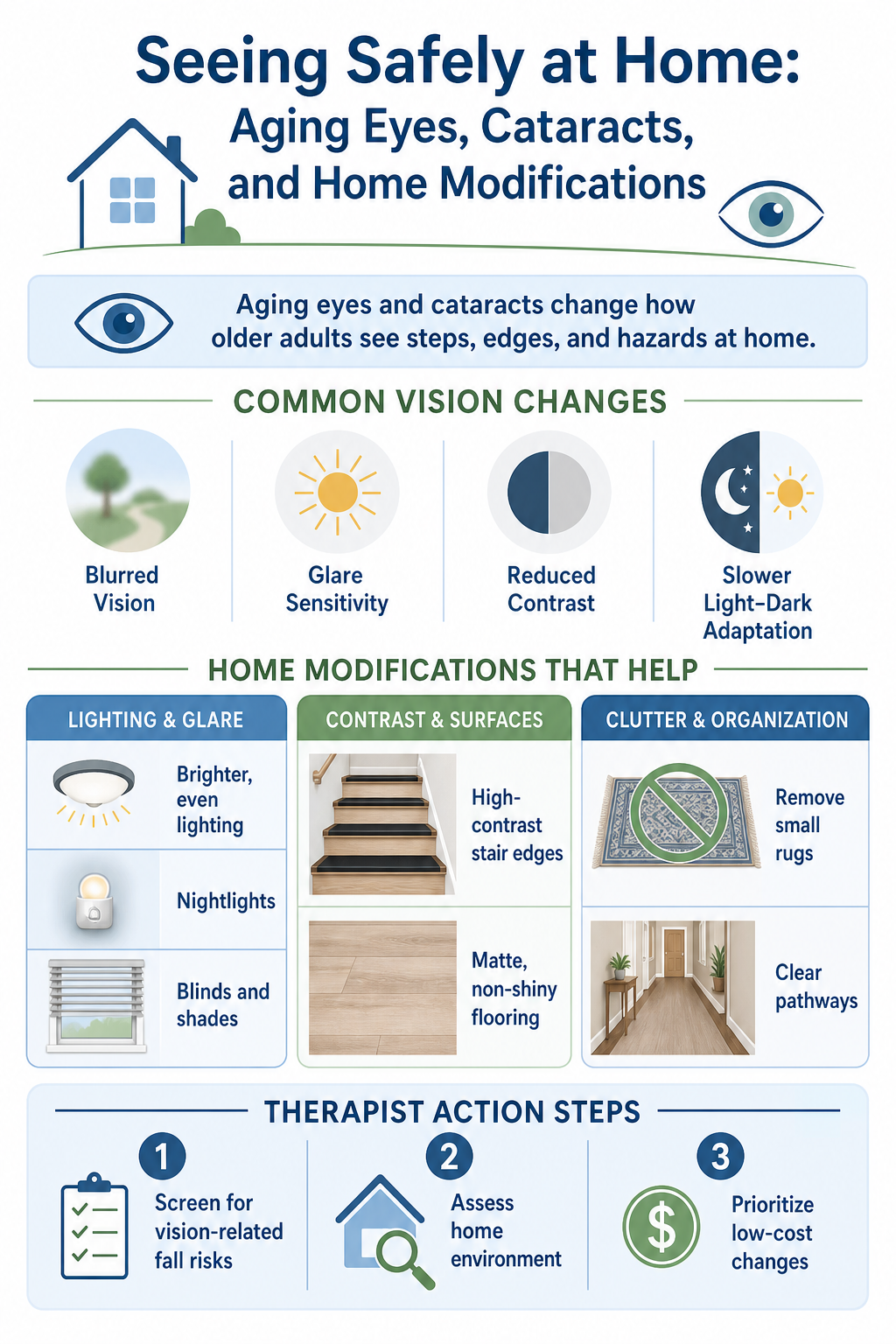
Seeing Safely at Home: Aging Eyes, Cataracts, and Evidence-Informed Home Modifications
Vision changes are so common with aging that many people treat them as an inconvenience rather than a meaningful home safety issue. The problem is that blurred vision, glare sensitivity, poorer contrast sensitivity, and slower adjustment to changes in lighting can quietly reshape how a person moves through the home, completes daily tasks, and responds…
-
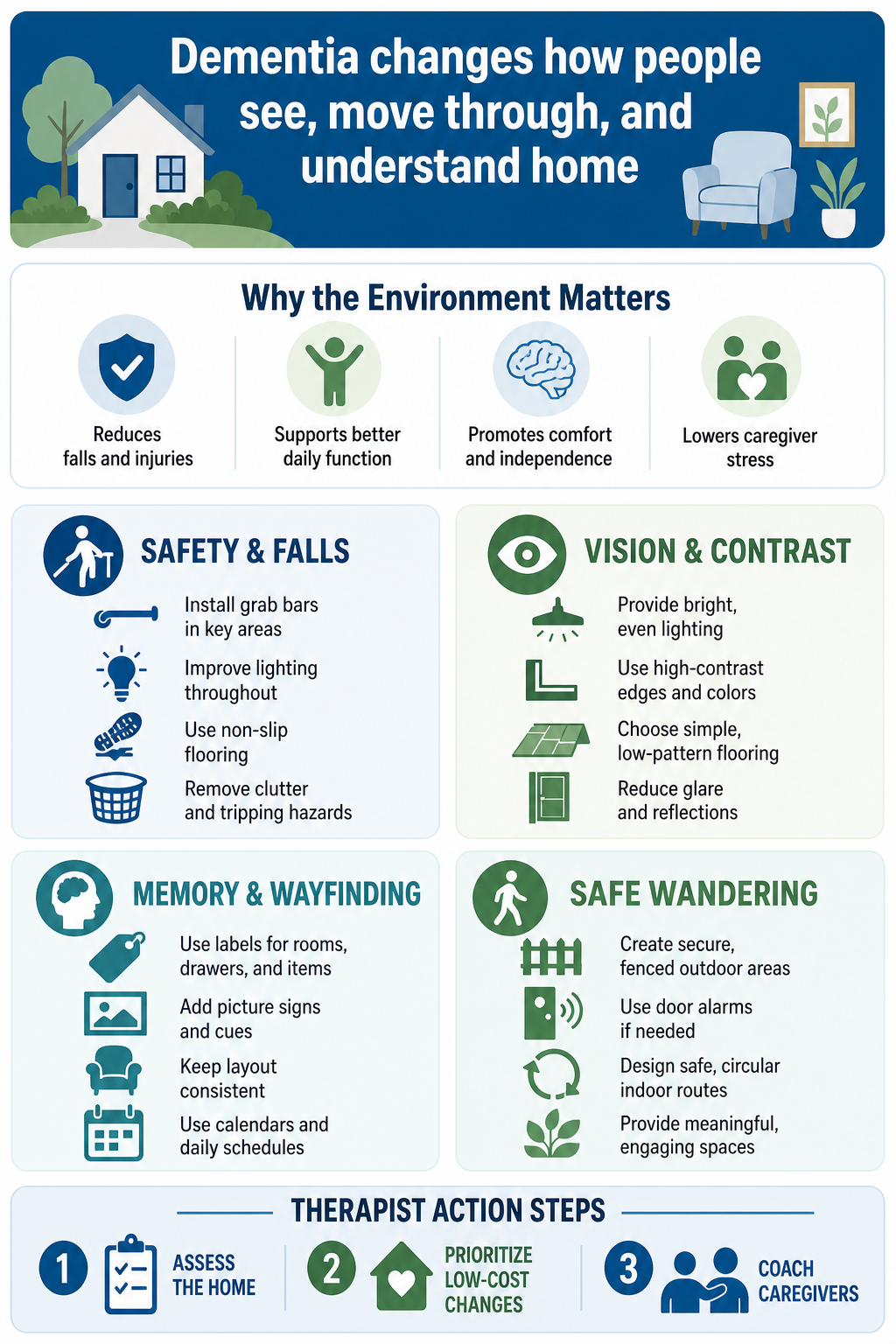
Designing Dementia‑Friendly Homes: What the Research Tells Us
Alzheimer’s and other dementias change how a person moves, sees, and makes sense of their surroundings—but the home often stays exactly the same. Research is showing that this mismatch matters. Thoughtful home modifications can lower fall risk, support independence, and ease caregiver stress for people living with dementia (Struckmeyer & Pickens, 2016; Cha, 2025; Dalvand…
-

When the Power Goes Out: OT’s Critical Role in Emergency Planning for Clients With Medical Equipment
When the power goes out during a hurricane, ice storm, or wildfire evacuation, most people think about flashlights and bottled water. But for occupational therapists who work with clients who depend on medical equipment — ventilators, oxygen concentrators, electric wheelchairs, home dialysis machines, infusion pumps, stairlifts, or powered hospital beds — a power outage is…
-

Why a Checklist Assessment Is Not Enough: The Real Role of OT in Home Modifications
If you work in home modifications, you’ve likely had this experience: you complete a home safety checklist, tick every box, hand the client a list of recommendations—and still walk out the door with a nagging sense that something is off. A week later, you hear that your client fell in the bathroom anyway, or stopped…
-
From One-Off CEUs to a Real Growth Plan: Professional Development for OTs in Home Safety and Home Modifications
Occupational therapists who specialize in home safety and home modifications often build their expertise in pieces: a great continuing education course here, a podcast episode there, a helpful article saved for later, and maybe a webinar or certification added somewhere along the way. While those resources are valuable, scattered learning does not always lead to confident…