
The measurement matters. So does understanding what the person is trying to do.
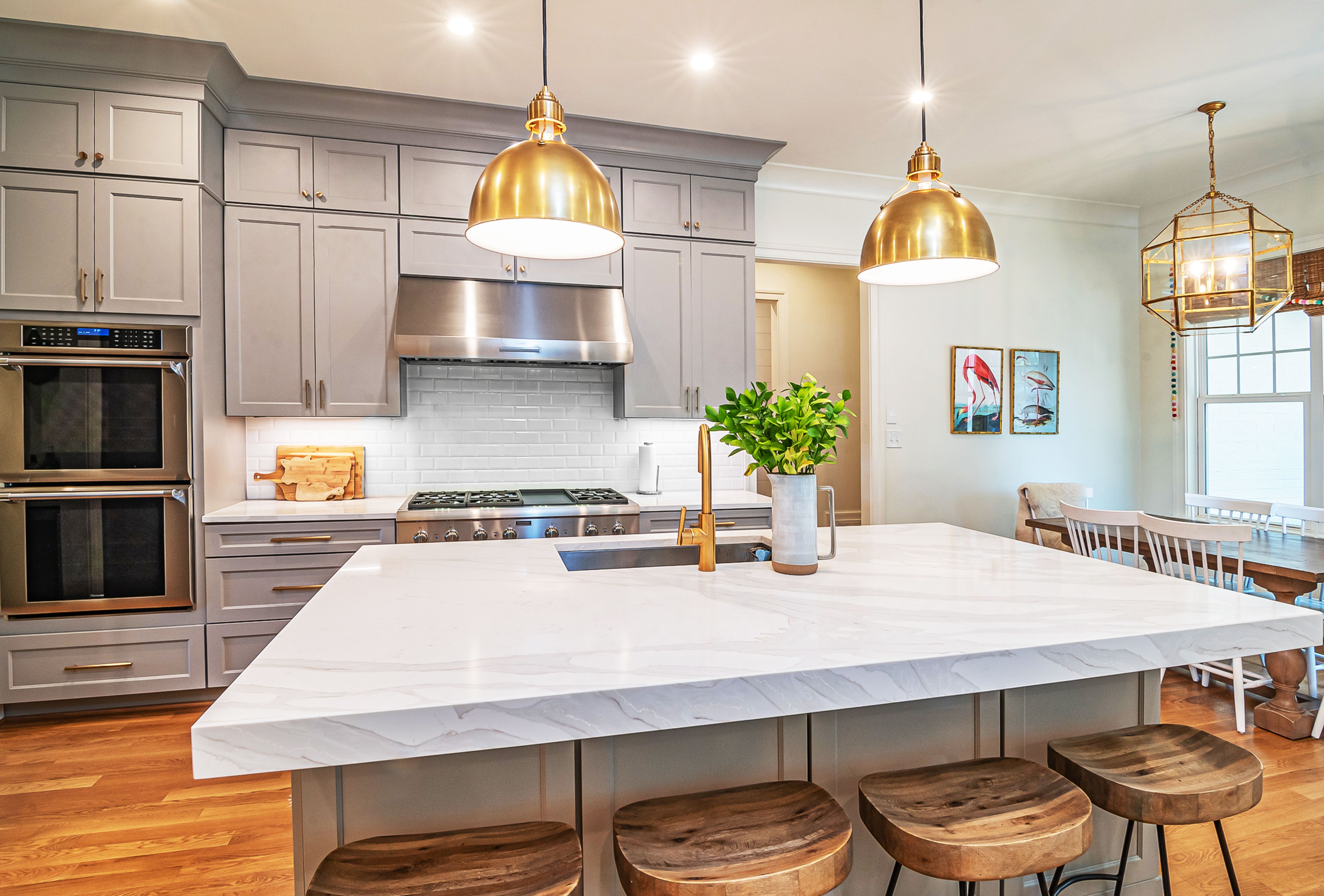
You walk into a client’s kitchen in the middle of the afternoon. The overhead light is on, daylight is coming through the window, and the room appears reasonably bright.
Then your client says, “I don’t make dinner much anymore. It’s too hard to see what I’m doing.”
That statement deserves more than a recommendation for a brighter bulb.
What is difficult to see? The markings on the stove? Food on the cutting board? Items inside a cabinet? Does the problem occur throughout the day, or only when preparing an evening meal? And what happens when the client stands at the counter and begins the activity?
These are occupational therapy questions. They connect the environment to the person’s ability to participate in everyday life.
In our earlier article, “Shedding Light on Home Safety: Why Every Home Modification Therapist Needs a Lux Meter,” we introduced a tool for bringing objective measurement into lighting observations. Here, we are taking the next step: looking at how measurement fits within a broader, activity-focused assessment.
A lux meter belongs in the toolkit. It does not replace the clinical reasoning that gives its readings meaning.

Start With the Occupation, Not the Light Fixture
“Improve kitchen lighting” describes an environmental change.
“Prepare a simple evening meal without needing someone else to read the appliance controls” describes what the person wants to accomplish.
That distinction helps shape the assessment.
Before focusing on a fixture, bulb, or measurement, identify the activity that has become difficult. Ask the client to describe—or, when appropriate and safe, demonstrate—what happens.
Useful opening questions include:
- What are you having difficulty seeing?
- When does the difficulty occur?
- Where do you usually sit or stand?
- What do you do differently because of the problem?
- Have you stopped doing anything you would like to do again?
- What have you already tried?
This approach is consistent with low vision assessment guidance that begins with a discussion of the person’s difficulties, daily support, and needs. Additional task lighting may help with activities such as reading or preparing food, but the assessment first needs to establish what the person is trying to do (Royal National Institute of Blind People [RNIB], n.d.-a).
For the home modifications therapist, that means resisting the urge to jump directly from “difficulty seeing” to a product recommendation.
First, understand the task.
A Bright Room Is Not the Same as a Usable Work Area
The impression you get from the doorway may not reflect the conditions at the point where the activity takes place.
A ceiling fixture may illuminate the room while the client’s body casts a shadow over the work surface. A reading lamp may be present but positioned where its light does not reach the page effectively. A window may provide useful daylight at one time and distracting reflections at another.
Lighting guidance for people with sight loss emphasizes both general illumination and additional lighting for specific activities. It also recognizes the importance of managing glare and avoiding difficult transitions between substantially different light levels (RNIB, n.d.-a; RNIB, 2019).
During a home visit, consider looking at the environment from the client’s actual position:
- Sit in the chair where the person reads.
- Observe the counter from the position used for food preparation.
- Look at appliance controls from the client’s usual viewing angle.
- Consider the view from seated as well as standing positions.
- Ask what changes when daylight is no longer available.
The purpose is not to judge whether the room looks attractive or bright enough to you. It is to understand whether the lighting arrangement supports the person’s activity.
More Light Is Not Always the Whole Answer
It is tempting to treat every lighting concern as a problem of insufficient brightness.
Sometimes additional light is helpful. Sometimes the source, direction, reflection, or distribution of that light is part of the difficulty.
RNIB explains that glare can cause discomfort or make it harder to see clearly. People with sight loss may benefit from enhanced lighting while also experiencing sensitivity to particular lighting conditions. That is why “brighter” and “better” should not be treated as interchangeable (RNIB, n.d.-a; RNIB, 2019).
A practical assessment should make room for both observation and the client’s report.
Glare and reflections
Ask whether the person experiences dazzle, discomfort, or difficulty seeing when a light is on or sunlight enters the room.
Consider whether a visible bulb, glossy surface, or reflected light is contributing to the problem. RNIB identifies shiny finishes as potential sources of glare and describes shades, blinds, and adjustments to lighting direction as possible ways to manage it.media (RNIB, 2019; RNIB, n.d.-b).
A useful question is:
“When you say it is too bright, is it uncomfortable, harder to see, or both?”
The answer will not establish a diagnosis, but it can help clarify what needs further investigation.
Shadows and light direction
Observe where the light falls when the person actually performs the activity.
Does the client block the light when leaning toward the counter? Does a hand or piece of equipment cast a shadow over the item being used? Would adjusting a task light change what is visible?
Adjustable task lighting can help direct light toward an activity, but positioning matters. RNIB guidance describes directing light onto the task while limiting glare into the eyes (RNIB, 2019).
The assessment question becomes more useful when it moves from “Does the client have a lamp?” to “Does the lamp provide useful light where the client needs it?”
Contrast
Lighting should not be considered in isolation from the objects and surfaces the person needs to distinguish.
A pale item against a pale background may present a different challenge from the same item against a contrasting surface. RNIB’s practical adaptation guidance includes contrasting kitchen surfaces, mats, switches, and other features to make them easier to locate or distinguish (RNIB, n.d.-b).
For an OT, that creates an important opportunity to explore alternatives. The most useful trial may involve lighting, contrast, positioning—or a combination—rather than simply increasing the room’s brightness.
Put the Lux Reading in Context
A lux meter measures illuminance: the amount of light reaching a surface. That makes it useful for investigating conditions at a task location, but a reading is not a direct measure of the person’s ability to complete the activity (RNIB, 2026b).
A number alone does not tell you whether the client:
- Can read the label they need.
- Experiences uncomfortable glare.
- Can distinguish an item from its background.
- Can position the light effectively.
- Can operate the lighting controls.
For a clinically useful record, pair the measurement with the conditions under which you obtained it.
A proposed documentation approach is to note:
- The activity and surface being assessed.
- The measurement location and meter orientation.
- Which lights were on.
- Whether daylight was present.
- The client’s usual position.
- What the client reported and what you observed.
This provides context for later comparison. A reading taken at the work surface during the client’s usual activity is different information from a general reading taken elsewhere in the room.
Avoid treating one numerical target as a universal answer for every person and every task. Use applicable guidance alongside the individual’s needs, preferences, and observed performance.
Can the Person Use the Lighting You Recommend?
A lighting solution also has to be accessible as a piece of equipment.
An adjustable lamp may offer useful options, but can the client reach it, position it, and operate its controls? Can the person locate the switch? Does using it require an awkward reach or assistance from someone else?
RNIB’s home adaptation guidance specifically recognizes that switches and sockets may be difficult to find or operate and suggests improving their visual contrast, with electrician involvement where needed (RNIB, n.d.-b).
For your assessment, consider:
- How the person turns the light on and off.
- Whether the control is easy to locate and understand.
- Whether the person can adjust the light without losing a stable position.
- Whether the arrangement introduces a cord-management concern.
- Whether the solution is acceptable within the person’s routines and shared living space.
These questions bring lighting back into the broader home accessibility picture. A technically capable product is not necessarily a usable solution for a particular client.
Practice in Action: An Evening Meal
The following is a fictional teaching example.
Elaine wants to prepare her own evening meal. She reports difficulty reading the microwave controls and seeing food clearly while chopping. Her daughter suggests replacing the ceiling fixture with a brighter one.
Rather than beginning with a purchase, the therapist observes Elaine’s usual preparation routine.
Several questions emerge:
- Is Elaine standing between the ceiling light and the cutting board?
- Do the microwave controls reflect light from another source?
- Is the food difficult to distinguish from the cutting surface?
- Are the conditions different when Elaine cooks after sunset?
- Could Elaine independently operate an additional task light?
The therapist and Elaine try a different light position and a contrasting cutting surface. They observe what changes and what remains difficult.
The purpose of this example is not to prescribe a particular solution. It is to illustrate the reasoning process: define the activity, investigate the conditions, trial an appropriate change, and return to the activity.
The meaningful outcome is not simply that the kitchen becomes brighter.
It is whether the proposed arrangement helps Elaine do what she wants to do.
Trial the Change—and Revisit the Activity
Where appropriate and safe, an assessment can include a structured comparison before committing to a permanent change.
You might explore a different lamp position, an alternative task location, an adjustment to blinds, or a contrasting background. Lighting and contrast adaptations are among the practical approaches described in RNIB’s guidance.media (RNIB, n.d.-b; RNIB, 2019).
For a useful comparison, consider changing one element at a time when feasible. Then ask the person to repeat the relevant activity.
What changed?
- Was the item easier to locate or identify?
- Did the person report better visibility or greater comfort?
- Was a reflection reduced?
- Could the person use the arrangement independently?
- Did the change create another difficulty?
Document both the environmental change and the response. “Added a task light” records an intervention. Describing what the person could do with it begins to capture its functional relevance.
Know When to Bring in Additional Expertise
A home lighting assessment should complement—not replace—appropriate eye care and low vision services.
When a client reports an unexplained visual difficulty or an unmet vision-related need, consider whether referral or coordination with an eye-care or low vision professional is warranted. Low vision services can assess visual needs and advise on lighting, magnification, and glare management (RNIB, n.d.-a; RNIB, 2026a).
Similarly, distinguish functional recommendations from electrical design and installation. When a proposal involves fixed wiring, fixtures, or other electrical work, involve an appropriately qualified professional.
The therapist’s contribution is to make the functional requirements clear: what the person needs to see, where the activity occurs, how the lighting will be used, and what must be checked after a change.
Try This During Your Next Home Visit
Choose one activity the client identifies as visually difficult.
Before recommending a product, record:
- The activity the person wants to complete.
- What the person says is difficult to see.
- When and where the difficulty occurs.
- What you observe about light direction, reflections, shadows, contrast, and controls.
- What additional assessment, trial, or professional input would help guide the next step.
If you use a lux meter, add the reading and its context to those observations—not in place of them.
That is the shift from collecting a number to building an occupational therapy understanding of the problem.
Continue Learning With Us
We’re planning a free introductory webinar on lighting for the home modifications therapist. We’ll begin exploring the questions and observations that can help you approach lighting more intentionally during home visits.
We’re also developing a full course for therapists who want to build their knowledge and skills in this area.
Watch for webinar registration details in an upcoming announcement.
A lux meter helps us investigate the light reaching a surface. Our occupational therapy lens keeps us focused on the person using that space—and the everyday activities that make the assessment matter.
References
Royal National Institute of Blind People. (n.d.-a). Low vision and low vision services. https://www.rnib.org.uk/your-eyes/navigating-sight-loss/eye-care-services-and-roles/low-vision-and-low-vision-services/
Royal National Institute of Blind People. (n.d.-b). Practical adaptations. https://www.rnib.org.uk/living-with-sight-loss/independent-living/practical-adaptations/
Royal National Institute of Blind People. (2019, May). Light sensitivity (photophobia) [Factsheet]. https://media.rnib.org.uk/documents/light_sensitivity_photophobia_2019.docx
Royal National Institute of Blind People. (2026, September 8). Light sensitivity (photophobia). https://www.rnib.org.uk/your-eyes/eye-conditions-az/light-sensitivity-photophobia/
Royal National Institute of Blind People. (2026, October 5). Three things you need to know about lighting for low vision. https://shop.rnib.org.uk/blogs/news/three-things-you-need-to-know-about-lighting-for-low-vision
Disclosure: This article was developed by Sue Doyle, PhD OTR/L, with limited assistance from generative artificial intelligence for literature organization and editorial drafting. The author reviewed the cited sources, provided the professional interpretation, completed substantive revisions, and approved the final version. Sue Doyle, PhD OTR/L, is responsible for the accuracy, integrity, originality, and final published form of this content.
Leave a Reply