A groundbreaking 2025 systematic review by Crosby and colleagues has answered a critical question that home modification therapists face daily: which specific home modifications independently reduce falls in older adults ? Published in January 2026, this research analyzed nine randomized controlled trials across four countries to identify the most effective interventions for preventing falls among community-dwelling older adults.
What the Research Reveals
The systematic review examined both individual and combined home modification interventions to understand their independent effects on fall-related outcomes. The findings provide therapists with concrete, research-backed evidence for making specific recommendations rather than relying on generic modification lists.
Key Findings
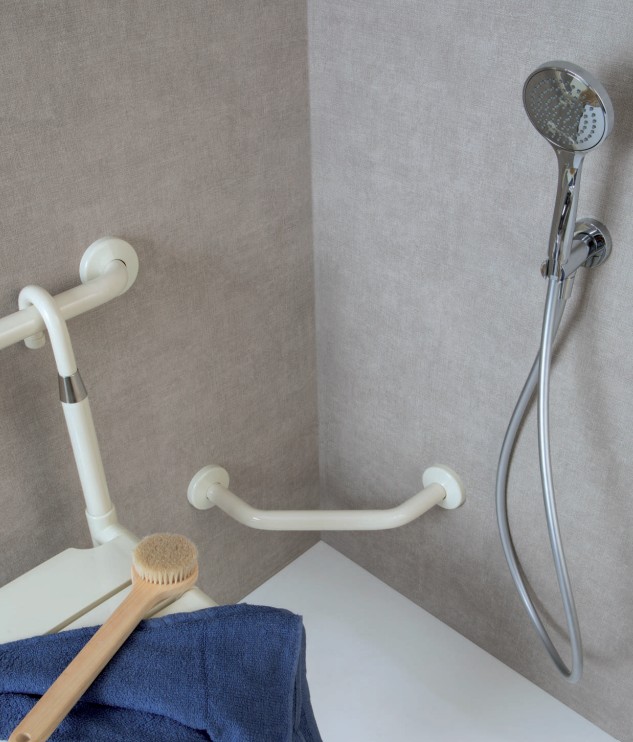
Secure rails—including grab bars and handrails—emerged as the clear winner in reducing both the number of fallers and fall rates among community-dwelling older adults. These were also the most commonly implemented modifications across all studies.
Combined modifications showed promise for reducing the number of fallers or maintaining baseline levels, though the research identified a need for more rigorous studies examining how specific combinations of technologies work together.
Adherence remains a significant challenge, with the review highlighting the need for improved strategies to ensure clients follow through with recommended modifications.
Why This Matters for Your Practice
Previous systematic reviews have established that home modifications reduce fall risk, but this research goes further by identifying which specific modifications work independently. This distinction is crucial when working with clients who resist extensive changes, have budget constraints, or need prioritized recommendations for Medicare documentation.
Occupational therapists delivering home modification interventions consistently achieve better outcomes than trained assessors alone, reinforcing the value of your clinical expertise in assessment and implementation. The research supports what you already know: comprehensive, higher-intensity interventions demonstrate greater efficacy than simple checklists.
Practical Implementation Steps for Therapists
Step 1: Prioritize Secure Rail Assessment
Begin every home evaluation by systematically assessing opportunities for grab bar and handrail installation in high-risk areas.
Bathroom assessment checklist:
- Toilet transfer points (both sides if space permits)
- Shower entry and exit points
- Tub transfer locations
- Areas where client changes position or reaches for items
Stairway assessment checklist:
- Both sides of all staircases, regardless of length
- Continuous handrails that extend beyond the first and last step
- Proper mounting height and structural support capacity
- Adequate lighting to see handrails clearly
Hallway and transition area assessment:
- Long corridors where clients might need support
- Level changes or thresholds
- Areas between furniture where clients travel frequently
Step 2: Conduct Function-Based Testing
Don’t just identify where modifications could go—observe your client performing actual tasks to determine necessity and optimal placement.
Dynamic assessment approach:
- Watch the client transfer on/off the toilet without modifications
- Observe shower/tub entry and exit patterns
- Document hand placement during natural movement
- Note compensatory strategies or near-falls
- Assess grip strength and ability to use different grab bar configurations
This functional approach provides documentation for medical necessity and ensures modifications align with the client’s actual movement patterns rather than standard placement guidelines alone.
Step 3: Address the Adherence Challenge
The Crosby review specifically identifies intervention adherence as a critical gap. Use evidence-based communication strategies to improve implementation rates.
Leverage the research in client conversations:
- “Recent research analyzing nine studies found that grab bars specifically reduce both the number of people who fall and how often falls occur”
- “This isn’t just a good idea—it’s backed by rigorous scientific evidence from multiple countries”
- Frame modifications as independence tools rather than admissions of decline
Develop a phased implementation plan:
- Prioritize the single most critical modification (typically bathroom grab bars)
- Provide clear rationale connecting this specific modification to the client’s fall risk
- Create a timeline for additional modifications
- Schedule follow-up to assess installation and usage
Studies show that 75.7% of participants who completed at least one recommended modification experienced significant fall reduction. Your goal is to move clients from assessment to action.
Step 4: Document with Specificity
Use the systematic review evidence to strengthen your documentation for Medicare and insurance reimbursement.
Enhanced documentation language:
- Instead of: “Client would benefit from grab bars”
- Write: “Client demonstrates impaired transfer safety at toilet, requiring UE support. Systematic review evidence (Crosby et al., 2025) indicates secure rails independently reduce fall rates in community-dwelling older adults. Recommend installation of grab bars at toilet to reduce fall risk and support functional independence”
Connect modifications to functional goals:
- Link each recommended modification to specific ADL/IADL performance
- Document baseline safety concerns with objective observations
- Establish measurable outcomes (e.g., “Client will complete toilet transfers independently with use of grab bars without loss of balance within 2 weeks”)
Step 5: Think Beyond Individual Modifications
While secure rails showed independent effectiveness, the research also found that combined modifications may reduce fallers or maintain baseline levels.
Develop comprehensive modification plans that include:
- Primary interventions (grab bars, handrails) with strong independent evidence
- Secondary modifications (lighting, flooring, furniture arrangement) that address environmental hazards
- Tertiary strategies (assistive devices, activity modification) that complement structural changes
Example comprehensive bathroom plan:
- Grab bars at toilet and shower (primary intervention with independent evidence)
- Improved lighting with nightlight pathway (secondary intervention)
- Shower chair and handheld showerhead (tertiary strategy)
- Remove bath mats and install slip-resistant flooring (environmental hazard removal)
Step 6: Collaborate with Qualified Contractors
The effectiveness of secure rails depends on proper installation that meets weight-bearing requirements.
Contractor collaboration checklist:
- Verify contractor experience with ADA-compliant installations
- Provide specific placement recommendations based on your functional assessment
- Specify mounting requirements (blocking, backing, studs vs. drywall anchors)
- Request photo documentation of backing/mounting before drywall closure
- Schedule post-installation assessment to verify placement matches your recommendations
Step 7: Educate Clients on Proper Use
Installation alone doesn’t guarantee fall prevention—clients must understand how and when to use modifications.
Client education protocol:
- Demonstrate proper grip and hand placement on grab bars
- Practice transfers using new modifications during your visit
- Identify situations when grab bars should be used (every transfer vs. as-needed)
- Address concerns about appearing “old” or “disabled” by using modifications
- Provide written instructions with photos for reference
Addressing Common Implementation Barriers
Budget Constraints
When clients cannot afford multiple modifications simultaneously, use the Crosby findings to prioritize: secure rails in the bathroom and on stairs should be your first recommendations given their independent evidence for fall reduction.
Cost-effective prioritization:
- Bathroom grab bars (highest fall risk location, strong independent evidence)
- Stair handrails on both sides (high consequence falls, strong evidence)
- Improved lighting (lower cost, addresses multiple areas)
- Flooring modifications and furniture arrangement (often no-cost changes)
Aesthetic Concerns
Many clients resist grab bars because they associate them with institutional settings or disability. Counter this by:
- Showing photos of decorative grab bar options that blend with home décor
- Emphasizing that falls are more disabling than any modification
- Connecting modifications to continued independence and aging in place
- Using evidence to demonstrate this is preventive medicine, not a response to decline
Rental Properties and Temporary Living Situations
For clients who cannot make permanent modifications:
- Recommend tension-mounted grab bars for tubs/showers (verify weight capacity)
- Explore portable options like floor-to-ceiling poles near toilets
- Negotiate with landlords using evidence of fall reduction benefits
- Document that temporary solutions are interim measures only, not equivalent to permanent installations
Future Directions for Evidence-Based Practice
The Crosby review identifies specific areas where more research is needed, presenting opportunities for therapists engaged in outcomes measurement:
Track adherence rates in your practice:
- What percentage of clients install recommended modifications?
- Which factors predict higher implementation rates?
- How do different communication approaches affect adherence?
Document combination intervention outcomes:
- When clients implement multiple modifications, what combinations seem most effective?
- Are there synergistic effects between specific modification types?
- How do modification combinations affect different functional outcomes beyond falls?
Contribute to the evidence base:
- Consider participating in practice-based research networks
- Collect standardized outcome measures for quality improvement
- Share findings through case reports and practice articles
Applying the Evidence Today
The Crosby systematic review provides the specific evidence you need to confidently recommend grab bars and handrails as independent fall prevention interventions. This research strengthens your clinical reasoning, supports medical necessity documentation, and gives you concrete talking points when clients question recommendations.
Every home modification assessment should now include systematic evaluation of opportunities for secure rail installation, with functional testing to determine optimal placement and intensive client education to address the adherence challenge the research identifies.
By implementing these evidence-based practices, you’re not just reducing fall risk—you’re applying rigorous scientific findings to help older adults maintain independence and age safely in their homes. That’s the power of occupational therapy in home modification practice.
Looking to deepen your home modification expertise? Join our interactive Facebook community at https://www.facebook.com/groups/homeaccessibilitysafety to discuss implementation strategies with fellow therapists, or explore our continuing education offerings at The Home Accessibility Therapist LLC.
Reference List
Clemson, L., Mackenzie, L., Ballinger, C., Close, J. C., & Cumming, R. G. (2008). Environmental interventions to prevent falls in community-dwelling older people: A meta-analysis of randomized trials. Journal of Aging and Health, 20(8), 954-971. https://doi.org/10.1177/0898264308324672
Crosby, R. A., Noelker, L. S., & Bier, N. (2026). The influence of home modifications on falls in community-dwelling older adults: A systematic review. Assistive Technology, advance online publication. https://doi.org/10.1080/10400435.2025.2596022
Keall, M. D., Pierse, N., Howden-Chapman, P., Cunningham, C., Cunningham, M., Guria, J., & Baker, M. G. (2015). Home modifications to reduce injuries from falls in the HOME study. Injury Prevention, 21(1), e42-e49.
Stark, S., Keglovits, M., Arbex, N., & Landsbaum, A. (2017). Home modification interventions for older adults. American Journal of Lifestyle Medicine, 11(2), 100-106.
Stark, S., Landsbaum, A., Palmer, J. L., Somerville, E. K., & Morris, J. C. (2009). Client-centred home modifications improve daily activity performance of older adults. Canadian Journal of Occupational Therapy, 76(Special Issue), 235-245.
USC Leonard Davis School of Gerontology. (2023, March 9). Home modification tools and tips to help prevent falls. https://gero.usc.edu/2023/03/10/home-modification-tools-and-tips-to-help-prevent-falls/
 The Home Accessibility Therapist LLC
Leave a comment