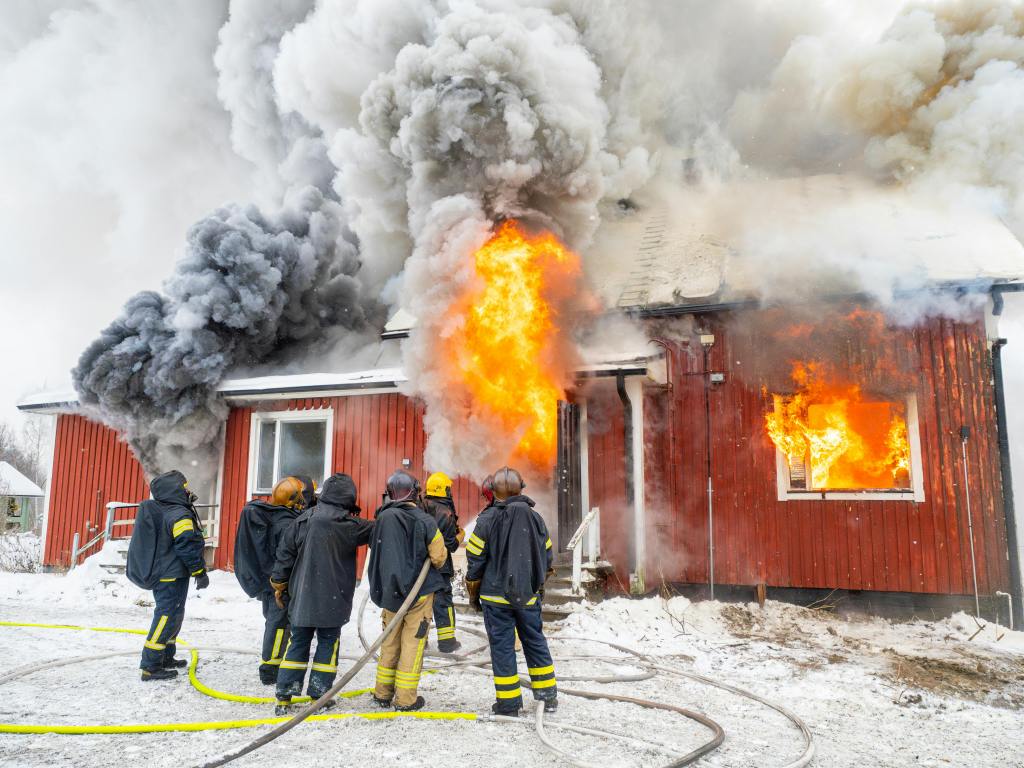
When conducting home safety evaluations, the kitchen presents one of the most critical—and challenging—risk areas to assess. As occupational and physical therapists, we’re often caught between supporting our clients’ independence and addressing legitimate safety concerns raised by families and caregivers. The statistics demand our attention: adults over 65 face 2.5 times greater risk of dying in a kitchen fire than the general population, and unattended cooking remains the #1 cause of home fires in the United States.
The Clinical Reality: Fire Risk in Home Assessments
During your next home evaluation, consider these sobering facts. Despite representing only 15% of the U.S. population, older adults suffer 40% of all fire deaths. From 2017 to 2021, more than half (58%) of people who died in cooking fires were 55 years or older. These incidents result in over 118 deaths and 2,359 injuries annually.
For clients living alone or spending significant portions of the day unsupervised, these risks intensify. Yet removing cooking privileges entirely can devastate independence, self-efficacy, and quality of life—outcomes that directly contradict our therapeutic goals.
Clinical Indicators: Identifying At-Risk Clients
During your home assessment, document the presence of these warning signs that indicate elevated kitchen fire risk:
- Physical evidence: Burned or scorched pots and pans, missing cookware (often discarded to hide incidents), smoke stains on walls or ceiling near stove
- Client reports: Stories about “forgetting” food on the stove, setting off smoke alarms, or minor cooking mishaps
- Clothing indicators: Burn marks, singed areas, or holes in sleeves or aprons
- Environmental clues: Disconnected smoke alarms, makeshift pot holders, cluttered stovetop areas
- Caregiver concerns: Family members reporting anxiety about cooking safety or increased supervision needs
Risk Factors Compounding Kitchen Fire Danger
Your clinical assessment should evaluate how these age-related changes impact cooking safety:
Cognitive factors:
- Memory impairment or early dementia affecting task completion
- Depression or anxiety impacting attention and concentration
- Medication side effects causing drowsiness or confusion
- Diminished executive function affecting safety judgment
Physical factors:
- Visual impairments limiting burner visibility or flame detection
- Hearing loss preventing smoke alarm recognition
- Reduced mobility slowing emergency response
- Decreased reaction time and muscle strength
- Balance issues increasing fall risk near hot surfaces
Environmental factors:
- Living alone with no backup monitoring
- Extended periods without caregiver supervision
- Lack of automatic safety systems
- Inadequate or non-functional smoke alarms
The Professional Dilemma: Balancing Independence and Safety
As therapists, we face a unique challenge. Recommending that clients stop cooking altogether often meets resistance and can accelerate functional decline. Yet inadequate safety recommendations expose us to liability concerns and fail our duty to protect vulnerable clients.
Family members and caregivers share these concerns but struggle with how to intervene without being dismissive or controlling. They want solutions that honor their loved one’s autonomy while providing meaningful protection during the hours they cannot be present.
Evidence-Based Intervention: Automatic Stove Shut-Off Technology
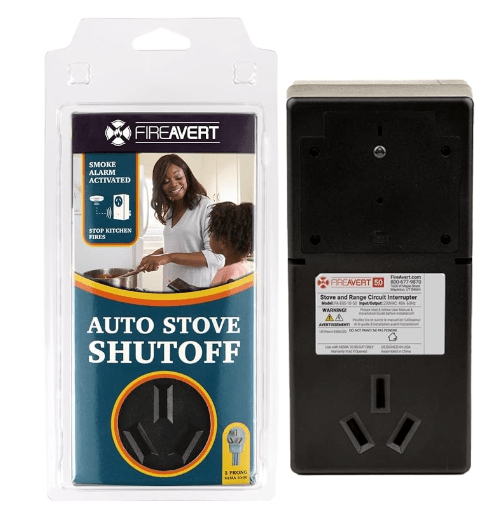
The Fire Avert automatic stove shut-off device represents a clinically appropriate middle-ground intervention that addresses safety concerns while preserving functional independence. This technology should be considered as part of your tiered recommendation approach for at-risk clients.
How the Technology Works
The Fire Avert continuously monitors for smoke alarm activation 24/7. When it detects the alarm sound, it automatically cuts power to the stove within 30 seconds—providing time to clear minor smoke but intervening before flames develop. This passive safety system requires no active participation from the client, making it ideal for individuals with cognitive impairment or memory issues.
Clinical Advantages for Your Practice
Installation accessibility: The device installs in under 10 minutes without professional help, fitting in the gap behind most stoves. This plug-and-play design means clients or family members can implement your recommendation immediately without scheduling contractors.
Maintenance-free operation: No batteries are required, and the system operates continuously without user input. This eliminates compliance concerns common with devices requiring regular charging or activation.
Compatibility: Works with both electric and gas stoves (natural gas only, not propane), covering most client home configurations.
Smart monitoring features: Advanced PRO models offer text alerts, remote dashboard access, and event tracking—valuable for family caregivers and therapists conducting follow-up assessments.
Appropriate Client Populations
Consider recommending Fire Avert for clients who:
- Demonstrate mild to moderate cognitive impairment but retain cooking skills
- Live alone or unsupervised for extended periods
- Have documented history of cooking-related incidents or near-misses
- Show strong motivation to continue cooking independently
- Have family members expressing safety concerns
- Are at risk for nursing home placement due primarily to safety concerns
Documentation and Reporting Language
When including Fire Avert in your home assessment report, use clear clinical justification:
“Client demonstrates functional cooking skills but exhibits memory impairment affecting safety awareness (as evidenced by [specific observations]). Client lives alone 8+ hours daily. To support aging-in-place goals while mitigating kitchen fire risk, recommend automatic stove shut-off device (Fire Avert or equivalent) providing passive safety monitoring without requiring active client participation. This intervention preserves independence while addressing family safety concerns and reducing fire risk identified during assessment.”
Comprehensive Kitchen Safety Intervention Strategies
The Fire Avert should be one component of your multi-layered kitchen safety recommendations:
Environmental modifications:
- Remove or secure flammable materials near cooking surfaces (towels, curtains, paper products)
- Ensure functional smoke alarms on every floor with interconnected systems
- Install adequate task lighting over cooking areas
- Clear pathways to exits and fire extinguishers
- Mark “on/off” positions on stove knobs with high-contrast indicators
Compensatory strategies:
- Timer use for all cooking tasks with audible/visual cues
- Simplified meal preparation routines
- Lower heat settings as default
- Keep pan lids and fire suppression materials accessible
- Establish “check kitchen” routines before leaving home or bedtime
Caregiver education:
- Recognition of escalating risk indicators
- Emergency response protocols
- When to supervise vs. provide standby assistance
- Communication strategies that preserve client dignity
Task modification:
- Microwave or toaster oven for appropriate foods
- Pre-prepared meals requiring only reheating
- Cold meal options for unsupervised times
- Meal delivery services during highest-risk periods
Professional Scope and Liability Considerations
As therapists conducting home safety assessments, we have both an ethical and legal obligation to identify and document fire safety risks. When cooking hazards are identified:
Document thoroughly: Record specific observations, client statements, and caregiver concerns in objective, measurable terms.
Provide clear recommendations: Offer a hierarchy of interventions from least to most restrictive, with Fire Avert positioned as a middle-tier solution.
Communicate risks: Ensure clients and responsible parties understand identified dangers and consequences of not implementing recommendations.
Follow up: Establish reassessment timelines to evaluate intervention effectiveness and changing risk levels.
Know your limits: Recognize when risk severity requires immediate action or referral to other professionals (adult protective services, physicians, care coordinators).
Facilitating Family Conversations
When presenting Fire Avert or other safety interventions during family conferences, frame recommendations to address all stakeholder concerns:
For clients: “This device lets you continue cooking independently while providing automatic backup protection—like a safety net that’s always there even if you forget something.”
For family members: “This technology monitors 24/7 and automatically shuts off the stove when it detects the smoke alarm, giving you peace of mind during the hours you can’t be there.”
For caregivers: “This reduces your need for constant kitchen supervision while providing data about cooking patterns that help us monitor for changes requiring additional support.”
Cost-Benefit Analysis for Client Decision-Making
While Fire Avert represents an upfront investment (typically $150-300 depending on model), help families consider the cost comparison:
- Average home fire damage: $50,000+
- Nursing home placement costs: $8,000-10,000/month
- Professional in-home supervision: $20-30/hour
- Fire Avert device: One-time cost under $300 with no ongoing fees
From a clinical perspective, interventions that prevent nursing home placement by extending safe independent living represent exceptional value for clients and families.
Implementation Action Steps for Therapists
During assessment:
- Include specific kitchen fire risk evaluation in all home safety protocols
- Observe cooking area and document warning signs
- Interview client and caregivers about cooking routines and concerns
- Assess cognitive and physical factors affecting cooking safety
In your recommendations:
- Tier interventions from least to most restrictive
- Include Fire Avert as appropriate middle-tier option
- Provide specific product information and installation resources
- Address implementation timeline and responsible parties
For follow-up:
- Verify implementation of recommendations
- Assess device functionality and client acceptance
- Monitor for changes requiring intervention adjustment
- Document outcomes for quality improvement tracking
Conclusion: Empowering Safe Independence
The Fire Avert automatic stove shut-off device provides occupational and physical therapists with an evidence-based tool that aligns with our core mission: supporting maximum independence with appropriate safety measures. By incorporating this technology into our kitchen safety assessment protocols, we offer clients, families, and caregivers a practical solution that addresses the #1 cause of home fires without prematurely restricting functional abilities.
As home accessibility professionals, our recommendations carry significant weight in aging-in-place decisions. When we can point to concrete interventions like Fire Avert that meaningfully reduce risk while preserving autonomy, we strengthen our ability to keep clients safely in their homes—the outcome that benefits everyone involved.
Here is a link to the FireAvert device on Amazon. https://amzn.to/4aiVV37
As an Amazon Associate, The Home Accessibility Therapist LLC may earn a small commission from qualifying purchases.
References
AgingCare. (2012, January 23). Kitchen fires: Make cooking safer for seniors. https://www.agingcare.com/articles/seniors-kitchen-fires-safe-cooking-149302.htm
All Seniors. (2025, January 27). Fire safety for seniors: Protecting your home and loved ones. https://allseniors.org/articles/fire-safety-for-seniors-protecting-your-home-and-loved-ones/
Angel Care. (2025, February 5). Kitchen safety for the elderly: Essential tips for a secure cooking environment. https://angelcareny.com/kitchen-safety-for-the-elderly-essential-tips-for-a-secure-cooking-environment/
Covenant Home Care. (2018, August 31). Dangers from cooking fires for older adults. https://covenanthome.care/dangers-from-cooking-fires-for-older-adults/
Elder Care Alliance. (2023, February 14). Fire prevention tips for seniors. https://eldercarealliance.org/blog/fire-safety-tips-for-seniors/
FireAvert. (2025, May 13). Automatic stove shut-off devices: 2025 fire prevention. https://fireavert.com/blogs/home-safety/automatic-stove-shut-off-guide
FireAvert. (2026, January 25). Fire prevention the auto stove shutoff. https://fireavert.com/products/fireavert-auto-stove-shutoff
Home Care Assistance Network. (2025, October 21). Cooking safety for older adults: A complete guide. https://hcan.com/aging-in-place/cooking-safety-for-older-adults-a-complete-guide/
National Fire Protection Association. (2023, August 30). “Home cooking fires” report. https://www.nfpa.org/education-and-research/research/nfpa-research/fire-statistical-reports/home-cooking-fires
Oregon Fire Rescue. (2023, December 14). Fire safety for older adults – Facts, stats, and tips. https://oregonfirerescue.com/safety-education/fire-safety-for-older-adults/
The Alzheimer’s Store. (2022, July 31). Stove fire prevention | Gas or electric stove shut off device. https://www.alzstore.com/fireavert-stove-fire-prevention-p/0106.htm
 The Home Accessibility Therapist LLC
Leave a comment