
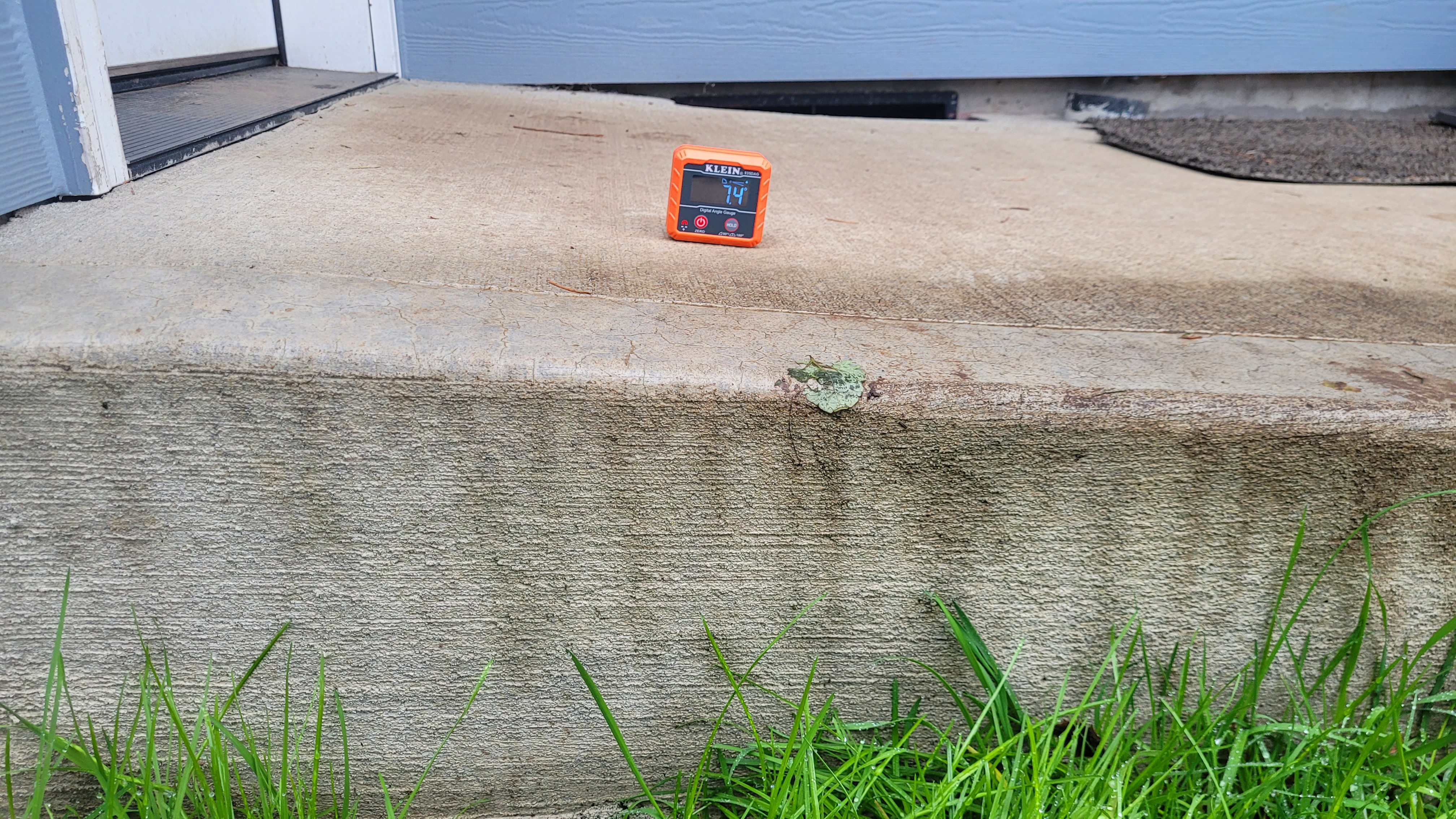
An inclinometer, also called a clinometer or tilt sensor, is an instrument that measures angles of slope, tilt, or inclination relative to gravity. The device displays measurements as angular degrees, percentages, or ratios, providing objective data about how much a surface deviates from level or vertical.
Modern inclinometers use accelerometer technology to detect gravitational pull on a small sensing element inside the device. When the instrument tilts, this mass moves and creates measurable changes that are converted into precise angle readings displayed digitally or on a dial. This makes inclinometers relatively inexpensive, portable, and easy to use compared to complex surveying equipment.
Primary Uses in Home Modification Practice
An occupational therapist specializing in home modifications uses an inclinometer to measure angles and slopes throughout the home environment, ensuring accessibility features meet safety standards and regulatory requirements.
I am providing a link to the Klien Tools Inclinometer I will be demonstrating the use of for this article: https://amzn.to/4bhtDIh
*As an Amazon Associate, The Home Accessibility Therapist LLC may earn a small commission from qualifying purchases..

Ramp Slope Verification: The most critical application is measuring ramp slopes to ensure they meet ADA standards, state or local codes, and the client’s functional needs. An inclinometer gives precise angle readings to confirm that wheelchair ramps are safe, appropriately graded, and meet therapist specifications based on regulatory requirements and the individual’s capabilities.

Threshold and Transition Assessment: Inclinometers measure the angle of door thresholds, transitions between flooring materials, and entryway slopes. These measurements help determine whether modifications are needed to reduce tripping hazards or improve wheelchair accessibility. Even slight inclines that seem minor can pose significant barriers for individuals with mobility limitations.

Stair and Handrail Evaluation: The device also measures stair angles and handrail placement to ensure they meet building codes and provide optimal support for the client’s biomechanics. This objective measurement complements the therapist’s clinical assessment of the client’s functional abilities on stairs.
Floor Leveling Assessment: Inclinometers detect uneven floors or slopes within rooms that could affect wheelchair maneuverability or create fall risks. This is particularly important in older homes where settling may have created gradual slopes that aren’t immediately visible but impact safety.
Advantages for Home Modification Work
Inclinometers are relatively inexpensive, easy to use, and provide objective, quantifiable data that can be documented in assessment reports. This documentation is essential when writing work orders for contractors, justifying modifications to insurance companies, or demonstrating compliance with accessibility standards. The precise measurements enable clear communication between the occupational therapist and construction professionals, ensuring accurate implementation of recommended modifications.
Essential Features for Home Modification Inclinometers
A useful inclinometer for ramp assessment should be a digital inclinometer (also called a “smart level”) with precise measurement capability, as measurements obtained by inspectors using current digital inclinometer devices show variability with RMS values around 0.5 percent. Key features include:
- Accuracy to 0.1 degree or better for precise compliance verification
- Digital display for easy reading and documentation
- Magnetic base to attach securely to railings or ramp surfaces during measurement
- Calibration capability to ensure accuracy over time
- Portable and lightweight for field assessments
Digital inclinometers perform significantly better than smartphone apps or basic bubble levels for professional ramp assessment.

Ramp Ratio to Angle Conversions
Digital inclinometers frequently provide results in terms of angles or percentages. As therapists, we generally discuss slope in terms of ratios e.g. 1:12. In our CHAT course Ramp lesson, we discuss how to decide on the best ramp slope for your individual client. Here’s how common ramp ratios convert to angles:
Practical Application
The 1:12 ratio (4.8°) is the critical standard for ADA compliance, meaning every inch of vertical rise requires 12 inches (1 foot) of horizontal ramp length. For example, a 21-inch step height requires a 21-foot ramp. The 1:16 ratio is considered the “comfortable slope” for easier wheelchair navigation, though not legally required.
Residential ramps aren’t required to follow the ADA commercial code, but it’s recommended that they don’t exceed a 2:12 ratio (approximately 9.5°). The slope decision needs to be based on the client’s current situation and potential future needs. An inclinometer allows therapists to verify contractor installations meet these specifications and document compliance for insurance or liability purposes.
Why This Inclinometer Works Well
After extensive research I chose the Klein Tools 935DAG Digital Electronic Level and Angle Gauge. It is an excellent choice for home modification work.
Accuracy: This device is accurate to 0.1 degree according to user reports, which meets the precision requirements for professional ramp assessment. Some sources indicate accuracy of 0.5 degree, but even at this level it’s suitable for ADA compliance verification where the critical 1:12 ramp ratio equals 4.8 degrees.
Dual Range Capability: It measures both 0-90° and 0-180° ranges, giving you flexibility to measure ramps from either direction and assess a variety of angles throughout the home environment.
Magnetic Base: The magnetic base allows secure attachment to metal railings, doorframes, or placed on ramp surfaces for hands-free measurement and documentation—particularly useful when you need to take photos or write notes during assessment.
Compact and Portable: At just under 2.5 inches in length and width, it’s small enough to carry in a professional toolkit without being cumbersome during home visits.
Practical Application for Home Modification
This Klein Tools inclinometer would allow you to:
- Verify that installed ramps meet the 1:12 ADA standard (4.8°) or document deviations for individual client needs
- Measure threshold transitions and floor slopes with precision
- Provide contractors with exact angle specifications rather than approximate ratios
- Document compliance in assessment reports with objective measurements
For the price point typically associated with Klein Tools (a professional-grade brand), this represents good value for occupational therapists building their home modification assessment toolkit.
Here is a link to the Klien Tools inclinometer I have used: https://amzn.to/4bhtDIh
* The Home Accessibility Therapist LLC is a participant in the Amazon Services LLC Associates Program, an affiliate advertising program designed to provide a means for sites to earn advertising fees by advertising and linking to Amazon.com. As an Amazon Associate, we may earn a small commission from qualifying purchases.
References:
Land Developments Ltd, ND. What is an inclinometer? Retrieved from: https://www.leveldevelopments.com/2020/10/what-are-inclinometers/
Wikipedia, 2025. Inclinometer. Retrieved from: https://en.wikipedia.org/wiki/Inclinometer
Pamula, H., 2024. Ramp calculator. Retrieved from: https://www.omnicalculator.com/construction/ramp-slope
Handiramp, ND. Americans with Disabilities Act ramp slope. Retrieved from: https://handiramp.com/ada-guidelines/ada-ramp-slope.htm
iCan Tools for Life, 2020. Wheelchair Ramp Incline Chart. Retrieved from: https://ar-ican.org/wp-content/uploads/2020/12/Wheelchair-Ramp-Chart-ICAN.pdf
US Department of Transportation, 2024. Pocket Lidar Curb Ramp
Assessments. FHWA Publication No.: FHWA-HRT-25-014. Retrieved from: https://rosap.ntl.bts.gov/view/dot/79731
Links to our other Toolbox Tips:
Leave a Reply to Toolbox Tips: Why Stud Finders Are Essential Tools for Occupational Therapists Specializing in Home Modifications and Safety. – The Home Accessibility Therapist LLCCancel reply