
The holiday season brings families together—but when elderly loved ones visit, the same homes that feel comfortable for younger family members can harbor hidden dangers for older adults with mobility limitations, balance challenges, or vision impairments. As occupational therapists specializing in home modifications and accessibility, we understand that hosting safely doesn’t mean downsizing the celebration—it means designing spaces with safety and comfort in mind. By implementing evidence-based modifications before elderly guests arrive, families can create warm, welcoming environments where everyone enjoys the festivities without added risk.
Why Holiday Home Safety Matters for Elderly Visitors
Falls are the leading cause of injury-related deaths among older adults, and holiday gatherings create a perfect storm of fall risk factors. Centers for Disease Control data reveals that one-third of all people aged 65 or older fall each year, with many suffering serious injuries including hip fractures, traumatic brain injuries, and hospitalizations (Liftavator, 2022). The holiday environment intensifies these risks through multiple mechanisms: unfamiliar home layouts, cluttered pathways from decorations and gifts, wet floors from tracked snow and ice, disrupted routines, late-night activities affecting fatigue and alertness, and the social pressure to “keep up” with younger family members.
When hosting elderly visitors—even for brief gatherings—thoughtful home modifications demonstrate care while preventing potentially devastating injuries. Research confirms that environmental modifications significantly reduce fall risk, with properly implemented changes reducing fall rates by 26-38% (Shelley, 2025). These modifications need not be expensive or permanent; many effective solutions involve simple rearrangements, temporary equipment, and heightened awareness of common hazards.
Entrance Modifications: The First Impression of Safety
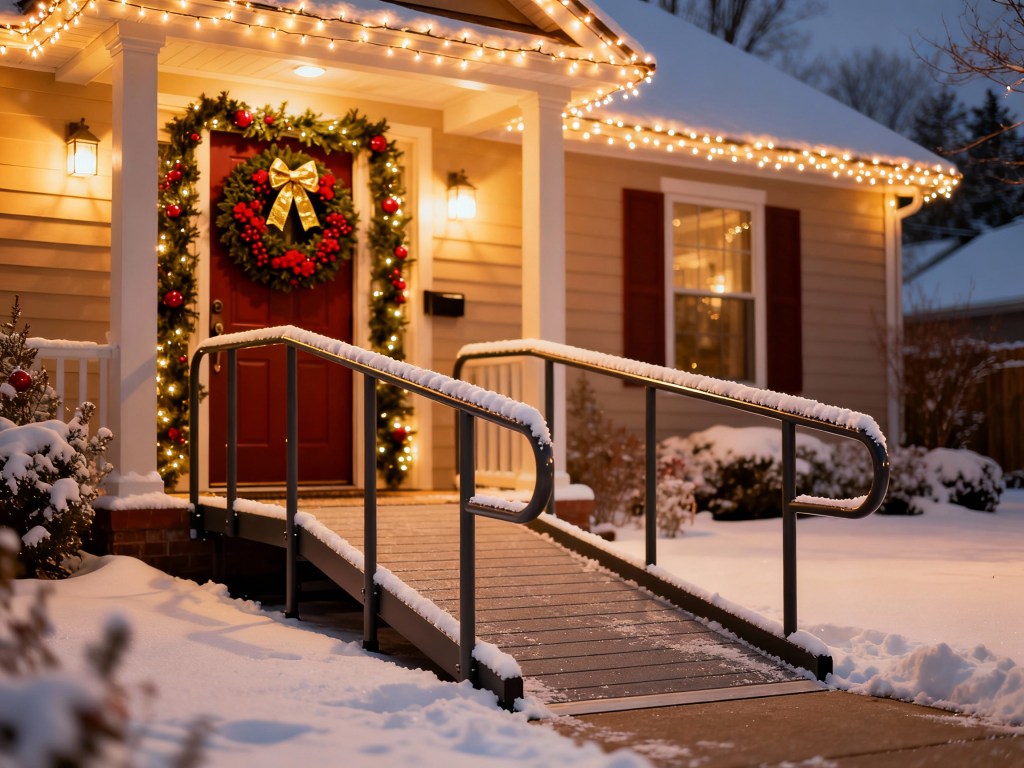
The journey from car to front door sets the tone for your elderly guest’s experience. Entrance accessibility determines whether seniors arrive feeling welcomed or anxious, capable or vulnerable.
Outdoor Pathway Preparation
Ice and Snow Management: Clear snow and ice from driveways, walkways, stairs, and sidewalks well before guests arrive. Apply rock salt, sand, or pet-safe ice melt to prevent refreezing, particularly on shaded areas that may not receive direct sun (Liftavator, 2022; ComForCare, 2025). If expecting icy weather, treat surfaces preventively the night before the gathering. For guests with mobility aids, create wider cleared pathways (minimum 36 inches) to accommodate walkers and wheelchairs.
Non-Slip Surface Treatments: Place commercial-grade, non-slip mats at each doorway to catch melting snow and prevent wet floors from creating slip hazards (ComForCare, 2025; Assisting Hands, 2025). These mats should have beveled edges to prevent tripping and should be secured to prevent sliding. Rough-textured outdoor mats help remove snow and ice from footwear before entering.
Adequate Lighting for Dark Winter Evenings: With darkness falling early in winter, exterior lighting becomes critical for safe navigation. Install motion-sensor lights at entrances to provide automatic illumination when guests approach. Ensure pathways from parking areas to entrances are well-lit, eliminating shadows where steps, cracks, or surface changes might be hidden (ComForCare, 2025; Home Instead, 2023). Consider temporary pathway lighting if your existing fixtures are inadequate.
Personal Assistance: If walks are slippery or outdoor lighting is inadequate, accompany senior guests from the car into the home rather than allowing them to navigate alone (Liftavator, 2022). Offer an arm for support and carry their belongings so they can keep hands free for balance.
Entrance Threshold and Door Accessibility
Threshold Management: Even small thresholds can prevent wheelchair access or create tripping hazards for individuals with shuffling gaits or reduced foot clearance. Use temporary threshold ramps (available at medical supply stores and online retailers) to smooth transitions between levels. Ensure ramps have non-slip surfaces and appropriate slopes.
Door Width and Operation: Standard residential doorways (typically 30-32 inches) may be narrow for individuals using walkers or wheelchairs. If necessary, temporarily remove decorative items, planters, or furniture near doorways to maximize clearance. Consider propping open interior doors during the gathering to ease navigation and reduce the need for elderly guests to manipulate doorknobs repeatedly.
Handrails and Support: Install or verify the presence of sturdy handrails at all exterior steps, extending beyond the top and bottom steps to provide support during full transitions (ICAA, 2024). Handrails should be easy to grip and securely mounted to support full body weight.
Creating Clear, Safe Pathways Throughout the Home
Once inside, elderly visitors need clear, wide pathways to navigate safely among family members and holiday activities.
Decluttering High-Traffic Areas
Remove Tripping Hazards: Conduct a thorough walkthrough of your home’s most-traveled areas—hallways, entryways, living spaces, and the path to the guest bathroom—removing loose rugs, electrical cords, floor-level decorations, and clutter (ComForCare, 2025; ICAA, 2024). Tape down or secure cords against walls using cord covers to prevent tripping. Remember that wrapping greenery or strands of holiday lights around bannisters and handrails creates hazards for guests who need extra support and stability on stairs (Liftavator, 2022).
Gift and Package Management: Establish protocols for immediate cleanup of wrapping paper, boxes, bows, and new toys that can become tripping hazards during gift exchanges (Liftavator, 2022). Designate a specific area away from walking paths for gift accumulation and wrapping debris collection.
Furniture Arrangement: Evaluate whether furniture placement allows adequate clearance for mobility aids. The minimum pathway width should be 36 inches, but 42-48 inches is preferable for wheelchair turning radius (Shelley, 2025). Remove occasional tables, plant stands, or decorative items that narrow passages. Arrange furniture to create clear sight lines so elderly guests can anticipate obstacles.
Flooring Considerations
Carpet and Rug Safety: Secure or remove area rugs, bath mats, and runners that can slide or bunch, creating fall hazards. Even elderly guests accustomed to navigating your home during regular visits may struggle with these hazards when distracted by social activities or when lighting changes due to decorative elements (Liftavator, 2022; ICAA, 2024). If rugs must remain, use double-sided tape or non-slip rug pads to secure them completely.
Surface Transitions: Mark or illuminate transitions between different flooring types (carpet to hardwood, tile to carpet) which can be difficult for individuals with depth perception challenges to detect. Ensure these transitions are flush without raised edges that catch walker wheels or toes.
Strategic Lighting Enhancement for Holiday Safety
Adequate lighting reduces missteps and improves depth perception, yet holiday lighting often prioritizes ambiance over safety. Proper lighting is one of the most effective and cost-efficient fall prevention modifications (Shelley, 2025).
Task-Specific Lighting
Entry and Exit Points: Ensure bright, even lighting at all doorways, eliminating shadows that may obscure steps or thresholds. Add temporary lamps if existing fixtures are inadequate (ComForCare, 2025).
Stairway Illumination: Stairs require bright overhead lighting that illuminates each tread completely. Consider adding strip lighting or individual tread lights that make each step edge visible. Ensure light switches are accessible at both top and bottom of staircases.
Kitchen and Food Service Areas: Increase light wattage to allowable levels in the kitchen where older adults may be helping with food preparation or serving (Home Instead, 2023). Proper lighting prevents burns, cuts, and spills that become slip hazards.
Bathroom Visibility: The bathroom requires bright, shadow-free lighting. Add nightlights or motion-sensor lights to guide elderly guests during nighttime bathroom visits without requiring them to fumble for unfamiliar switches (Home Instead, 2023; Shelley, 2025).
Ambient Lighting Adjustments
Avoiding Disorienting Contrast: While decorative lighting creates festive ambiance, extreme contrast between brightly lit and dark areas can be disorienting for older adults with compromised vision. Ensure adequate background lighting throughout spaces so eyes don’t need to constantly adjust between bright decorations and dark surroundings.
Motion-Sensor Additions: Install battery-operated motion-sensor lights in hallways, bathrooms, and guest bedrooms to provide hands-free illumination (Shelley, 2025). This simple modification prevents dangerous navigation in darkness during overnight visits.
Bathroom Safety: The Highest-Risk Area
Bathrooms pose the greatest fall risk in homes, with CDC data showing that 80% of falls experienced by older adults happen in bathrooms, resulting in an estimated 200,000 seniors treated annually for bathroom-related injuries (Shelley, 2025). Slippery surfaces, confined spaces, transfers on and off toilets, and moisture create a hazardous combination.
Essential Grab Bar Installation
Strategic Placement: Install grab bars near the toilet (side and/or behind) and in the shower or bathtub. Horizontal bars should be mounted 33-36 inches from the floor; vertical bars provide additional support for various transfer techniques. Grab bars must be properly installed into wall studs or backing boards—decorative towel bars are not adequate substitutes and can fail under weight, causing serious falls (Home Instead, 2023; ICAA, 2024).
Types for Temporary Use: If permanent installation isn’t feasible for a short visit, consider temporary suction-mounted grab bars rated for appropriate weight capacity. Test these thoroughly before guest arrival and inspect daily during the visit to ensure secure mounting.
Slip Prevention
Non-Slip Mats and Treads: Place non-slip mats inside bathtubs and showers and on bathroom floors, particularly near the shower/tub and in front of the sink (Home Instead, 2023; Shelley, 2025). Ensure mats have beveled edges to prevent tripping and are positioned to avoid interference with door operation.
Shower Access Solutions: For guests requiring shower accessibility, provide transfer benches for tub showers or stable shower chairs for walk-in showers. Handheld showerheads mounted on sliding bars accommodate various users and abilities. Remove glass shower doors that can trap or confuse elderly users; shower curtains provide safer, clearer access.
Toilet Accessibility
Raised Toilet Seats: Purchase or rent toilet seat risers to make sitting and standing easier for guests with lower extremity weakness or hip/knee limitations (Home Instead, 2023). These temporary modifications install in minutes without tools and significantly reduce fall risk during transfers.
Adequate Maneuvering Space: Provide clear floor space (30×48 inches minimum) for wheelchair transfers or walker positioning. Temporarily remove bathroom furniture, decorative items, or storage that impedes movement.
Visibility and Hardware
Improved Lighting: Add bright overhead lighting and eliminate shadows. A nightlight provides orientation during nighttime visits without requiring guests to find switches in unfamiliar bathrooms.
Easy-Operation Hardware: Replace standard doorknobs with lever handles that are easier to operate for individuals with arthritis or reduced hand strength (Shelley, 2025). This modification benefits all users and can remain as a permanent universal design feature.
Living and Dining Space Accessibility
The social heart of holiday gatherings requires thoughtful modifications to ensure elderly guests can participate fully and comfortably.
Seating Arrangements
Appropriate Chair Selection: Provide sturdy chairs with armrests for holiday meals and gatherings (ComForCare, 2025). Armrests make sitting and standing significantly safer, especially after long meals when legs may be stiff. Recommended seat height is 17-19 inches for most adults. Avoid low, soft sofas that make transfers difficult. Test chairs for stability—wobbly arms or legs indicate chairs need replacement or repair (Home Instead, 2023).
Positioning for Inclusion: Arrange seating to allow wheelchair users or those with mobility aids to join conversational groupings rather than being isolated at the periphery. Ensure adequate space around seating for maneuvering walkers or wheelchairs.
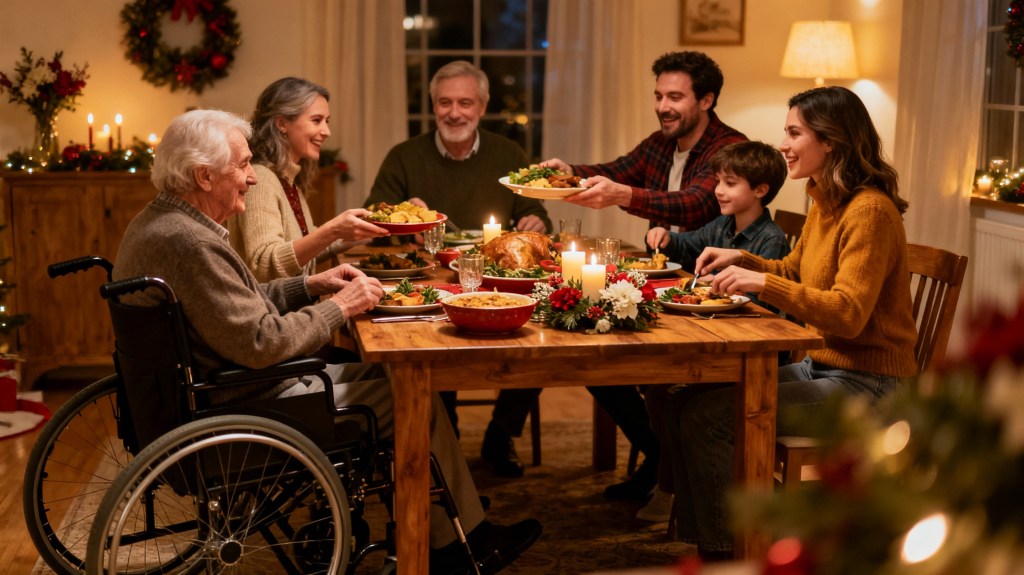
Table Access
Appropriate Table Height and Clearance: Dining tables should provide adequate knee clearance (27 inches high minimum) for wheelchair users. Pedestal tables or tables with legs at corners provide better wheelchair access than tables with center supports. Set the table leaving clear wheelchair access spaces rather than placing chairs at every position.
Serving Strategy: Consider buffet-style serving on accessible-height surfaces rather than requiring elderly guests to reach across tables or navigate crowded serving arrangements. Alternatively, offer to plate food for guests with mobility limitations.
Safe Decoration Placement
Deck the Halls—Safely: Position Christmas trees and other decorations out of the main footpath of the home (Liftavator, 2022). Avoid floor-level decorations that create obstacles. Use sturdy bases for all decorations and secure tall items to prevent tipping. Opt for shatter-proof ornaments in areas where falls might occur (Botek, 2018).
Fire Safety: Use battery-operated candles instead of flame candles, particularly on tables or surfaces within reach (ComForCare, 2025; AgingCare, 2018). Keep flammable decorations away from heat sources. Never leave candles, fireplaces, or space heaters unattended when elderly guests are present (CarePatrol, 2024).
Guest Bedroom Considerations for Overnight Visits
When elderly guests stay overnight, bedroom safety becomes paramount.
Bed Safety and Accessibility
Appropriate Bed Height: Beds should be at a safe level for older adults to avoid fall risks during transfers. The ideal height allows the seated person’s feet to rest flat on the floor with knees at approximately 90 degrees. Consider bed risers if the bed is too low or remove the bed frame to lower height if too tall (Home Instead, 2023).
First-Floor Accommodation: Whenever possible, offer guest rooms on the first floor to eliminate stair use, which poses significant fall risk for elderly visitors (Liftavator, 2022). If stairs are unavoidable, ensure sturdy handrails on both sides extending the full length.
Nighttime Navigation: Add nightlights or lamps controlled by touch switches, clapper switches, or voice activation to ensure safe nighttime navigation without fumbling for unfamiliar switches (Home Instead, 2023). Clear pathways from bed to bathroom completely.
Temperature and Comfort Considerations
Older adults are more vulnerable to cold temperatures and require warmer home environments than younger family members might prefer.
Adequate Heating: Ensure homes are heated to safe temperatures (68-70°F minimum) to prevent hypothermia risk in elderly guests (Assisting Hands, 2025; CarePatrol, 2024). Older adults generate less metabolic heat and may not recognize when they’re becoming dangerously cold. Provide extra blankets and ensure guest bedrooms have adequate heating.
Ventilation and Air Quality: While maintaining warmth, ensure adequate ventilation to prevent carbon monoxide buildup if using supplemental heating. Verify that carbon monoxide detectors are functional and properly placed.
Pre-Visit Home Safety Assessment Checklist
Consider offering professional home safety assessments to families planning to host elderly relatives. This service aligns perfectly with home accessibility specialist training and creates opportunities to demonstrate expertise while preventing injuries.
Key assessment areas include:
- Entrance accessibility and outdoor pathway safety
- Interior pathway clearance and lighting adequacy
- Bathroom safety features and modifications needed
- Appropriate seating and mobility aid accommodation
- Stairway safety if applicable
- Emergency egress and fire safety
- Temperature control and environmental comfort
- Decoration safety and clutter management
This comprehensive assessment approach positions occupational therapists as essential partners in holiday planning while establishing relationships with families who may need ongoing home modification services as parents age.
Connecting Holiday Safety to Your Home Accessibility Practice
The holiday season offers a natural entry point for conversations about aging in place, home modifications, and accessibility. Adult children visiting aging parents often notice functional decline that has developed gradually. Holiday gatherings that highlight participation barriers or near-miss safety incidents motivate families to seek professional assessment and intervention.
By positioning yourself as the expert resource for holiday home safety, you create opportunities to showcase the value of comprehensive home accessibility assessment—the foundation of programs like the Certified Home Accessibility Therapist (CHAT) training. Families who experience the relief of a safe, successful holiday visit become ideal candidates for permanent home modification services that support long-term aging in place.
Consider developing holiday-specific service offerings including pre-holiday home safety consultations, temporary modification equipment rental programs, post-holiday follow-up assessments, and educational workshops for families preparing to host elderly relatives. These targeted services expand your practice during peak seasons while demonstrating the occupational therapy expertise that makes homes truly accessible for all ages and abilities.
References
Botek, A. (2018). How to make a senior’s house safe, merry and bright. AgingCare. https://www.agingcare.com/articles/holiday-safety-for-elder-148842.htm
Assisting Hands. (2025). Holiday safety tips for seniors: A caregiver’s complete guide. https://assistinghands.com/87/michigan/milford/blog/holiday-safety-tips-for-seniors/
CarePatrol. (2024). Holiday safety tips for seniors: How to reduce accidents at home. https://carepatrol.com/lorain-medina-wooster-mansfield/holiday-safety-tips-for-seniors-how-to-reduce-accidents-at-home/
ComForCare. (2025). Holiday stress & safety tips for seniors & caregivers. https://www.comforcare.com/blog/holiday-safety-and-stress-tips-for-seniors-and-caregivers/
Shelley. (2025). Senior-friendly home safety modifications. Heritage Senior Communities. https://www.heritageseniorcommunities.com/senior-friendly-home-safety-modifications/
Home Instead. (2023). Creating a safe home for older adults this holiday season. https://www.homeinstead.com/news-and-media/creating-a-safe-home-for-older-adults-this-holiday-season/
International Council on Active Aging. (2024). Home for the holidays: Checklist for senior safety. https://www.icaa.cc/industrynews/2024-01/Home-for-the-holidays-checklist-for-senior-safety.htm
Liftavator. (2022). Will your senior loved ones feel safe in your home this holiday season? https://liftavator.com/will-your-senior-loved-ones-feel-safe-in-your-home-this-holiday-season/
 The Home Accessibility Therapist LLC
Leave a comment