
November is National Home Care and Hospice Month, making it an ideal time to educate referral sources and families about the unique value occupational therapists bring to home-based practice. Home-based OT provides assessment and intervention advantages impossible to replicate in clinic settings, yet many potential clients and referral sources don’t fully understand these benefits.
The Clinical Advantage of Home-Based Assessment
Environmental Context Provides Essential Assessment Data: Conducting evaluations in clients’ actual living environments reveals functional challenges that never emerge in standardized clinic settings. You observe how clients navigate their specific stairs, manage their actual bathroom layout, use their own kitchen appliances, and interact with their unique furniture arrangements.
This contextual assessment identifies environmental barriers and facilitators affecting daily function: specific furniture heights, actual pathway widths, real lighting conditions, true clutter levels, and genuine safety hazards. You can’t accurately assess or address these factors by asking clients to describe their homes—you must see and measure the actual environment.

Observation of Authentic Performance: Home assessments allow you to observe clients performing activities exactly as they do independently, using their own methods and equipment. In clinics, clients modify behavior due to observation, unfamiliar environments, and available assistance. At home, you see their actual performance including unsafe techniques, compensatory strategies, and environmental use patterns.
You can assess real meal preparation challenges using their specific kitchen layout, their actual transfer techniques using their own toilet and tub, their genuine medication management systems, and their true mobility patterns throughout their living space. This authentic performance observation provides accurate baseline data for intervention planning.
Evidence-Based Benefits of Home-Based Intervention
Improved Functional Outcomes: Research demonstrates that home-based OT achieves superior functional outcomes compared to clinic-based services for many populations. Interventions implemented in actual performance environments show better skill generalization, improved carryover to daily activities, increased independence in meaningful tasks, and enhanced safety in real-world contexts.
When you teach transfer techniques using the client’s actual toilet, train kitchen safety in their specific kitchen, practice stair navigation on their real stairs, and implement modifications in their true living environment, clients achieve functional independence more efficiently.
Reduced Hospitalization and Institutional Placement: Studies show home-based OT significantly reduces hospital readmissions, emergency department visits, and nursing home placements. Your environmental modifications and functional training enable clients to age in place safely, avoiding costly institutional care.
Fall prevention interventions implemented in home settings show measurable reduction in fall rates and fall-related injuries. Your grab bar recommendations, lighting modifications, and pathway clearance directly prevent the falls that lead to hospitalization and loss of independence.
Comprehensive Home Safety Assessment
Systematic Environmental Evaluation: Home-based OT services include systematic environmental assessments using standardized tools like the Home Safety Self-Assessment Tool (HSSAT) or SAFER tool. These evidence-based instruments provide a structured approach to identifying the environmental hazards and measuring the effectiveness of recommended modifications on client safety and function. You evaluate every room systematically: bathroom safety including transfer surfaces, grab bar needs, and slip resistance; kitchen safety including appliance accessibility, storage organization, and fall hazards; bedroom safety including bed height, pathway clearance, and lighting; stairway safety including handrails, tread condition, and illumination; and general home safety including flooring, furniture arrangement, and emergency preparedness.
This systematic approach identifies hazards clients don’t recognize and prioritizes modifications based on fall risk and functional impact.
Individualized Modification Recommendations: Unlike generic home safety checklists, your professional assessment generates individualized recommendations based on the client’s specific impairments, their unique environmental challenges, their personal goals and priorities, their financial resources, and their support system capabilities.
You specify exact grab bar placement based on their transfer techniques, recommend lighting levels appropriate for their vision impairments, suggest assistive technology matched to their cognitive and physical abilities, and prioritize modifications addressing their highest fall risks.
Family and Caregiver Education
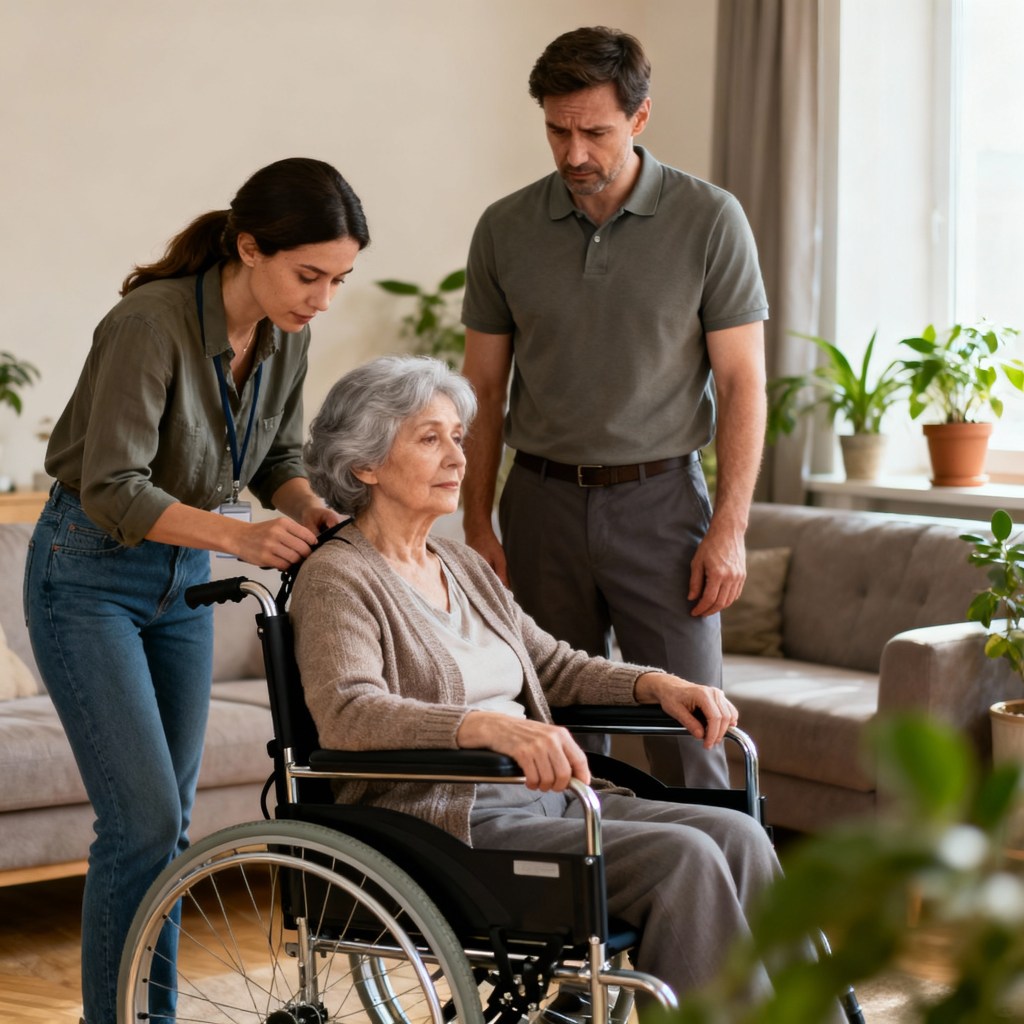
Contextualized Training: Home-based OT allows you to train family caregivers in the actual environment where they’ll provide care. You teach transfer techniques using the client’s specific bathroom layout, demonstrate safe mobility assistance in their real pathways, train medication management using their actual systems, and educate about fall prevention in their true home environment.
This contextualized training improves caregiver competence, increases safety during caregiving activities, reduces caregiver burden and stress, and prevents caregiver injury.
Environmental Modification Implementation: You can train families in proper use of modifications you’ve recommended, verify correct installation of equipment, ensure modifications meet safety standards, and adjust recommendations based on real-world implementation challenges.
Cost-Effectiveness and Value-Based Care
Preventing Costly Adverse Events: Home-based OT’s fall prevention focus directly prevents expensive hospitalizations, emergency department visits, and resulting institutional placements. A single fall-related hospitalization costs Medicare an average of $30,000, while a comprehensive home safety evaluation and modification implementation costs a fraction of that amount.
Your interventions also prevent complications like medication errors, burn injuries, and functional decline that lead to increased healthcare utilization.
Supporting Aging in Place: With institutional care costing $8,000-$10,000 monthly, your interventions enabling clients to age at home safely generate enormous cost savings. Home-based OT provides the environmental modifications and functional training that make independent living feasible.
Educating Referral Sources
Communicate Your Unique Value: Help physicians, discharge planners, and care managers understand that home-based OT provides services impossible to replicate in other settings. Emphasize that you assess and modify the actual environment affecting patient safety, observe authentic performance in real-world contexts, implement interventions in the specific environment where patients function, and train caregivers in the actual caregiving environment.
Provide concrete examples demonstrating your impact: falls prevented through environmental modifications, hospital readmissions avoided through home safety interventions, nursing home placements prevented through aging-in-place modifications, and functional independence restored through contextual intervention.
Document Measurable Outcomes: Track and report outcomes demonstrating your value including fall rates before and after intervention, hospital readmission rates, functional independence measures, caregiver burden scores, and cost savings from prevented adverse events.
Share this data with referral sources to demonstrate the return on investment from home-based OT services and support appropriate reimbursement for your skilled interventions.
During National Home Care and Hospice Month, advocate for home-based OT as an essential component of comprehensive healthcare that enables clients to live safely and independently in their chosen environments.
References:
Home modifications for fall prevention: Creating a safer living space. (2025, January 20). Dakota Home Care. https://dakotahomecare.com/home-modifications-for-fall-prevention-creating-a-safer-living-space/
Lima, K. (2025). How occupational therapy enhances home safety for seniors. (2025, March 11). Great Lakes Home Health Care. https://www.greatlakeshhc.com/how-occupational-therapy-enhances-home-safety-for-seniors/
How home health aides assist in preventing falls and injuries in seniors. (2025, August 5). Regency Home Care Services. https://www.regencyhcs.com/blog/how-home-health-aides-assist-in-preventing-falls-and-injuries-in-seniors
Keystone Health. (2024, August 11). Aging in place: Home modifications checklist. https://keystone.health/aging-in-place-home-modifications-checklist
National Institute on Aging. (2023, October 11). Aging in place: Growing older at home. https://www.nia.nih.gov/health/aging-place/aging-place-growing-older-home
Strom, J. (n.d.). Fall prevention interventions: A comprehensive guide. Quality Insights. https://www.qualityinsights.org/fall-prevention-interventions
Rogers, A. T., Bai, G., Lavin, R. A., & Anderson, G. F. (2017). Higher hospital spending on occupational therapy is associated with lower readmission rates. Medical Care Research and Review, 74(6), 668-686. https://doi.org/10.1177/1077558716666981
National Council on Aging, (2025). 2025 National Falls Prevention Action Plan. Sound Generations. https://soundgenerations.org/wp-content/uploads/250314-FINAL-NCOA-2025-FALLS-PREVENTION-V1-1.pdf
U.S. Administration for Community Living & National Association of Area Agencies on Aging. (n.d.). Modifying your home for healthy aging. https://www.usaging.org/Files/Home-Modification-brochure-508.pdf
 The Home Accessibility Therapist LLC
Leave a comment