
Gone are the days when “accessible” meant “clinical.” In 2025, the most effective home safety features are the ones you wouldn’t recognize as accessibility aids at all. Universal design has evolved from a specialized niche into the new standard for residential design, with homeowners embracing modifications that seamlessly blend function with style. This design revolution is transforming how occupational therapists approach home modifications—prioritizing dignity, independence, and aesthetic appeal in equal measure.
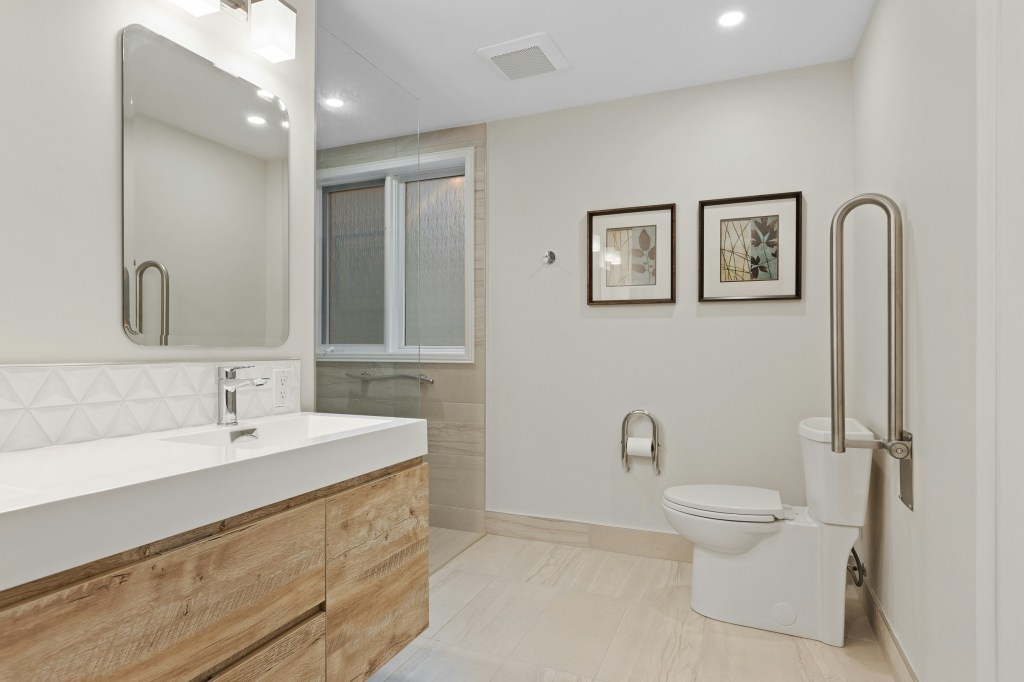
The Rise of Universal Design as Standard Practice
Universal design is no longer an afterthought or a retrofit necessity—it’s becoming the baseline for thoughtful home design. Originally coined by architect Ron Mace, universal design describes “the practice of designing environments to be usable by all people, to the greatest extent possible, without the need for adaptation”. This proactive approach means homes work for everyone regardless of age or ability, from wide hallways that accommodate mobility devices to barrier-free showers that make daily routines effortless. Research demonstrates that comprehensive home modification interventions show strong evidence for improved function across various health conditions, with occupational therapists playing a critical role in effective implementation.
Accessibility Features That Disappear Into Your Décor
The best accessibility features are invisible until you need them. Today’s grab bars masquerade as sleek towel racks in finishes like matte black, brushed nickel, and warm brass tones that complement modern bathroom aesthetics. Shower seats now resemble spa furniture rather than medical equipment, while lever-style door handles provide universal ease without sacrificing architectural style. This “design-forward” approach addresses one of the primary barriers to home modification adoption: the fear that safety features will make a home look institutional.
The impact extends beyond appearance—these carefully integrated features provide genuine functional benefits without stigma. Client-centered home modification interventions have shown sustained positive outcomes, with high adherence rates when modifications align with both functional needs and personal aesthetic preferences.
The Evidence Behind Beautiful Safety Solutions
Research confirms what occupational therapists have long advocated: properly placed grab bars significantly reduce fall risk. A 2023 study found that participants with access to grab bars were 75.8% more likely to recover their balance during unexpected slips while exiting a bathtub compared to those without grab bars. Successful grab bar grasp was associated with balance recovery in all cases, and grab bar presence appeared to cue users to develop fall prevention strategies even before losing balance.
Systematic reviews demonstrate strong evidence for both single and multicomponent interventions that include home modifications to reduce fall rates among older adults. The key finding for occupational therapy practice: comprehensive, higher-intensity interventions show greater efficacy in improving occupational performance when they address both functional requirements and design preferences.
Strategic Placement Meets Interior Design
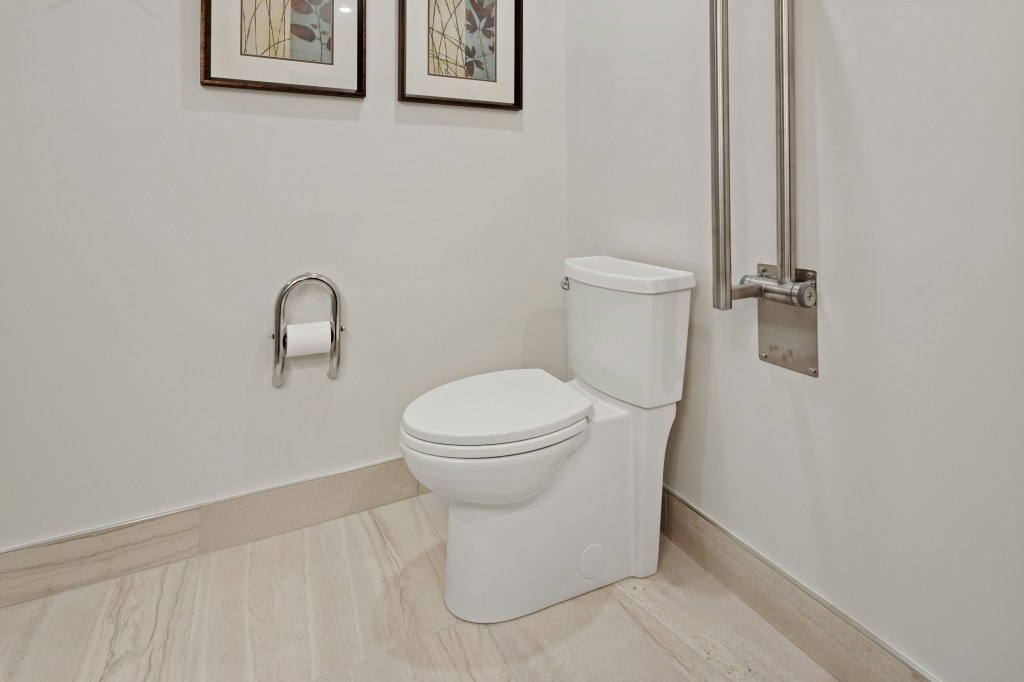
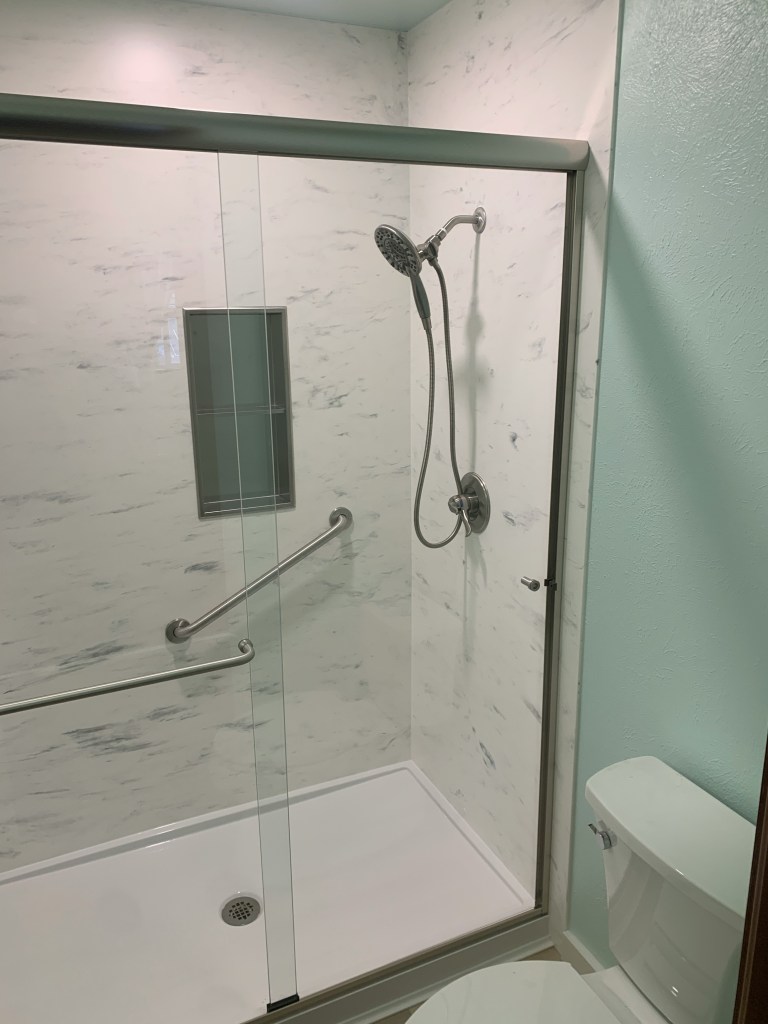
Professional placement transforms grab bars from safety equipment into architectural elements. In the shower, horizontal or diagonal bars along the wall provide balance while maintaining clean visual lines. Near the toilet, a well-positioned bar assists with transfers while doubling as a practical accessory holder. The most successful installations align grab bars with tile grout lines or coordinate with existing bathroom hardware to create visual cohesion.
Modern manufacturers offer grab bars in dozens of finishes that match contemporary faucets and fixtures, ensuring every safety feature enhances rather than disrupts your design scheme. Textured or contoured shapes provide superior grip comfort while contributing interesting geometric elements to bathroom walls.
Proactive Adaptation: Planning Ahead Without Compromise
The 2025 trend toward proactive adaptation encourages homeowners to make thoughtful upgrades now rather than waiting for mobility challenges. This forward-thinking approach includes installing reinforced backing during renovations (hidden behind walls until grab bars are needed), selecting curbless shower designs that work for all abilities, and choosing lever handles throughout the home for immediate convenience and future flexibility.
AARP emphasizes that homes aligned with universal design principles can prevent the later need for expensive, specialized modifications by using designs and fixtures that are “stylish, functional, flexible and attainable”. Key features include step-free access, floor plans with essential rooms on one level, no-step showers, and wide hallways and doorways—all elements that appeal to buyers of all ages.
Luxury Meets Function: The New Aesthetic Standard
Accessibility products have officially entered the world of high-end design. Picture a shower bench that wouldn’t look out of place in a luxury spa, or grab bars with architectural appeal that serve as statement pieces while providing essential support. These products prove that safety and beauty aren’t mutually exclusive—they’re complementary design goals that enhance both home value and quality of life.
The shift represents more than aesthetics—it’s about dignity and choice. When accessibility features blend seamlessly into well-designed spaces, users experience support without the visual reminder of limitations. This psychological benefit is particularly important for clients who resist modifications due to concerns about appearing “old” or “disabled”.
The Occupational Therapy Advantage
As universal design becomes standard practice, occupational therapists are uniquely positioned to guide clients through the selection and placement of invisible accessibility features. Your expertise in activity analysis, environmental assessment, and client-centered care ensures that modifications address specific functional needs while honoring aesthetic preferences. Partner with clients to create roadmaps for upgrades, focusing on high-traffic areas like bathrooms, kitchens, and entryways where thoughtful design delivers immediate safety benefits.
The evidence supports your role: occupational therapist-led home modification interventions demonstrate effectiveness across diverse populations and settings, with client-centered approaches yielding high satisfaction and adherence over time. By positioning yourself as both a safety expert and a design consultant, you help clients understand that accessible doesn’t mean unattractive—it means thoughtfully designed for real life.
Building Your Expertise in Design-Forward Modifications
The Certified Home Accessibility Therapist (CHAT) certification equips occupational and physical therapists with the advanced skills needed to navigate this design revolution confidently. Through research-based training that covers current product options, home automation solutions, and clinical application examples, CHAT-certified therapists learn to assess environments with both safety and aesthetics in mind. The program goes beyond basic grab bar placement to address comprehensive home modification strategies that honor client preferences while maximizing independence. When you complete CHAT certification, you gain the knowledge to confidently recommend designer-grade accessibility products, communicate effectively with contractors and interior designers, and position yourself as the expert who transforms homes without compromising style. This specialized training prepares you to meet the growing demand for therapists who understand that the most effective modifications are the ones clients actually want to use.
Making the Invisible Visible: Your Next Steps
The 2025 design revolution offers an unprecedented opportunity to reframe home modifications as desirable upgrades rather than medical necessities. When consulting with clients, highlight products that blend form and function, emphasize the proactive benefits of universal design, and showcase examples of beautiful accessible spaces that maintain architectural integrity. Start with small, high-impact changes like lever handles or coordinated grab bars in designer finishes, then build toward comprehensive modifications as clients experience the confidence that comes from moving freely in thoughtfully designed spaces.
Remember: accessibility that disappears into great design isn’t just about aesthetics—it’s about creating homes that support independence, dignity, and beauty for everyone who enters.
References:
AARP. (2025, July 21). Universal design: An introduction. https://www.aarp.org/livable-communities/housing/info-2025/universal-design-introduction.html
BOMA. (2025, July 1). Why universal design is a smart move for building owners. Buildings. https://www.buildings.com/industry-news/article/55300676/why-universal-design-is-a-smart-move-for-building-owners-boma-2025
Capella Design. (2025, January 2). Accessible home design trends for 2025. https://designbycapella.com/blogs/the-capella-blog/accessible-home-design-trends-for-2025
Clemson, L., Mackenzie, L., Ballinger, C., Close, J. C., & Cumming, R. G. (2008). Environmental interventions to prevent falls in community-dwelling older people: A meta-analysis of randomized trials. Journal of Aging and Health, 20(8), 954-971. https://doi.org/10.1177/0898264308324672
Gitlin, L. N., Corcoran, M., Winter, L., Boyce, A., & Hauck, W. W. (2001). A randomized, controlled trial of a home environmental intervention: Effect on efficacy and upset in caregivers and on daily function of persons with dementia. The Gerontologist, 41(4), 4-14. https://doi.org/10.1093/geront/41.1.4
Grab Bar Los Angeles. (2025, October 12). Transforming your bathroom: How grab bars boost safety and style. https://www.grabbarlosangeles.com/post/transforming-your-bathroom-how-grab-bars-boost-safety-and-style
Levine, I. C., Montgomery, R. E., & Novak, A. C. (2022). Grab Bar Use Influences Fall Hazard During Bathtub Exit. Human Factors: The Journal of the Human Factors and Ergonomics Society, 65(8), 1821-1829. https://doi.org/10.1177/00187208211059860 (Original work published 2023)
Rand, M., Pelchat, J., Levine, I. C., Montgomery, R. E., Greene, R. M., King, E. C., Pong, S. M., & Novak, A. C. (2024). Efficacy of Installation of Temporary Bathing Transfer Aids by Older Adults. Gerontology & geriatric medicine, 10, 23337214241237119. https://doi.org/10.1177/23337214241237119
Rebuilding Together. (2023, August 9). The impact of occupational therapist-led home modifications. https://rebuildingtogether.org/blog/impact-occupational-therapist-led-home-modifications
Section508.gov. (2024, December 31). Universal design and accessibility. https://www.section508.gov/develop/universal-design/
Stark, S., Keglovits, M., Arbesman, M., & Lieberman, D. (2017). Effect of home modification interventions on the participation of community-dwelling adults with health conditions: A systematic review. American Journal of Occupational Therapy, 71, 7102290010. https://doi.org/10.5014/ajot.2017.018887
Stark, S., Landsbaum, A., Palmer, J. L., Somerville, E. K., & Morris, J. C. (2009). Client-centred home modifications improve daily activity performance of older adults. Canadian journal of occupational therapy. Revue canadienne d’ergotherapie, 76 Spec No(Spec No), 235–245. https://doi.org/10.1177/000841740907600s09
Universal Design Centre. (n.d.). About universal design. Centre for Excellence in Universal Design. https://universaldesign.ie/about-universal-design
 The Home Accessibility Therapist LLC
Leave a comment