Falls represent one of the most significant health risks for community-dwelling older adults, with approximately one-third experiencing at least one fall annually. As occupational therapy professionals, understanding evidence-based home modification strategies is critical for reducing fall risk and supporting aging in place. Recent systematic reviews have identified specific environmental modifications that can reduce fall rates by 30-40% when properly implemented. This article synthesizes the latest research to provide actionable guidance for occupational therapists conducting home safety assessments.
Key Evidence-Based Home Modification Strategies
A systematic literature review, published in 2025 (An et al.) identifies six primary categories of fall prevention interventions for community-dwelling older adults:
- Fall Risk Screening: Systematic screening using validated tools like the “Community Fall Risk Stratification and Management Screening Tool” helps identify high-risk individuals based on fall history, physiological function, comorbidities, and environmental factors
- Exercise Interventions: Exercise programs that combine balance and functional training have been shown to reduce falls rates by 30 – 40 %. Sessions that were 2 – 3 times per week for 12 weeks significantly improved balance and muscle strength, resulting in 35% reduction in fall risk. Three-dimensional exercise, such as Tai Chi or dance classes, have also been associated with 30 – 40% fall risk reduction.
- Medication review focused on fall risk: A focused review by prescribing medical professionals identifies issues such as polypharmacy, adverse side effects, frailty, and comorbidities. The goal is to identify high-risk medications associated with falls.
- Environmental Safety Modifications: Hazardous environments include slippery floors, loose carpets, poor lighting, narrow spaces, and lack of handrails in bathrooms and staircases. Safe environments incorporate barrier-free design, appropriate assistive devices (handrails, grab bars, non-slip mats), and rational furniture layout
- Multifactorial Assessment Approach: A comprehensive evaluation using tools like the Stay Independent Brochure combined with the Home Fall Hazards Assessment (HFHA) tool provides the most accurate risk identification.
- Integrated Health Education and Psychological Interventions: Focusing on active learning, self-awareness, and emotional support can result in improvements in areas such as fear of falling (40%), anxiety (35%), improving physical activity (25%), and improved self-confidence (30%).
Studies demonstrate that 30-50% of falls are attributable to environmental hazards, making home modifications one of the most cost-effective interventions available.
Cost-Effectiveness of Home Modifications
A 2023 quasi-experimental study found that the mean average total costs for home modifications were $10,396.65 compared to average annual healthcare costs ranging from $22,763 to $154,478 for older adults without modifications. This represents significant cost savings for both families and healthcare systems.
A two-visit occupational therapy home modification model has demonstrated statistically significant increases in occupational performance and satisfaction ratings for participants. The model involves an initial home safety assessment using standardized tools, followed by a second visit to deliver equipment and provide education. This replicable approach supports AOTA’s Vision 2025 to maximize health, well-being, and quality of life through effective solutions that facilitate participation in everyday living.
Specific Modification Recommendations by Area
Bathrooms and Toilets:
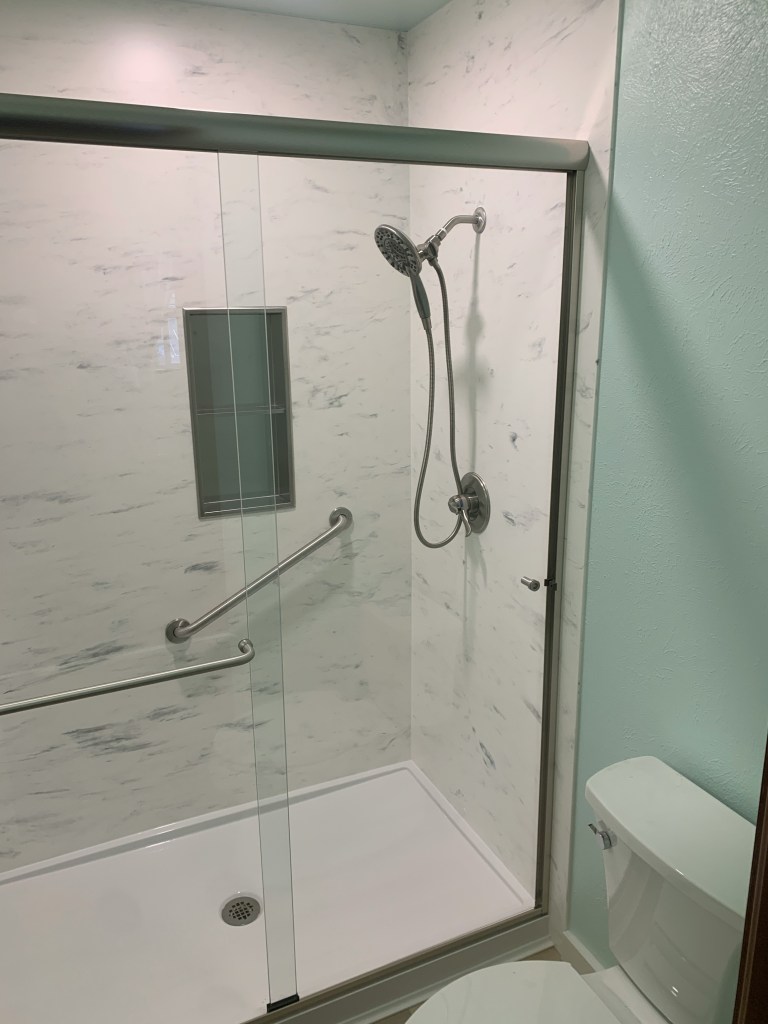
The 2025 systematic review identifies bathrooms as the most common location for falls among older adults. Evidence-based modifications include:
- Installation of grab bars in strategic locations for shower transfers and toilet use
- Anti-slip flooring and mats
- Improved lighting systems
- Shower chair installations and bathtub modifications
Stairs and Entrances:
Stair-related falls are particularly dangerous for older adults. Recommended modifications include:
- Installation of sturdy handrails on both sides
- Improved lighting with motion-activated systems
- Non-slip treads and contrasting colors for step edges
- Elimination of stairs as the only route when possible
General Living Spaces:
- Removal of loose carpets and electrical cords
- Furniture rearrangement to create clear pathways
- Enhanced lighting throughout the home
- Reduction of clutter and tripping hazards
Professional Assessment Tools and Protocols
Occupational therapists should utilize validated assessment instruments to ensure comprehensive evaluation:
- Housing Enabler (HE): Identifies specific environmental barriers and assesses housing accessibility problems
- Home Falls and Accidents Screening Tool (HFHA): Systematically evaluates potential fall risks including flooring, lighting, stairs, bathrooms, furniture layout, and assistive equipment
- Safety Assessment of Function and the Environment for Rehabilitation in the Home (SAFER HOME): Comprehensive tool for identifying safety hazards
- Stay Independent Brochure: CDC-recommended tool for preliminary screening with high sensitivity for self-assessment
The World Guidelines for Falls Prevention and Management recommend using the “3-Key-Questions” (3KQ) scale combined with the Stay Independent Brochure to screen and stratify fall risk effectively. Advanced training for occupational therapists to develop specialized skills in this area is recommended. This training should be a program focused specifically for therapists, such as the Certified Home Accessibility Therapist training program.
Therapists can make a difference.
Evidence-based home modifications represent a critical intervention strategy for occupational therapists supporting older adults aging in place. By implementing systematic screening protocols, utilizing validated assessment tools, and providing targeted environmental modifications, therapists can reduce fall rates by 30-40% while significantly improving the quality of life for clients. The cost-effectiveness of these interventions makes them valuable not only for individual clients but also for healthcare systems seeking to reduce emergency department visits and long-term care admissions. Staying current with the latest research ensures occupational therapists provide the highest standard of care. The Home Accessibility Therapist offers resources, training, and community support to allow therapists to deliver these services in their communities.
References
An, X., Pan, Y., He, C., & Liang, Y. (2025). Evidence Based Strategies for Preventing Falls in Community-Dwelling Older Adults. Journal of multidisciplinary healthcare, 18, 4033–4044. https://doi.org/10.2147/JMDH.S535977
Cha S. M. (2025). A Systematic Review of Home Modifications for Aging in Place in Older Adults. Healthcare (Basel, Switzerland), 13(7), 752. https://doi.org/10.3390/healthcare13070752
Grasso, A. Y., Murphy, A., & Abbott-Gaffney, C. (2023). The Impact of a Two-Visit Occupational Therapy Home Modification Model on Low-Income Older Adults. The Open Journal of Occupational Therapy, 11(1), 1-9. https://doi.org/10.15453/2168-6408.2047
Department of Physiology & Aging (2025). Assistive technology devices: Helping seniors age in place. University of Florida, Online Graduate Programs in Innovative Aging Studies. Retrieved from: https://online.aging.ufl.edu/2025/03/19/assistive-technology-devices-helping-seniors-age-in-place/
 The Home Accessibility Therapist LLC
Leave a comment