
Mrs. Chen sat across from me in the living room of her home, her hands folded tightly in her lap. At 73, she’d recovered well from her hip fracture. Her daughter had done everything right—installed grab bars in the bathroom, added a raised toilet seat, purchased a rolling walker, and even rearranged the bedroom furniture for safer navigation.
“I have everything I need at home,” she told me, her voice flat. “The walker, the toilet seat, the grab bars. So why do I feel so trapped?”
I paused, recognizing something I’d heard from other clients but hadn’t fully understood. We’d addressed every fall risk, eliminated every physical barrier, made her home objectively safer. Yet something crucial was missing. Mrs. Chen’s question captures what emerging research is finally revealing: when we focus exclusively on physical safety, we may inadvertently create environments that negatively impact mental health.

The Missing Link in Home Assessments
A comprehensive 2024 systematic review examined 21 studies across multiple countries and found something remarkable: specific dwelling characteristics significantly impact mental well-being in older adults. High house quality, larger living spaces, functional bath facilities, and even the type of fuel used for heating all showed positive correlations with mental health outcomes. The research, which analyzed data from thousands of older adults, challenges us to think beyond grab bars and ramps.
Here’s what caught my attention: while we’re increasingly skilled at spotting physical hazards, we’re often blind to the psychological impact of our modifications. The same equipment that prevents falls can inadvertently increase feelings of dependence, isolation, and loss of identity. With the global older adult population projected to exceed 2.1 billion by 2050, and mental health challenges growing alongside this demographic shift, we can’t afford to overlook this connection.
The problem isn’t that safety modifications are wrong—they’re essential. The problem is incompleteness. When we install equipment without considering how it affects a person’s sense of autonomy, social connection, and identity, we solve one problem while potentially creating another.
Environmental Factors That Shape Mental Health
Research has identified several key environmental elements that influence mental wellbeing in older adults, and the findings challenge some of our assumptions.
House Quality and Mental Wellness
Multiple studies confirm that high-quality housing is associated with reduced risk of depression. But “quality” means more than structural soundness. It includes supportive equipment, absence of structural problems, and functional amenities. What’s particularly interesting is that social support serves as a significant mediating factor in this relationship. In other words, a well-designed home that facilitates social connections provides double benefit—both the physical environment and the social interactions it enables contribute to better mental health outcomes.
The Surprising Truth About Space
Larger living spaces (over 80 square meters) show significant association with improved mental health in older adults. Before you worry that you can’t help clients who live in smaller homes, consider why size matters: spacious environments provide opportunities for physical activity, better organization, and a sense of control. These benefits can be partially achieved in smaller spaces through thoughtful organization, decluttering, and creating distinct areas for different activities. The key isn’t necessarily square footage—it’s the sense of freedom and capability the space provides.
Even more surprising: high-rise and multi-story buildings with modern amenities like elevators are associated with better mental health outcomes. This contradicts our previous assumptions that older adults fare better in single-story homes. The research suggests that when accessibility features are properly integrated, the benefits of these environments—often including better natural light, views, and community amenities—outweigh traditional concerns.
The Sensory Environment
Indoor noise pollution and structural problems are directly linked to depression. But the sensory considerations extend beyond noise. Natural lighting, views of nature, and personalization (versus institutional aesthetics) all play roles. Even indoor air quality matters: the use of clean fuels for heating and cooking versus polluting fuels (coal, wood, straw) shows consistent correlation with mental health, likely due to the connection between respiratory health and overall wellbeing.
Consider how many of our safety modifications inadvertently create institutional atmospheres. White grab bars on white walls. Hospital-style shower chairs. Removal of rugs and personal items in the name of fall prevention. Each change may be individually justified, but collectively they can transform someone’s home into something that feels more like a medical facility.
Designing for Both Safety AND Psychological Wellbeing
The goal isn’t to choose between safety and mental health—it’s to integrate both from the start. Here’s what this looks like in practice:
Bathroom Modifications That Support Dignity
Research confirms that working showers and flush toilets with seats are associated with improved mental health worldwide. The mechanism is fascinating: these features support personal hygiene, which in turn affects self-esteem and social interactions. They also prevent common issues like urinary incontinence, which can lead to social isolation, depression, and anxiety when not properly managed. In more affluent communities, seniors can often face issues with access and safe use of these features.
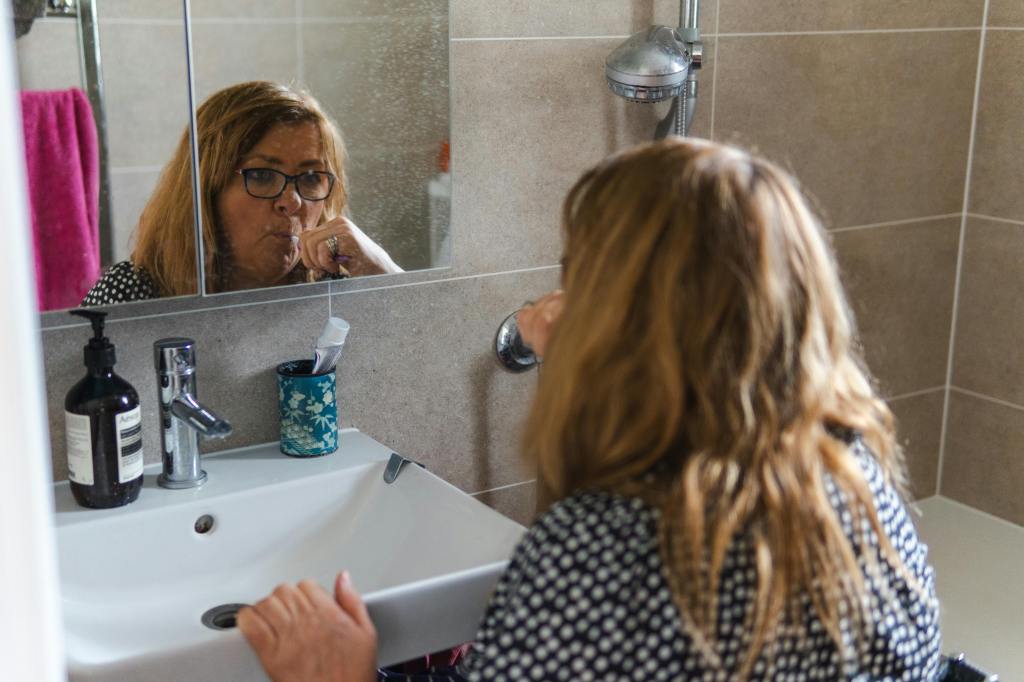
When I returned to Mrs. Chen’s home with this broader perspective, I looked at the bathroom differently. Yes, she had the grab bars. But the harsh fluorescent lighting, the medical-looking shower chair, and the absence of any personal items created an environment that felt clinical rather than comfortable. Together, we made changes: softer lighting with increased brightness where needed, a shower chair that coordinated with her décor, and designated spaces for the toiletries and small luxuries that made bathing enjoyable rather than merely safe.
Kitchen Access That Enables Connection
Allowing participation in meaningful activities—like cooking for family or preparing a favorite dish—has profound psychological benefits. Yet how often do we make kitchens so “safe” that we remove the person’s ability to participate? Lower frequently-used items for accessibility, yes. But also consider: Can they still access ingredients for their signature recipe? Can they participate in holiday cooking, even if modified? Does the kitchen setup allow them to interact with visitors while preparing simple snacks?
Spaces That Invite Rather Than Isolate
Place attachment—the emotional connection and sense of belonging to one’s home—serves as a complete mediator between house quality and mental health. When modifications preserve and even enhance this attachment, mental health benefits follow. This might mean:
- Positioning furniture to facilitate conversation, not just safe ambulation
- Ensuring favorite chairs remain accessible and prominent
- Maintaining display of personal photos, collections, and meaningful objects
- Creating clear sightlines to windows and outdoor views
- Preserving spaces for hobbies and interests
Environmental Control and Autonomy
The ability to control one’s environment—adjusting lighting, temperature, and even the arrangement of space—correlates with better mental health outcomes. Yet our modifications sometimes remove this control. Smart home technology can help: voice-activated lights and thermostats, motorized blinds, easily accessible controls. But even simple solutions matter: extension poles for hard-to-reach switches, organizing systems that the client chooses, and always asking permission before rearranging their space.
Red Flags: When Environment Affects Mental Health
As therapists, we need to recognize signs that the home environment is contributing to mental health struggles:
- Expressions of feeling “trapped” despite having appropriate equipment. This was Mrs. Chen’s signal, and I’ve heard variations from other clients: “I’m stuck here,” “I can’t do anything anymore,” “This isn’t my home anymore.”
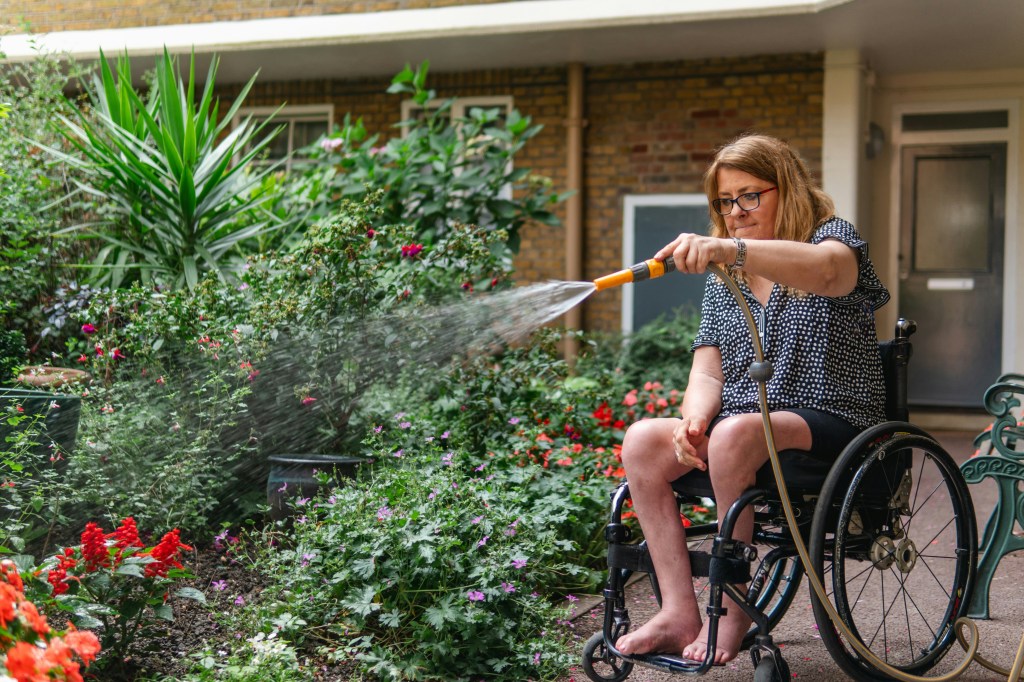
- Decreased participation in previously enjoyed activities beyond what physical limitations require. When someone stops gardening not because they can’t physically do it, but because all their plants were removed as “tripping hazards,” that’s an environmental barrier to meaningful activity.
- Reluctance to have visitors despite having an accessible home. If clients express embarrassment about how their home looks or worry about others seeing their “medical equipment,” the environment has become a source of shame rather than pride.
- Increased anxiety around ADLs even with proper modifications. Sometimes modifications that improve objective safety actually increase subjective anxiety. A client who feels they “should” be able to navigate their over-modified home perfectly may experience performance anxiety.
- Loss of sense of control or personalization in living space. Comments like “my daughter arranged everything” or “I don’t know where anything is anymore” signal loss of autonomy.
- Complaints about noise, lack of natural light, or feeling “closed in.” These sensory complaints often mask deeper concerns about the environment’s impact on mood and wellbeing.
When you observe these signs, it’s time to consider referring to mental health services. We can identify environmental contributors and make appropriate referrals while addressing the modifiable environmental factors within our scope. As a team, we can help seniors experience an improved quality of life.
Practical Application: The Environmental Mental Health Assessment
I now incorporate five questions into every home evaluation:
- “How much control do you feel you have over your daily activities and living space?” This reveals whether modifications have preserved or diminished autonomy.
- “Has your home environment made it easier or harder to connect with others?” This identifies whether safety measures have inadvertently increased isolation.
- “Are you able to engage in activities that are important to you at home?” This moves beyond ADLs to meaningful occupation.
- “How do you feel about the lighting, noise levels, and overall atmosphere in your home?” This addresses sensory factors that affect mood.
- “Does your home still feel like YOUR space, or does it feel more like a medical facility?” This directly addresses place attachment and identity.
Document the responses as part of your holistic assessment. If concerns emerge in three or more areas, consider modifications specifically aimed at supporting mental health alongside physical safety. Discuss with the client how their environment affects their mood. Involve family members in understanding psychological needs, not just physical ones.
The Path Forward
When I followed up with Mrs. Chen three months later, she’d made several changes to her home. The grab bars remained—safety was still paramount—but we’d added artwork she loved to bathroom walls, repositioned furniture to create a conversation area that overlooked her small garden, and reorganized her kitchen so she could prepare simple meals independently. She’d started inviting friends over again.
“It feels like my home now, not a hospital,” she told me. Her depression screening scores had improved significantly, and she was participating in activities she’d abandoned months earlier.
The research is clear: dwelling characteristics shape mental wellbeing in older adults. As occupational therapists specializing in home modifications, we’re uniquely positioned to integrate this knowledge into our practice. The future of home modification isn’t choosing between safety and psychological wellbeing—it’s designing environments that support both.
This week, I challenge you to reassess one current case through this broader lens. Look beyond the fall risks and physical barriers. Ask those five questions. Consider how your recommendations might affect not just safety and function, but identity, autonomy, and mental health.
Because the goal isn’t just to keep people safe at home. It’s to help them thrive there. (Mrs. Chen is a composite of several clients seen by this therapist.)
References
- Sharifi, S., Mosafer, H., Rahmati, M., Babaei Khorzoughi, K., & Parandeh, A. (2024). Dwelling characteristics and mental well-being in older adults: A systematic review. Heliyon, 10(18), e37676. https://doi.org/10.1016/j.heliyon.2024.e37676
- Gan, D.R.Y., Wister, A.V., & Best, J.R. (2022). Environmental influences on life satisfaction and depressive symptoms among older adults with multimorbidity: Path analysis through loneliness in the Canadian longitudinal study on aging. The Gerontologist, 62(6), 855-864.
- Evans, G.W., Kantrowitz, E., & Eshelman, P. (2002). Housing quality and psychological well-being among the elderly population. The Journals of Gerontology Series B: Psychological Sciences and Social Sciences, 57(4), P381-P383.
- Liang, Y. (2020). Heterogeneity in the trajectories of depressive symptoms among elderly adults in rural China: The role of housing characteristics. Health & Place, 66, 102449.
- Liu, Y., et al. (2017). Healthy urban living: Residential environment and health of older adults in Shanghai. Health & Place, 47, 80-89.
- Firdaus, G. (2017). Built environment and health outcomes: Identification of contextual risk factors for mental well-being of older adults. Ageing International, 42(1), 62-77.
- Gobbens, R.J. (2018). Associations of ADL and IADL disability with physical and mental dimensions of quality of life in people aged 75 years and older. PeerJ, 6, e5425.
- World Health Organization. (2023). Mental health of older adults. https://www.who.int/news-room/fact-sheets/detail/mental-health-of-older-adults
 The Home Accessibility Therapist LLC
Leave a comment