
Why Main-Floor Living Is Gaining Momentum
The home building industry is experiencing a significant shift toward main-floor living design principles, driven by demographic trends and evolving consumer preferences. This architectural approach, which eliminates or minimizes the need for stair navigation by concentrating essential living spaces on a single level, is no longer reserved exclusively for accessible housing or senior communities—it’s becoming mainstream in new construction.
Six key factors are driving this transformation in 2025. Baby boomers entering retirement years are purchasing new homes with long-term aging-in-place considerations built in from the start rather than retrofitting later. Multigenerational households are seeking designs that accommodate family members of varying ages and abilities—a critical consideration given that the share of Americans living in multigenerational households has more than doubled from 7% in 1971 to 18% in 2021, with nearly quadrupled absolute numbers. Universal design principles are gaining recognition not just as accessibility features but as convenience enhancements that benefit everyone regardless of age or ability.
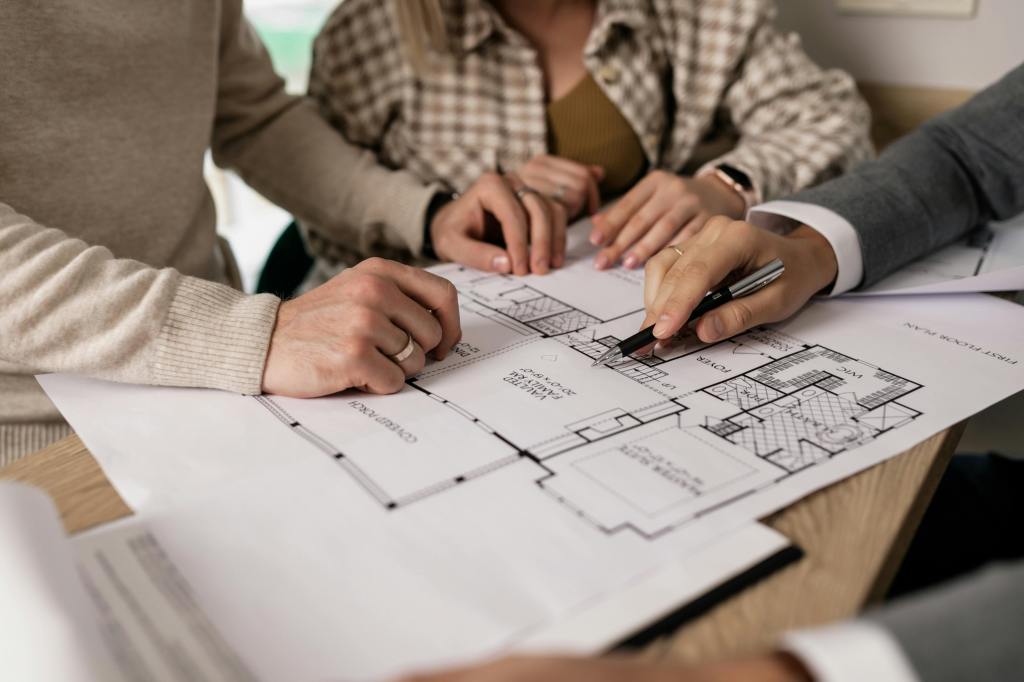
Core Design Principles for Main-Floor Living
Effective main-floor living design concentrates bedrooms, bathrooms, laundry facilities, and living areas on the home’s primary level. This configuration allows residents to conduct all essential daily activities without navigating stairs, significantly reducing fall risks and energy expenditure while preserving independence. Research indicates that one-floor dwellings or having a kitchen, bedroom, and bathroom on the same floor help older adults age in place successfully.
Modern main-floor designs incorporate several key features grounded in universal design principles. Primary bedroom suites with accessible bathrooms eliminate the most common reason for stair navigation—nighttime bathroom access. First-floor laundry rooms prevent the hazardous task of carrying heavy baskets up and down basement or second-floor stairs. Open-concept layouts with wider hallways and doorways accommodate mobility aids while creating visual spaciousness that benefits all residents.
Strategic space planning maximizes functionality within single-level footprints based on Person-Environment-Occupation (PEO) model principles, which emphasize the dynamic interaction among personal, environmental, and occupational factors determining functional independence. Kitchens feature varying counter heights to accommodate seated or standing work. Bathrooms include curbless showers and reinforced walls for future grab bar installation. Storage solutions bring frequently accessed items to accessible heights, reducing the need for step stools or overhead reaching.
Advantages for OT/PT Practice
Understanding main-floor living principles enhances your value as a home modification consultant based on evidence-based practice frameworks. When working with clients planning new construction or major renovations, you can advocate for proactive design choices that prevent future modification needs and expenses. Research demonstrates substantial cost savings: the CAPABLE study by Johns Hopkins School of Nursing showed that approximately $1,300 spent on patient-requested home improvements resulted in nearly tenfold net savings in medical costs. Falls cost the U.S. over $50 billion annually in related medical expenses, making preventative modifications highly cost-effective.
Main-floor designs also provide superior outcomes for clients with progressive conditions. Rather than repeatedly modifying a multi-level home as abilities decline, clients benefit from environments that adapt seamlessly to changing needs. This forward-thinking approach aligns with occupational therapy’s focus on optimizing function and preventing disability through improved person-environment fit.
Practical Applications for Client Consultations
When assessing clients’ current homes, evaluate whether main-floor living modifications are feasible alternatives to installing stairlifts or platform lifts. Converting dining rooms or first-floor offices into bedrooms, adding accessible bathrooms, or creating main-floor laundry access may provide more cost-effective long-term solutions than mechanized stair navigation, particularly given that stair-related falls are a significant concern for older adults.
For clients considering relocation, provide guidance on evaluating new construction options through the lens of main-floor living principles and universal design. Your expertise helps them recognize true accessibility features versus superficial “aging-friendly” marketing claims. Recommend they prioritize homes with primary bedroom suites on the main level, accessible bathroom configurations, and adaptable spaces over homes requiring immediate or imminent modifications.
Collaborate with builders, architects, and real estate professionals in your community to position yourself as the local expert on accessible design. Offering educational workshops on main-floor living principles for these professionals expands your referral network while advancing the availability of truly accessible housing in your market.
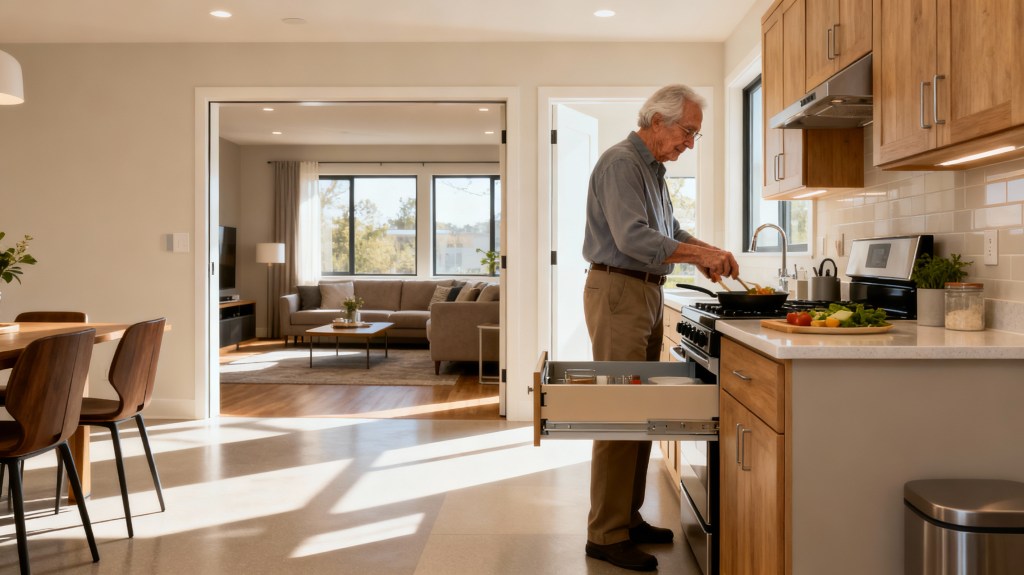
Looking Ahead
The growing prevalence of main-floor living design in new construction represents a paradigm shift from reactive modification to proactive accessibility. As OT and PT professionals specializing in home modifications, staying current on these design trends positions you as forward-thinking experts who help clients make informed decisions about their long-term housing needs. Whether consulting on new construction, major renovations, or assessing modification priorities in existing homes, understanding main-floor living principles enhances your ability to deliver comprehensive, future-focused recommendations grounded in evidence-based practice and recognized theoretical frameworks like the Person-Environment-Occupation model.
References
Andersson, M., Wahlgren, L., Rosenberg, L., & Iwarsson, S. (2023). Environmental barriers and housing accessibility problems for people with Parkinson’s disease: A three-year perspective. Scandinavian Journal of Occupational Therapy, 30(8), 1163-1172. https://doi.org/10.1080/11038128.2022.2152850
American Occupational Therapy Association. (2020). Home modifications and key community-based partnerships. https://www.aota.org/practice/practice-settings/home-modifications-key-community-partnerships
Carnemolla, P., & Bridge, C. (2019). Housing design and community care: How home modifications reduce care needs of older people and people with disability. International Journal of Environmental Research and Public Health, 16(11), 1951. https://doi.org/10.3390/ijerph16111951
Cha, S.-M. (2025). A systematic review of home modifications for aging in place in older adults. Healthcare, 13(7), 752. https://doi.org/10.3390/healthcare13070752
Generations United. (2021). Fact sheet: Multigenerational households. https://www.gu.org/app/uploads/2021/04/21-MG-Family-Report-FactSheet.pdf
Gitlin, L. N., Winter, L., Dennis, M. P., & Hauck, W. W. (2008). Variation in response to a home intervention to support daily function by age, race, sex, and education. The Journals of Gerontology Series A: Biological Sciences and Medical Sciences, 63(7), 745-750.
Homes Renewed. (2021). The cost efficiency of home modifications to reduce healthcare costs. HomesRenewed.org. https://www.homesrenewed.org/wp-content/uploads/2021/11/HomesRenewed-Gov-save-money-on-remods-for-aging-in-place.pdf
Hwang, E., Cummings, L., Sixsmith, A., & Sixsmith, J. (2011). Impacts of home modifications on aging-in-place. Journal of Housing for the Elderly, 25(3), 246-257. https://doi.org/10.1080/02763893.2011.595611
Petersson, I., Lilja, M., Hammel, J., & Kottorp, A. (2008). Impact of home modification services on ability in everyday life for people ageing with disabilities. Journal of Rehabilitation Medicine, 40(4), 253-260. https://doi.org/10.2340/16501977-0160
Pew Research Center. (2022). The demographics of multigenerational households. https://www.pewresearch.org/social-trends/2022/03/24/the-demographics-of-multigenerational-households/
Pynoos, J., Steinman, B. A., & Nguyen, A. Q. D. (2010). Environmental assessment and modification as fall-prevention strategies for older adults. Clinics in Geriatric Medicine, 26(4), 633-644. https://doi.org/10.1016/j.cger.2010.07.001
Ratnayake, M., Lukas, S., Brathwaite, S., Neave, J., & Henry, H. (2022). Aging in place: Are we prepared? Delaware Journal of Public Health, 8(3), 28-31. https://doi.org/10.32481/djph.2022.08.007
Remodeling Online. (2025). Investing in aging-in-place remodeling pays off. https://aginginplace.com/investing-in-aging-in-place-remodeling-pays-off/
Sanford, J. A. (2012). Universal design as a rehabilitation strategy: Design for the ages. Springer Publishing Company.
Smith, S. K., Rayer, S., & Smith, E. A. (2008). Aging and disability: Implications for the housing industry and housing policy in the United States. Journal of the American Planning Association, 74(3), 289-306. https://doi.org/10.1080/01944360802197132
Steinfeld, E., & Maisel, J. (2012). Universal design: Creating inclusive environments. John Wiley & Sons.
Stark, S., Keglovits, M., Arbesman, M., & Lieberman, D. (2017). Effect of home modification interventions on the participation of community-dwelling adults with health conditions: A systematic review. American Journal of Occupational Therapy, 71(2), 7102290010p1-7102290010p11. https://doi.org/10.5014/ajot.2017.018887
Strong, D., Mathers, C., Leeder, S., & Beaglehole, R. (2005). Preventing chronic diseases: How many lives can we save? The Lancet, 366(9496), 1578-1582. https://doi.org/10.1016/S0140-6736(05)67341-2
Szanton, S. L., Thorpe, R. J., & Gitlin, L. N. (2014). The home environment: A focus for aging research and intervention for 8 million Americans with functional difficulties living in the community. American Journal of Public Health, 104(7), 1209-1211. https://doi.org/10.2105/AJPH.2014.301980
Wahl, H. W., Fänge, A., Oswald, F., Gitlin, L. N., & Iwarsson, S. (2009). The home environment and disability-related outcomes in aging individuals: What is the empirical evidence? The Gerontologist, 49(3), 355-367. https://doi.org/10.1093/geront/gnp056
Whole Building Design Guide. (2024). Beyond accessibility to universal design. https://www.wbdg.org/do/accessible/universal-design
Wilson, D. L., Strobhar, R., & Beardmore, S. (2019). The effect of home modifications on the occupational participation of a person with spinal cord injury: A case report. Occupational Therapy in Health Care, 33(4), 359-371. https://doi.org/10.1080/07380577.2019.1658633
 The Home Accessibility Therapist LLC
Leave a comment