
At The Home Accessibility Therapist LLC, we believe that the great outdoors should be open to everyone. America’s national parks offer breathtaking landscapes, rich history, and countless recreation opportunities—and with thoughtful planning, these experiences are accessible to persons with disabilities. Here’s how to make the most of your visit or help your clients plan their visit, from understanding the benefits to leveraging the latest accessibility tools and resources.
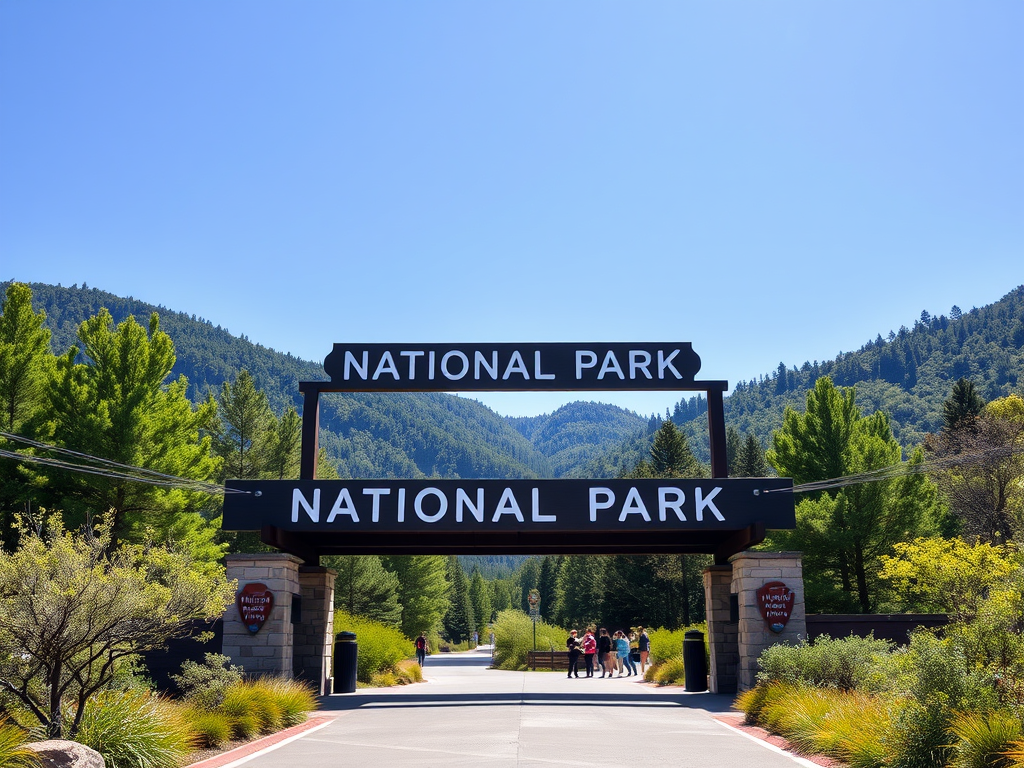
The Benefits of Visiting National Parks for Persons with Disabilities
- Physical and Mental Well-Being: Spending time in nature can lower stress, boost mood, and support physical health. Accessible trails and adaptive programs make these benefits available to all visitors.
- Social Connection: National parks provide spaces for families and friends to connect, participate in group activities, and build lasting memories.
- Empowerment and Independence: Navigating new environments and participating in outdoor activities can foster confidence and independence.
- Educational Opportunities: Many parks offer accessible interpretive programs, exhibits, and ranger-led tours, ensuring everyone can engage with the park’s natural and cultural stories.
How to Get the National Parks Access Pass
The Access Pass is a free, lifetime pass for U.S. citizens or permanent residents with a permanent disability. It provides free entry to over 2,000 federal recreation sites, including all national parks, and often includes discounts on amenities like camping and guided tours.
Eligibility:
- U.S. citizens or permanent residents of any age with a permanent disability that severely limits one or more major life activities.
How to Apply:
- In Person: Visit a participating federal recreation site with a valid photo ID and documentation of permanent disability (such as a doctor’s statement or proof of federal/state disability benefits).
- Online: Apply through the USGS Online Store by uploading required documents and paying a $10 processing fee for mail delivery.
- By Mail: Submit a completed application, proof of residency, disability documentation, and the processing fee to the USGS.
Tip: Not all parks issue passes in person—check ahead before visiting.
Using the Mobility Planner on the NPS Website
The National Park Service (NPS) offers a Mobility Planner and dedicated accessibility pages for each park to help visitors plan their trips.
How to Use the Mobility Planner:
- Visit the NPS Accessibility page or the website of your chosen park.
- Look for the “Accessibility” or “Plan Your Visit” section.
- Use the Mobility Planner tool to find information on accessible trails, facilities, restrooms, parking, and transportation.
- Contact the park’s accessibility coordinator for personalized assistance if you have specific needs.
Summary of Accessibility Features in National Parks
National parks are continually improving their accessibility. While features vary by location, many parks offer:
| Accessibility Feature | Description |
|---|---|
| Accessible Trails & Paths | Paved or graded trails suitable for wheelchairs and mobility devices |
| Visitor Centers | Ramps, elevators, tactile exhibits, assistive listening devices, captions |
| Wheelchair-Accessible Camping | Campsites with accessible restrooms, tables, and fire rings |
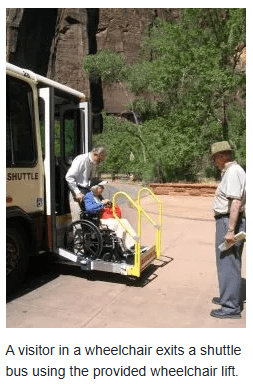
| Transportation | Shuttle buses and trams with lifts and tie-downs |
| Accessible Restrooms | Widened stalls, grab bars, and accessible sinks |
| Interpretive Programs | Audio-described exhibits, braille materials, large-print maps, sign language |
| Loaner Equipment | Some parks offer wheelchairs or mobility aids for visitor use |
| Accessible Parking | Designated spaces close to entrances and trailheads |
Note: Always check the park’s website or contact staff for the most current accessibility information.
Final Thoughts
Planning a national park visit is more accessible than ever for persons with disabilities. From the lifetime Access Pass to comprehensive online planning tools and ever-expanding accessible features, the National Park Service is committed to making nature’s wonders available to all.
REFERENCES:
National Park Service. (2024). Accessibility in the National Parks. Retrieved from: https://www.nps.gov/subjects/accessibility/index.htm
USGS. (2024). America the Beautiful – The National Parks and Federal Recreational Lands Access Pass. Retrieved from: https://www.nps.gov/subjects/accessibility/interagency-access-pass.htm
National Park Service. (2024). Plan Your Visit: Accessibility. Retrieved from: https://www.nps.gov/subjects/accessibility/plan-your-visit.htm
 The Home Accessibility Therapist LLC
Leave a comment