As occupational therapists specializing in home modifications, November presents an opportunity to provide targeted interventions helping aging clients maintain safety during holiday gatherings. Temporary environmental changes from decorations, furniture rearrangement, and increased visitors create increased fall risks that require clinical assessment and proactive modification recommendations.
Pre-Holiday Home Safety Evaluation Protocol
Schedule comprehensive safety assessments before clients begin holiday preparations, typically early-to-mid November. Use standardized tools like the Home Safety Self-Assessment Tool (HSSAT) or Safety Assessment of Function and the Environment for Rehabilitation (SAFER) tool to document baseline safety and identify areas requiring modification.
Focus your assessment on anticipated environmental changes: areas where furniture may be rearranged, locations for holiday decorations, pathways that will experience increased traffic, lighting adequacy for evening gatherings, and spaces where visitors will congregate. Document current furniture arrangements photographically as a reference for restoration after holidays.
Evidence-Based Modification Recommendations
Circulation and Pathway Assessment: Measure pathway widths throughout the home, ensuring minimum 36-inch clearance in main circulation routes. For clients using assistive devices, verify adequate clearance for walker or wheelchair navigation with increased foot traffic.
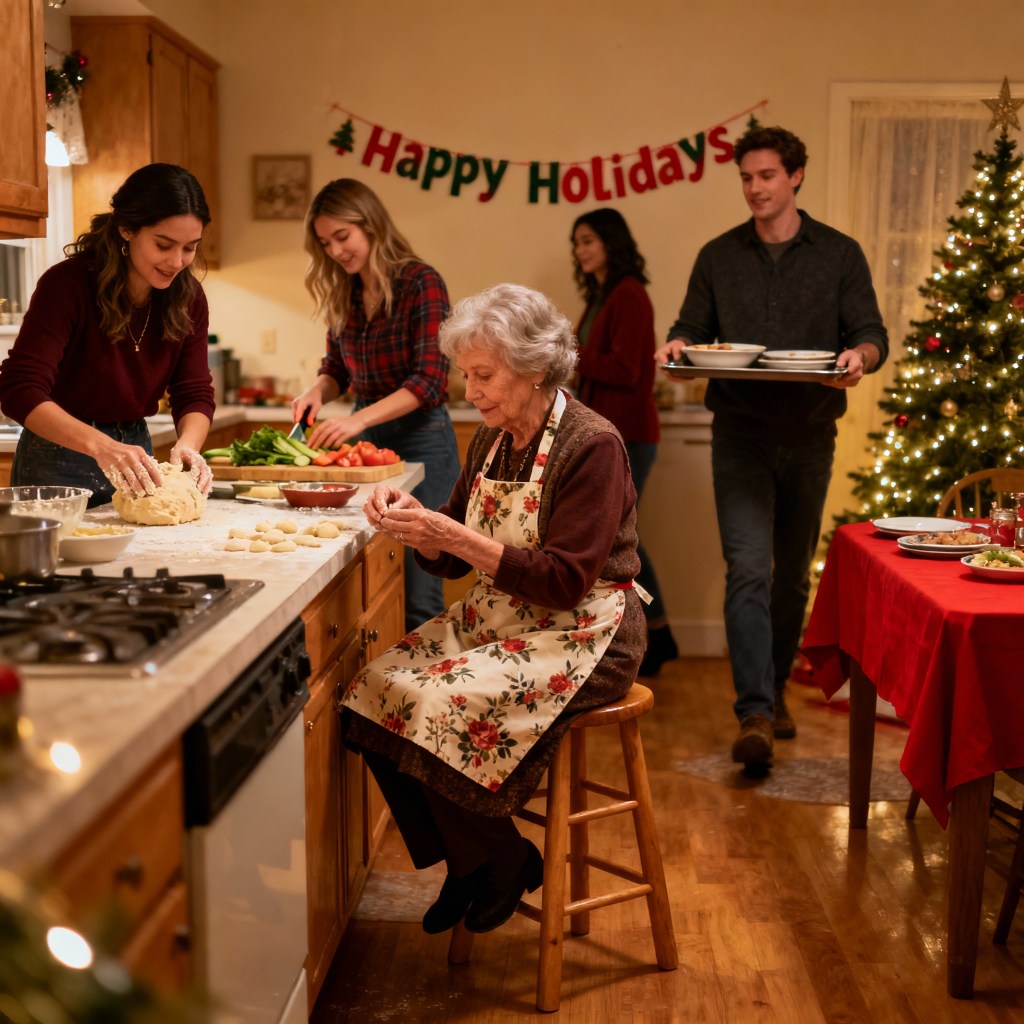
Recommend specific furniture repositioning that maintains familiar layouts while accommodating guests. Provide clients with floor plans marking safe furniture arrangements that preserve their established movement patterns while creating guest space. Identify and recommend removal or secure fastening of loose rugs, runners, and floor decorations that create trip hazards.
Bathroom Modification for Guests: Assess guest bathroom safety from a universal design perspective. Recommend temporary grab bar solutions including high-quality suction models tested to support 250+ pounds, though note these are supplementary rather than primary support. Specify grab bar placement following your standard positioning protocols appropriate for varied user heights and abilities.
Recommend non-slip surface treatments for tub and shower floors, adequate lighting including motion-sensor nightlights for safe nighttime navigation, and accessible placement of toilet paper, towels, and hand soap. Evaluate toilet height and recommend temporary toilet seat risers if multiple elderly guests will visit.
Seating and Furniture Safety: Assess seating options available for guests with mobility challenges. Recommend specific chair characteristics: arms for transfer support, firm cushions providing stable seating surfaces, seat heights between 17-19 inches, and stable bases without wheels or rockers.
Specify placement of seating near main gathering areas but away from circulation paths to prevent collision injuries. Ensure side tables are within reach of seating for safe glass and plate placement.
Lighting Assessment and Recommendations
Comprehensive Lighting Evaluation: Measure illumination levels throughout the home using a light meter, targeting minimum recommendations of 100-200 lumens for general areas and 300-500 lumens for task areas. Compare current levels against evidence-based recommendations for aging vision, which requires 2-3 times more light than younger adults.
Recommend specific lighting modifications: higher-wattage LED bulbs (specify color temperature between 2700-3000K for warm, comfortable light), additional task lighting for reading and food service areas, motion-sensor pathway lighting for safe nighttime navigation, and exterior lighting for safe guest arrival and departure.
Assess contrast and glare issues that worsen with age-related vision changes. Recommend minimizing glare sources, maintaining consistent lighting levels between spaces to prevent adaptation challenges, and using contrasting colors to define edges and level changes.
Decoration Safety Guidelines
Provide clients with evidence-based decoration safety protocols: avoid floor-level decorations in circulation paths, secure all decorations to prevent falls if bumped, eliminate decorations that block lighting fixtures or outlets, use LED lighting to reduce fire risk and heat generation, secure all electrical cords along baseboards or under cord covers, and maintain clear sightlines through main pathways.
Recommend specific decoration placement that enhances rather than compromises safety, such as positioning decorations where they provide wayfinding cues or improve lighting.
Client and Family Education
Develop Written Safety Protocols: Provide clients with individualized written guides covering pre-party safety checks, emergency contact information and locations, first aid kit accessibility, medication management during celebrations, fatigue monitoring and rest scheduling, and safe guest departure procedures.
Train family members in recognizing fall risk factors and implementing interventions. Provide caregiver education on balancing celebration with safety, recognizing when clients need rest, and managing guest interactions to prevent client overwhelm.
Post-Holiday Follow-Up Assessment
Schedule post-holiday assessments to evaluate intervention effectiveness, document any incidents or near-falls, identify modifications requiring adjustment, and restore optimal environmental setup. Use this information to refine your clinical protocols and improve future holiday safety interventions.
Your proactive assessment and modification recommendations enable clients to host celebrations confidently while maintaining the safety essential for aging in place.
References:
Doubek Medical. (2025, September 4). Fall prevention starts at home: 5 simple upgrades that make a big difference. https://doubekmedical.com/2025/09/04/fall-prevention-starts-at-home-5-simple-upgrades-that-make-a-big-difference/
Home modifications for fall prevention: Creating a safer living space. (2025, January 20). Dakota Home Care. https://dakotahomecare.com/home-modifications-for-fall-prevention-creating-a-safer-living-space/
Hosparus Health. (2021, November 19). Senior safety at home during the holidays. https://hosparushealth.org/blog/senior-safety-at-home-during-the-holidays/
Keystone Health. (2024, August 11). Aging in place: Home modifications checklist. https://keystone.health/aging-in-place-home-modifications-checklist
Maplewood Senior Living. (n.d.). Holiday safety guide for seniors and those with Alzheimer’s. https://www.maplewoodseniorliving.com/blog/holiday-safety-guide-for-seniors-maplewood-senior-living/
National Institute on Aging. (2023, October 11). Aging in place: Growing older at home. https://www.nia.nih.gov/health/aging-place/aging-place-growing-older-home
Walborn, H. (2025). 9 Home modifications for aging in place. (2025, January 2). Pennsylvania Association of Realtors. https://www.parealtors.org/blog/9-home-modifications-for-aging-in-place/
Pynoos, J., Steinman, B. A., & Nguyen, A. Q. D. (2010). Environmental assessment and modification as fall-prevention strategies for older adults. Clinics in Geriatric Medicine, 26(4), 633-644. https://doi.org/10.1016/j.cger.2010.07.001
U.S. Administration for Community Living & National Association of Area Agencies on Aging. (n.d.). Modifying your home for healthy aging. https://www.usaging.org/Files/Home-Modification-brochure-508.pdf
 The Home Accessibility Therapist LLC
Leave a comment