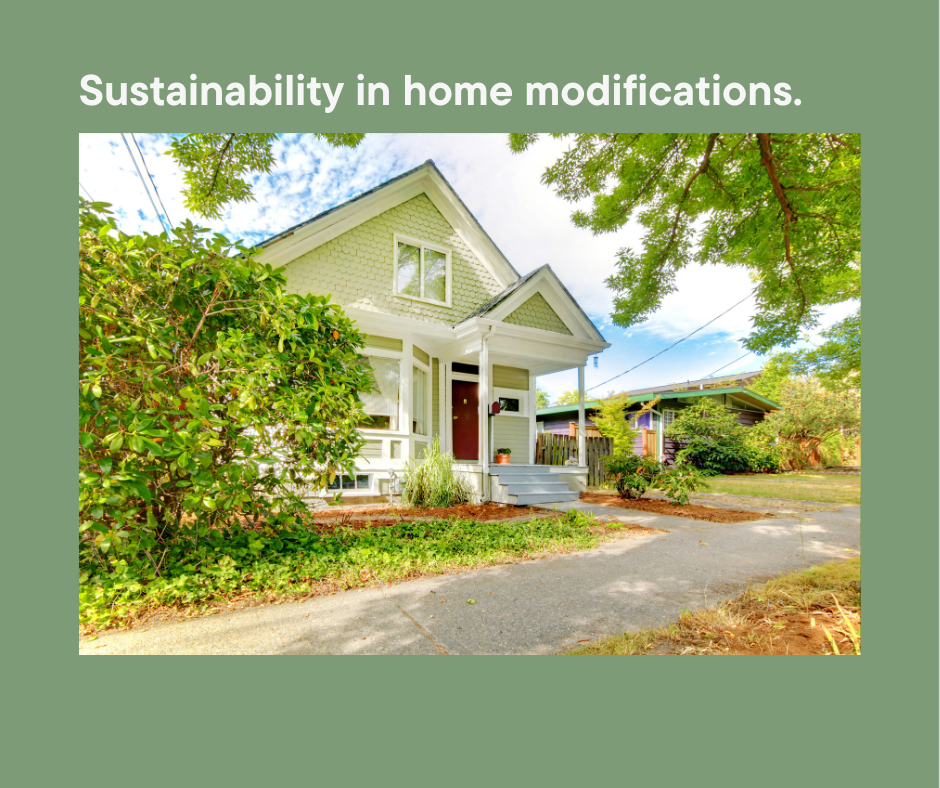
As occupational therapists, we often find ourselves recommending home modifications to improve our clients’ quality of life. However, a recent study by Fawkes et al. (2024) reveals that while we consider various factors during this process, sustainability is not always at the forefront. This article summarizes key findings from their qualitative study exploring occupational therapists’ perceptions of sustainability in home modifications.
Study Background
The study aimed to understand how occupational therapists perceive and incorporate sustainability into home modifications. Sustainability was examined through three lenses: economic, social, and environmental.
Methodology
Researchers used a qualitative description approach, conducting semi-structured interviews with ten female occupational therapists, each with over three years of experience in home modifications in Canada. Their insights were analyzed to identify common themes and perspectives.
Key Findings
Three major themes emerged from the analysis:
- It’s Not Easy Being Green: Environmental Sustainability
- Stretching a Dollar: Financial Inequities
- Barriers and Benefits in the Home Modification Process
Environmental Sustainability.
Therapists expressed uncertainty about implementing environmentally sustainable practices in home modifications and focused predominantly on function and safety. Most focus on the environmental impact of equipment provision and recycling rather than broader home modifications. This may be due to financial constraints and systemic barriers that limit their ability to adopt higher-level sustainable practices.
Financial Inequities
Economic sustainability is heavily influenced by the funding sources available for home modifications. Therapists noted that public systems prioritize safety and cost-effectiveness, often leading to inequitable access to necessary modifications. Therapists also found themselves helping clients navigate funding options. They highlighted the need for policies that support sustainable and equitable funding for home modifications. The participants also highlighted the benefits of clients who anticipated potential needs and “future-proofed” their homes.
Barriers and benefits.
Social sustainability is intertwined with financial constraints. Without adequate funding, individuals face significant barriers to accessing necessary home modifications. This is particularly evident in marginalized communities, such as those living on reserves, where the need for major repairs is high, and access to modifications is limited. Therapists also noted that where clients lived in rental accommodation there were additional layers of complexity. Further barriers were identified even if it was the client’s own home. Frequently the client was reluctant to spend money, concerned about potential future resale value, or the home was not structurally sound. The overall benefit of the client being able to age in place, stay engaged in daily routines, and community activities even when faced with challenges is frequently described as one of the benefits of this area of practice.
Implications for Practice
The study’s findings highlight the need for improved policies and guidelines that promote sustainable home modification practices. Occupational therapists show a keen interest in incorporating environmentally friendly approaches but are hindered by systemic challenges. Equitable funding and better access to resources are crucial to support sustainable practices.
Future Research
Further research is needed to deepen our understanding of sustainability in occupational therapy. Studies should explore the views and practices of therapists across different regions and settings. Additionally, cost analysis research could help identify hidden costs and establish benchmarks for providing sustainable home modifications.
Conclusion
This study sheds light on the current perceptions of sustainability in home modifications among occupational therapists. While there is a desire to adopt more sustainable practices, systemic constraints pose significant challenges. By addressing these barriers and promoting equitable access to funding, we can enhance our practice and contribute to a more sustainable future.
Key Takeaways
- Occupational therapists aim to implement sustainable approaches in home modifications but face systemic limitations.
- There is a need for equitable funding to ensure all individuals can access necessary home modifications.
- Further research and improved policies are essential to support sustainable occupational therapy practices.
Reference:
Fawkes, T., Croft, C. S., Peters, C. M., & Mortenson, W. B. (2024). Exploring the Sustainability of Home Modifications and Adaptations in Occupational Therapy. Canadian journal of occupational therapy. Revue canadienne d’ergotherapie, 91(2), 116–123. https://doi.org/10.1177/00084174231222310
https://pubmed.ncbi.nlm.nih.gov/38192223/
How are you addressing sustainability in your home modifications recommendations?
As I reviewed my practice, I was able to list the following ways I was addressing sustainability:
- Using the Caring Closet in our local city that provides recycling of adaptive equipment.
- Making sure that any recommendations also incorporate “future proofing” considerations.
- Providing the necessary minimum options for clients to allow them to make choices.
- Spending time helping clients navigate funding sources.
Which of these options do you find yourself doing? What system recommendations do you think might be helpful?
 The Home Accessibility Therapist LLC
Leave a comment