
July 29th 2024
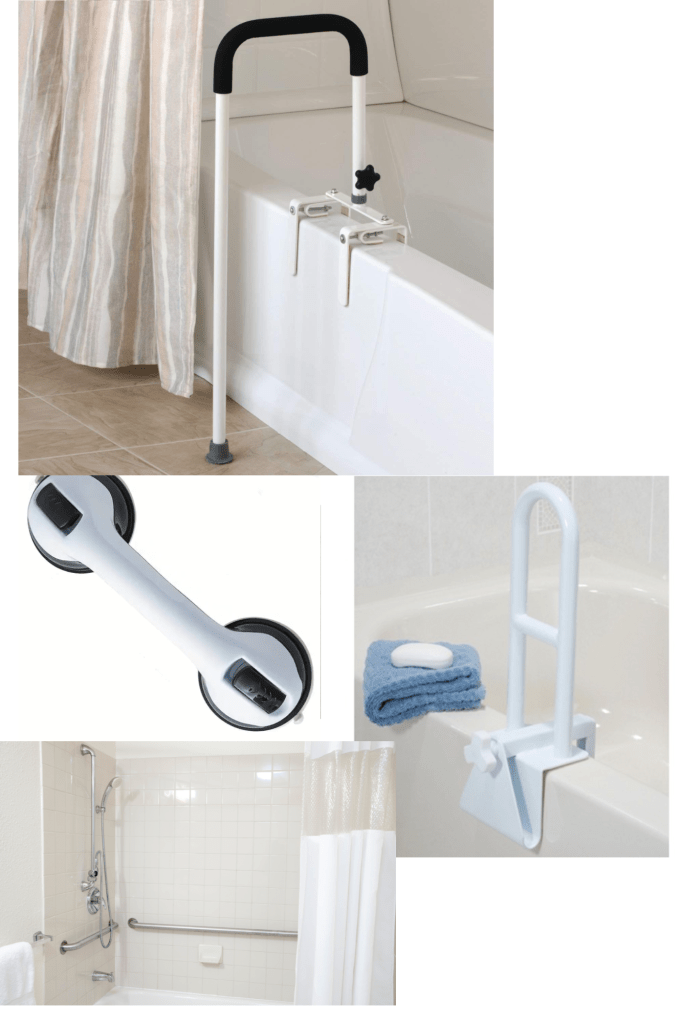
A recent study published in Gerontology & Geriatric Medicine sheds light on the effectiveness of temporary bathing transfer aids for older adults. Researchers Rand, Pelchat, Levine, and colleagues examined whether older adults could effectively install two types of temporary bathing aids: suction cup handholds and rim-mounted tub rails. Their concern was that older adults were able to safely install these devices as they provided a lower cost option as well as one that could be easily removed if this was a home rental situation.
Key findings from the study include:
- Suction Cup Grab bars/Handholds:
- 85% of installations passed mechanical testing, but more than half of the participants placed them in unexpected locations.
- While generally successful in a controlled environment, real-world performance may differ significantly due to factors like soap scum, mineral build-up, and textured surfaces.
- Rim-Mounted Tub Rails:
- None of the rim-mounted tub rails withstood the applied force during load testing, indicating significant safety concerns.
- Participants were confident in their installations, despite the devices failing to support the required load.
Safety Concerns:
- Mismatch between perceived safety and actual performance: Participants were generally confident in their installations, but most devices did not meet loading criteria or anticipated positioning.
- Inadequate guidance: Manufacturer instructions lacked clear directions on where to install the devices and how to evaluate installation effectiveness.
- Potential for misuse: The varied placement of handholds suggests users may not understand optimal positioning for safe bathing transfers.
- Limited real-world testing: The study used ideal conditions, which may not reflect typical home environments.
- Overconfidence in abilities: Many participants felt they didn’t need grab bars despite reporting bathing challenges or previous falls.
Implications for Occupational Therapists:
- Provide clear, specific instructions on proper installation and positioning of temporary bathing aids.
- Consider clients’ cognitive and physical abilities when recommending self-installed devices.
- Reassess the recommendation of rim-mounted tub rails for independent installation by older adults.
- Educate clients on the importance of proper installation, regular checks, and the limitations of temporary devices.
My comments:
1. Load testing occurred immediately after placement. We are aware that with fluctuating humidity and temperature as well as soap scum build up, suction secured grab bars would have a potentially higher failure rate over time. I still feel that the suction grab bars have limited safety overall in the long term use in this population.
2. A recent study by Greene et al. (2024) demonstrated that rim mounted bar increased forward flexion during transfers, potentially decreasing the client’s sense of safety, and overall increased musculoskeletal demands on the spine. Given biomechanical changes with aging as well as the potential increase in incidents of chronic conditions as a person ages, the ability to maintain balance or recover from a balance challenge in this situation decreases. Again, the rim mounted grab bar has been found to not be useful in the senior population with overall poor safety factors during use as well as initial positioning.
3. This study highlighted the variability in positioning of the suction grab bar by the older adult. Further research into handheld strategies and the pros and cons are needed.
King & Novak (2017) felt that grab bar placements were often decided on by the client’s comfort and ease of use. They argue that we need more research related to the biomechanics of bathroom transfers in the senior population and research evidence to support our recommendations for grab bar placement. In their study of 26 adults getting in and out of bathtub, they reported that the vertical grab at the tub entry was the most useful for transfer safety. This could potentially be achieved in a temporary setting by using a transfer pole positioned near the tub entry. Further studies to identify how well this works are needed.
In conclusion, while temporary bathing aids can appear to be valuable tools for enhancing bathroom safety, this study highlights significant concerns about their effectiveness when self-installed by older adults. The discrepancy between users’ confidence and actual device performance is particularly worrying.
Occupational therapists play a crucial role in assessing individual needs, recommending appropriate solutions, and ensuring proper installation and use of these devices. For older adults and their caregivers, it’s essential to seek professional advice and not rely solely on self-installation of temporary bathing aids for safety.
The study underscores the need for improved product design, clearer installation guidelines, and better education on the limitations and proper use of these devices to ensure the safety of older adults during bathing activities. Alternatives for safe transfer aids in a rental home are clearly needed,
REFERENCES:
1. Rand, M., Pelchat, J., Levine, I. C., Montgomery, R. E., Greene, R. M., King, E. C., Pong, S. M., & Novak, A. C. (2024). Efficacy of Installation of Temporary Bathing Transfer Aids by Older Adults. Gerontology & geriatric medicine, 10, 23337214241237119. https://doi.org/10.1177/23337214241237119
2. Greene, R., Levine, I. C., Guay, M., & Novak, A. C. (2024). Biomechanical Demands and User Preference Associated with Wall-Mounted and Rim-Mounted Grab Bars. Canadian journal of occupational therapy. Revue canadienne d’ergotherapie, 91(2), 183–193. https://doi.org/10.1177/00084174231186066
3. King, E.C., & Novak;, A.C. (2017) Effect of Bathroom Aids and Age on Balance Control During Bathing Transfers. Am J Occup Ther Vol. 71(6), 7106165030p1–7106165030p9. doi: https://doi.org/10.5014/ajot.2017.027136
 The Home Accessibility Therapist LLC
Leave a comment